


You load sixteen tons, what do you get?
Another day older and deeper in debt

Saint Peter, don’t you call me, ’cause I can’t go
I owe my soul to the company store
Ernie Ford’s recording of Sixteen Tons was released by Capitol Records in October 1955. By November 1955, the song was number one on both the Billboard country chart and Hot 100. Clearly a connection was made!

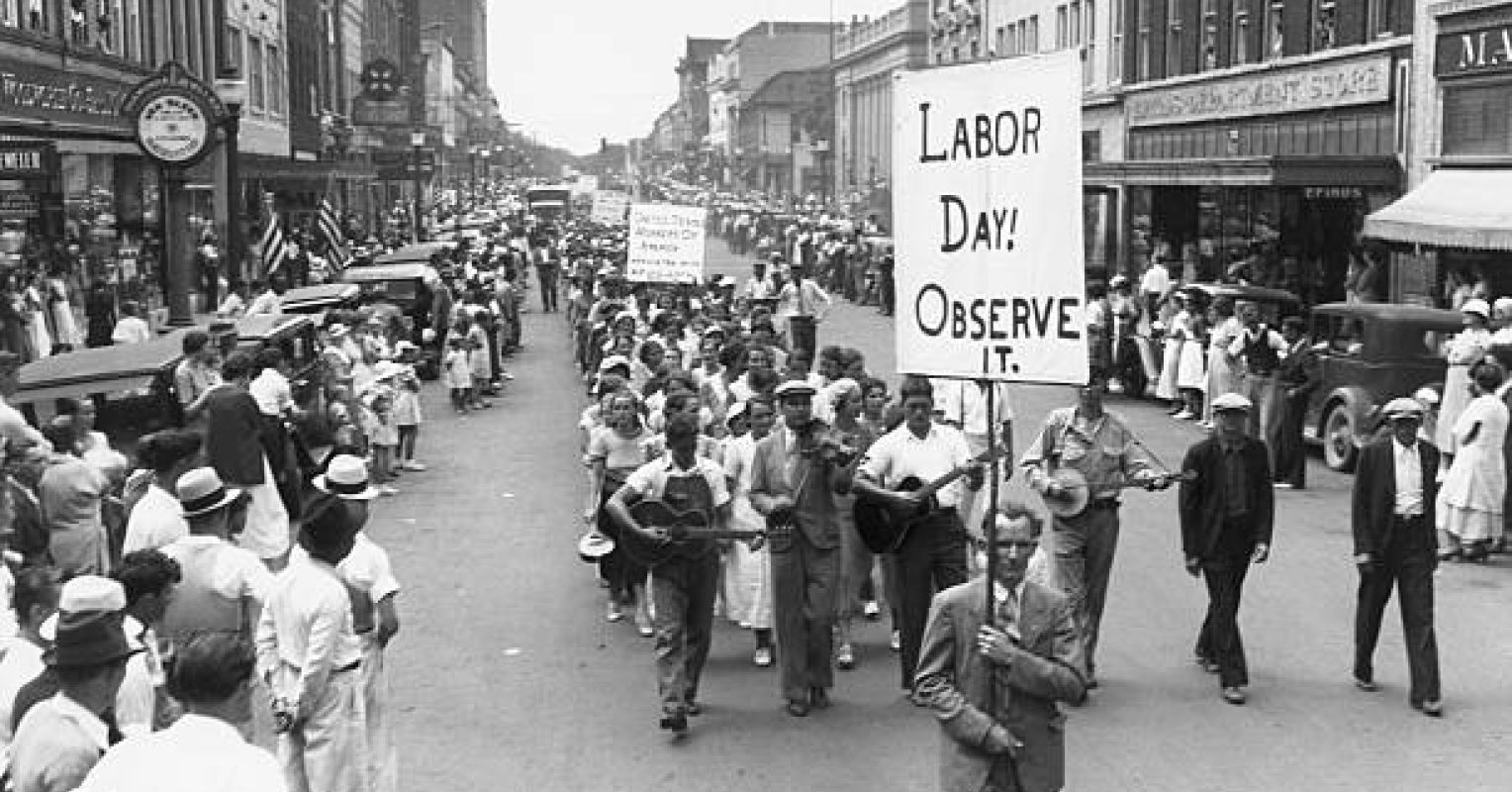
This song captured the passion and despair of a country still rebuilding after WWII and the Korean War. Our remarkable rebound came on the backs of workers, to whom Labor Day was dedicated in 1894. The U.S. Department of Labor master calendar states: “Labor Day, the first Monday in September, is a creation of the labor movement and is dedicated to the social and economic achievements of American workers. It constitutes a yearly national tribute to the contributions workers have made to the strength, prosperity, and well‑being of our country.”
Yet, the music of and for workers does not always reflect the joy and spirit of those who are recognized as bedrock for sustaining our democracy.
We believe that it should.
Our family is not unlike yours. We are teachers, mechanics, nurses, upholstery refinishers, pajama factory workers, lawyers, tattoo artists, accountants, armed forces, and office assistants. Our musical anthem for our hometown is Billy Joel’s Allentown.
We appreciate a day dedicated to working service to this country.
Labor Day As the Seasonal Hinge
Closing the summer door and opening another into fall, this holiday gives us a long weekend to honor labor and the generations who fought for fair wages, safe conditions, and dignity in work.
We pause to offer gratitude to teachers who shape children each day, health aides who care for our elders, and for the unseen work that keeps communities running.
If gratitude is the purpose of pausing on Labor Day, music is one of the best ways to get there.
Songs of Solidarity and Labor Day
Most holidays carry familiar soundtracks. Unlike the July 4th fireworks, Labor Day music is often quieter, serving as a cultural connection of work itself and of workers who built our country.
Labor anthems like Solidarity Forever (Chaplin, 1915) and Union Maid (Guthrie, 1940) echoed at rallies and parades. Working Man Blues (Haggard, 1969) carried the working-class grit and pride. Bread and Roses remind us that labor is about survival, dignity, and beauty in life.
Music entertains even as it creates a record of the emotional weather of the time. The Great Depression song, Brother, Can You Spare a Dime? (Crosby, 1931) captures desperate reality. In the 1970’s, Parton’s 9 to 5 became an anthem for working women.
Labor Day is a recognition of collective effort, a holiday built to honor the human drive to work with dignity and fairness. The weekend soundtracks remind us when workers sing together on picket lines, in factories, or through folk ballads passed down generations, they are making music and marking history.
Music as Reflection
Guthrie sang This Land Is Your Land to remind us that work and land belong to all. Springsteen’s Factory and My Hometown hold the quiet dignity and ache of working-class life.
Familiar songs activate the hippocampus and prefrontal cortex, regions of the brain that store memory and support self-reflection (Janata, 2009). A single phrase of a song can send you back to your first summer job, a parent’s voice humming after a long day, or a union rally where voices rose in chorus.
Music and Gratitude
Practicing gratitude increases well-being, lowers stress, and even improves sleep (Emmons & McCullough, 2003; Wood et al., 2010). Music amplifies gratitude because it stirs emotion, loosens memory, and brings us into the present.
Armstrong’s What a Wonderful World has carried countless people through grief into hope. Withers’ Lovely Day reframes a simple morning into possibility. The Beatles’ In My Life names gratitude for the people who shape us. Wonder’s Sir Duke celebrates the gift of music itself.
Music, Labor, and Belonging
Labor Day is about “we,” not just “me.” Seeger’s Solidarity Forever is an anthem of union power. Sweet Honey in the Rock’s Ella’s Song linked labor, race, and civil rights.
Baez sang We Shall Overcome at marches, linking labor rights to civil rights, reminding listeners that labor justice are inseparable from human dignity.

Gratitude Essential Reads
American spirituals like Swing Low, Sweet Chariot or Wade in the Water carry layered meanings: religious hope, coded resistance, and the strength to endure backbreaking enslaved labor. Gospel songs later carried this same resilience into labor and civil rights marches. Music activates the brain’s reward and emotion systems, releasing dopamine and oxytocin, which help reduce stress and build social connection (Salimpoor et al., 2011). For workers whose days were filled with exhaustion or danger, spiritual music was both prayer and protest.
Religious hymns also played a central role in labor movements. In coal towns and factory villages, hymns such as Amazing Grace or I’ll Fly Away were sung at union meetings offering comfort and conviction.
Singing together synchronizes heart rates and breathing, raising oxytocin, the hormone tied to trust and bonding (Tarr, Launay, & Dunbar, 2014).
A Call to Pause
Labor Day reminds us that work has meaning, which transforms labor into purpose.
Music and mindful action allow us to tune into deeper harmonies. Five actions we will take this weekend:
-
Thank a waitress, a policeman, fireman, or a construction worker.
-
Remind our family of the elegance and importance of workers everywhere.
-
Find a song which honors labor, play it, talk with others. Like this one from Newsies, the story of the 1899 newsboys’ strike, with Seize the Day.
-
Ask friends what their Labor Day songs are, such as: LABOUR (Paloma) and Break My Soul (Beyonce).
-
Be grateful; Honor Workers
Thank you for your service as workers and dreamers.
