


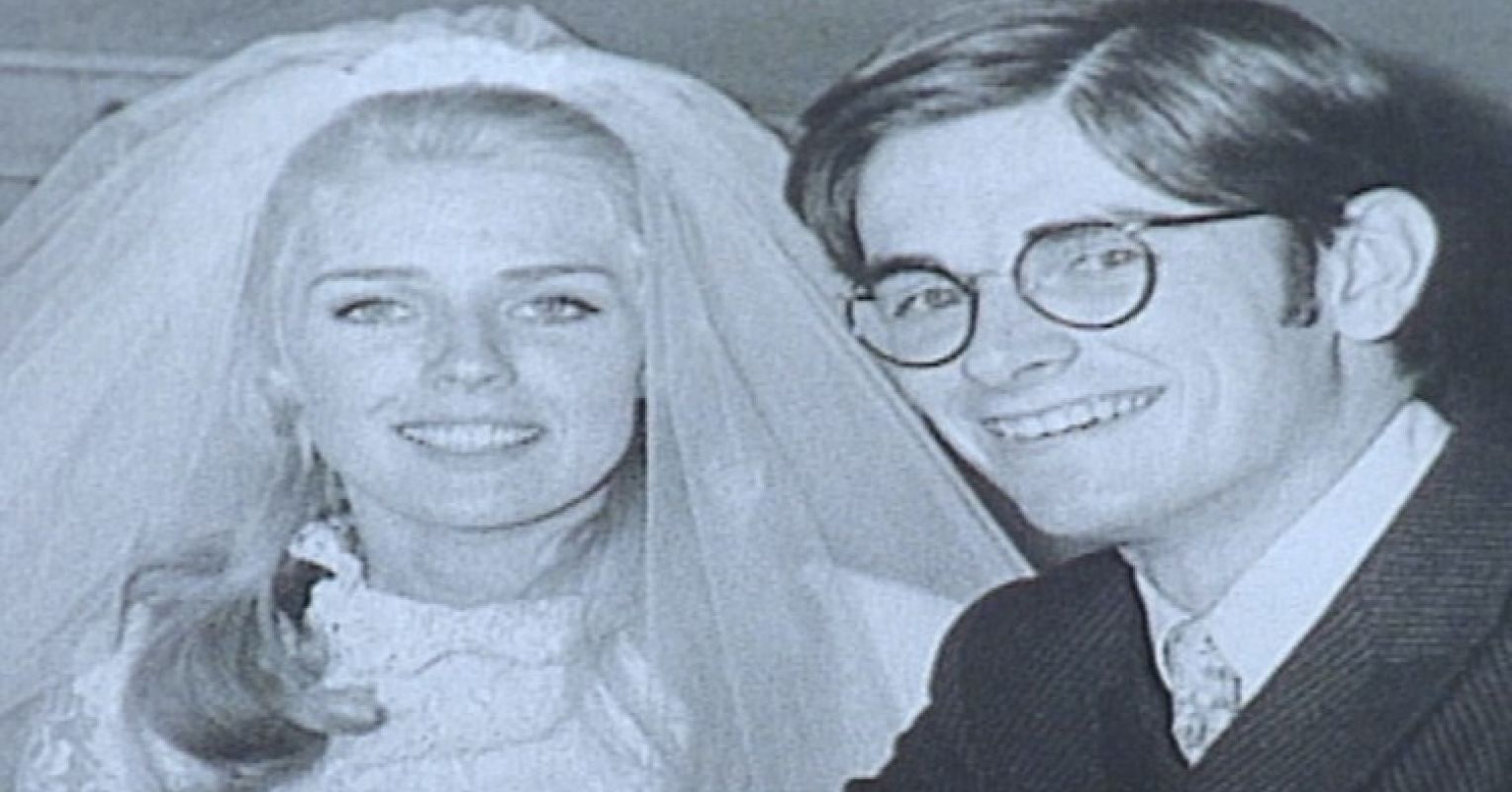
I still remember the first time I heard the story of Betty Broderick, the famous wronged woman who murdered her ex-husband and his new wife as they lay sleeping in their beds. Betty Broderick, one of the most notorious murderers of recent times, died last week at the age of 78, having never tasted the freedom she campaigned for. She was never granted parole, having shown no remorse or comprehension of the fact that she had killed two people in cold blood. Decades after the murders, Betty still seethed with fury at the injustice of having spent her youth supporting her husband Dan, putting him through medical school and law school, raising their children and enduring years of hardship, only for him to leave her for a younger version of herself and discard her on the scrapheap of life as she entered middle age. Betty Broderick had truly been traded in for a newer model. Anyone who saw Dan Broderick’s new young wife, Linda Kolkena, was struck by her uncanny resemblance to Betty herself.
When I first heard the chilling story of Betty Broderick’s catastrophic fall from grace, I had just been unceremoniously dumped myself, albeit I was only 22 and not 40 with three kids. But that particular brand of fiery rage at rejected love made me resonate somewhat with the ranting, raving Broderick, who could never come to terms with the betrayal and decided it was better to murder than to move on. Betty was a cautionary tale of how not to handle a breakup. But as time moved on, our understanding of the psychological underpinnings of the Broderick case evolved. Betty Broderick was possibly one of the most extreme examples of what author Colette Dowling termed the Cinderella Complex.

I have often wondered whether Betty Broderick ever read The Cinderella Complex, as it was released in the early 1980s, right around the time Betty’s marriage fell apart and her downward spiral began. It was an instant bestseller, with Betty Friedan herself praising it: “The Cinderella Complex will touch a nerve with many women.” It wouldn’t so much touch a nerve with Betty as describe her own marital story to a tee. There is one story in the book so similar to Betty’s that I have always wondered: If she had read it and realised how common her situation was, would that have made any difference to her story’s terrible outcome?
Dowling interviewed a woman she called “Carolyn Burckhardt,” who gave up her dreams of becoming an opera singer to marry a promising academic, “Helmut Anderson,” who was clearly on the rise. She put her career on hold, just like Betty had, and poured everything into her husband’s aspirations and child-rearing. After years ensconced in domestic life with no income and total financial dependence on her husband, Helmut began to resent Carolyn:
Somehow eight years went by…she was thin and taut, her hair no longer thick as it had once been. The velvet skin of girlhood had begun to lose its lustre. Carolyn could not find the words to articulate that she was neither girl nor woman anymore; that, living in the timeless limbo of service to another, she was a creature utterly without autonomy.
What many people don’t know about Betty Broderick is just how much she sacrificed to build the life they shared. Betty supported Dan through not only law school but medical school too, working until the day she gave birth; at one point she even ran a kindergarten from their home. It was Betty who funded Dan’s ambitions and worked her fingers to the bone to see him succeed. And just as with Carolyn in The Cinderella Complex, Betty was discarded the moment her husband reached the summit she had helped him climb.

Dowling writes of Carolyn’s husband:
He was publishing regularly now, he was being spoken of in his field. Instead of this boosting him, he complained to several of his most intimate colleagues at Yale that his wife and family were holding him back…He was beginning to feel that his wife was a failure.
And exactly like Dan Broderick, once Helmut tasted success he began to cheat and discarded Carolyn like a worthless object that had served its function:
As a result of her dependency, Helmut got away with murder. A petty tyrant whose every wish was acceded to, he wasn’t even faithful to her anymore.
Dowling sums up Carolyn’s predicament plainly:
From the day Carolyn Burckhardt had met Helmut Anderson she had not made one independent decision concerning her own life. She had become a helpmate, a grown-up in name only. But by the time she was several years into the marriage, her phobic avoidance of life had increased to the point where she had given up all authority and handed it over to Helmut, who she hoped would save her.
In Betty Broderick’s autobiography, she describes how Dan similarly began his affair and voiced his newfound contempt for his wife upon achieving the success they had both spent years working towards:
Wishing to share his sense of misery and entrapment with me, just in case I was unaware of it and might, even worse, have been somewhat pleased with life, he announced to me that ‘seven different women asked me out for my birthday.’ I wouldn’t bite, so I just answered, ‘That’s nice, Dan.’ Annoyed, he expounded on his theme. ‘You know, women are waiting in line to replace you.’ I shook my head and repeated, ‘That’s nice, Dan.’ Frustrated by my lack of reaction, he began trying to humiliate me in public by introducing me as ‘his current wife’ at parties. He blamed me for his unhappiness, and so, in his mind, everything that followed seemed justified.
One might be tempted to think these stories belong to a bygone era: Carolyn’s story was from the 1970s, Betty’s from the 1980s. Surely we’ve moved on. But a quick glance at TikTok or any social media platform tells a different story. A few years ago, a viral TikTok trend set to the audio of a woman declaring she was “looking for a man in finance, trust fund, 6’5″, blue eyes” captured the mood perfectly. The song became an anthem for a generation of young women openly advertising their desire to marry wealthy men and opt out of financial independence entirely. It was meant to be tongue-in-cheek, but the comments sections told another story.
This isn’t a judgement on women who choose partnership over career or who build a life alongside an ambitious partner. But The Cinderella Complex was written precisely to name what happens when that choice is made from fear rather than freedom, when women outsource their autonomy and make themselves wholly dependent on a man’s goodwill, success and faithfulness. Betty Broderick is the most extreme version of where that road can lead. She didn’t just lose her marriage; she lost her identity, her agency and ultimately her freedom, all in service of a man who replaced her the moment she was no longer useful. Before you go looking for a man in finance, it is worth asking yourself honestly: What happens to you if he decides, one day, that you’ve served your purpose?
