


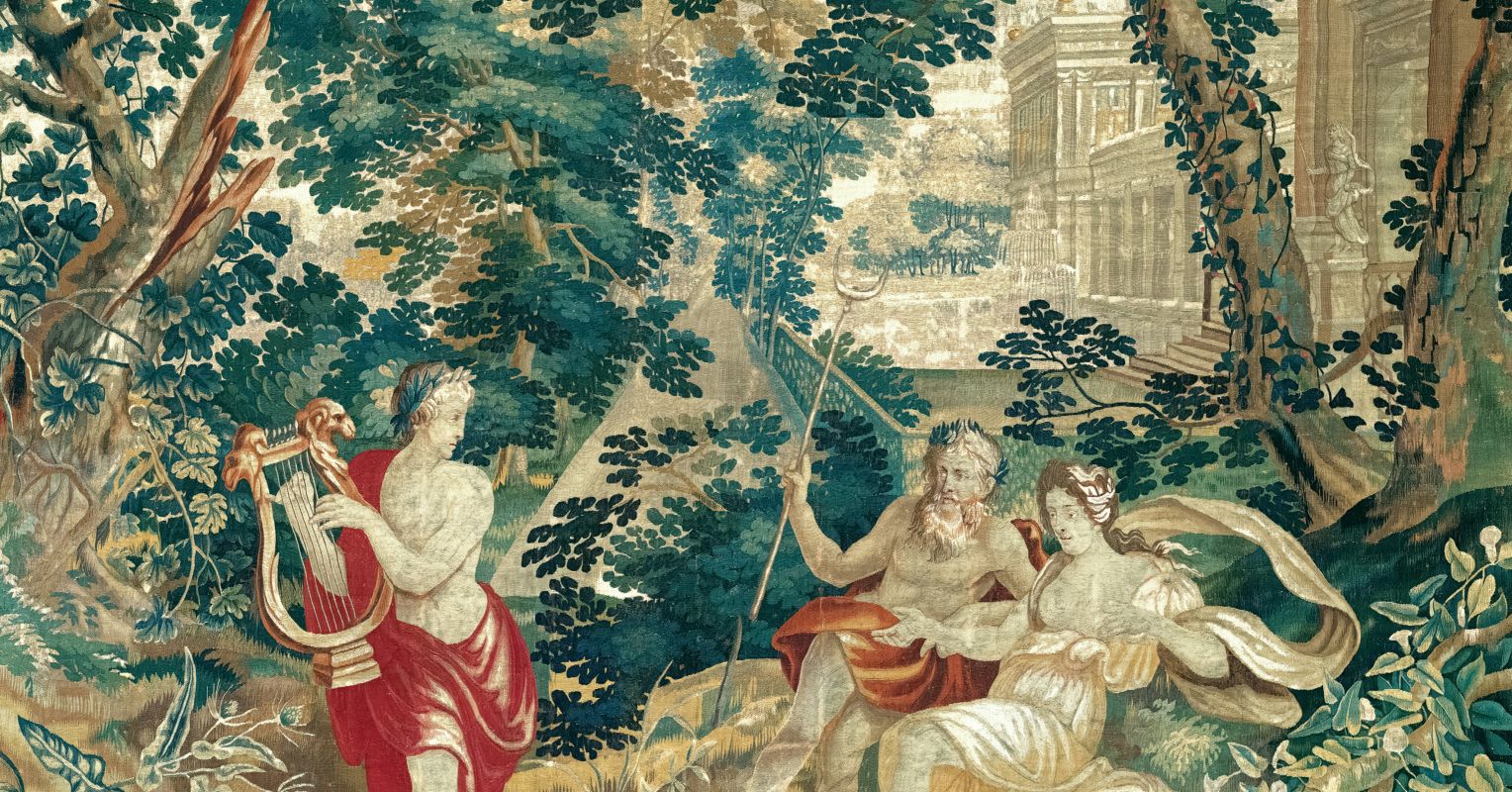
Many of us spend years trying to acquire the right career, friends, hobbies, interests, romantic partner(s), and even a highly specific coffee order. Then, rather inconveniently, something within us stops wanting any of it. Suddenly, relationships sever, the job feels wrong, our interests change, and the old ambitions have become strangely outdated. Even our half sugar, no whip, pumpkin spice latte made with oat milk seems to belong to someone else we no longer recognize.
In these situations, we can witness how death is psychologically present long before biological death arrives within our lifespan.

Carl Jung, the pioneering founder of analytical psychology, was fascinated by the persistent appearance of death and rebirth imagery throughout mythology, religion, dreams, ritual, art, culture, and inner life.1 What interested him was what this persistent imagery implied about our own psychology; that the psyche possesses its own transformative intelligence, and that this intelligence is oriented toward a centre other than the rational mind, or what can be referred to as our small ‘i’ (ego). Jung named that centre of the human psyche the Self.
The negotiation between the egoic rational mind and the Self is where the death and rebirth motif lives for most of us.
Psychological Deaths
We typically experience many symbolic, intangible, and psychological deaths throughout our ordinary lives. As adults, our childhood eventually disappears, an identity that once organized our life stops fitting for whatever reason, and we may lose ways of relating that existed inside a particular community or familial role.

Sometimes these symbolic deaths can be chosen, but for most of us, they often arrive without our consent. I don’t think it’s a stretch to say that most of us have both mercifully and tragically outlived certain fashion trends; the point here being that there are moments in life when something that once gave our lives structure simply no longer does. So, what ends is a structure of identification.
Jungian analysts and depth psychotherapists often describe human development as a psychological process where our ego is periodically dismantled and reconstituted to something larger, and to something it does not author. In other words, life transitions often feel larger than their presenting circumstances; a job ending, for example, is often an initiation into not knowing one’s own identity or worth in Western society.
I also find the language we use for these transitions to be illuminating, as it is common to hear people describe this process as letting go, shedding an old self, being reborn, starting over, losing oneself, or becoming someone new. These statements precisely capture the death and rebirth archetype that Jung was referring to.
The Space In-Between
My colleague and I previously wrote about how past cultures have taken this archetypal pattern seriously, and how other human civilizations successfully built containers for these types of threshold experiences.2 These in-between times are so structurally ambiguous, where people are no longer who they once were, and they are not yet what they will be.
In our modern era, we have continued to experience these life transitions like our ancestors, but now many of us no longer have the support we need for these liminal times. Many experience psychological death-and-rebirth periods with no name, and often within communities that only see them as problems to be immediately corrected or rationally solved.
Interestingly enough, Stanislav and Christina Grof made this the centre of their clinical argument within the field of transpersonal psychology: Episodes of psycho-spiritual transformation are frequently met as pathology alone within many clinical spaces, and it’s often because the clinician lacks a framework in which a person coming apart might also be a person who is being reorganized at a deeper level.3 If we only see distress through a lens of deficit, then the meaning of the distress can easily be lost.
Psychological Rebirth
Jung’s writings highlight how rebirth is not simply restoration, but a process of renewal through which the psyche is fundamentally changed.1
The myth of Persephone offers a striking image of this transformation, as her descent into the underworld is not chosen; she is abducted and taken there against her will. After eating the pomegranate seeds, she cannot simply return to the life she knew before, and she must return to the world above while remaining bound, in some sense, to the world below. Persephone embodies the tension of psychological transformation itself: descent and return; loss and renewal; the self we were and the self that emerges.
This provides us with an image of psychological development that is very different from simply acquiring more coping tools or trying to recover who we were before a period of significant change. Persephone reminds us that it is the experience of the descent itself that changes us, and that transformation may require us to hold the tension between what has ended and what is emerging, rather than try to resolve it too quickly.
It is also imperative to recognize how emotionally distressing and profoundly uncomfortable it is to enter the stretch of time between a psychological death and rebirth. As a result, many of us want to quickly convert our ending into a new beginning, as there is no glamour, praise, fun, or ease in not knowing who we are becoming. Yet, I have found in my clinical work that the psychological task here is often to resist immediately filling the void, and to actively grieve what has psychologically died.
Returning to Self
In the middle of these difficult life passages, people in my consulting room have often reported something interesting: a unique type of awareness that persists while an old identity dissolves and dies. To me, this illuminates how our rational minds are clearly not the whole of us, and that it is truly possible for us to survive an aspect of our ego dying.
I think it’s fair to say we often encounter endings long before we fully understand what they are preparing us for.
