


You might not realize how deeply ingrained communication barriers affect your interactions. These obstacles, stemming from psychological nuances and cultural contexts, can distort messages and foster misunderstandings. Consider how language differences, emotional states, or even technological limitations influence your ability to connect. As you navigate these complexities, it's essential to reflect on your own role in perpetuating or overcoming such challenges. What strategies can you employ to enhance clarity and foster understanding? Exploring this question could lead to profound insights into your communication habits and their broader implications.
Understanding Communication Barriers

Steering through the complexities of communication often reveals a myriad of barriers that can impede understanding. You might find that these barriers stem from various sources, including psychological factors, social dynamics, and cultural differences. It's essential to recognize that each individual carries unique experiences, beliefs, and emotions that shape their perception of messages. Cognitive disorders, such as those affecting memory and attention, can greatly exacerbate these challenges, making effective communication even more difficult cognitive rehabilitation strategies.
For instance, cognitive biases can distort interpretation, leading you to misinterpret intentions or meanings. When you approach a conversation, your preconceived notions can cloud your judgment, causing you to overlook vital context. Similarly, emotional states play an important role; anxiety or anger can hinder your ability to listen effectively, contributing to misunderstandings.

Moreover, the social environment can further complicate interactions. Power dynamics, group norms, and interpersonal relationships influence how messages are conveyed and received. You may hesitate to express yourself fully in hierarchical settings, thereby stifling open dialogue. Cultural differences also present challenges, as varying communication styles and values can lead to misalignments in understanding. By acknowledging these barriers, you can actively work to enhance your communication strategies, fostering a more empathetic and effective exchange of ideas.
Types of Communication Barriers
When you communicate, language differences can create significant obstacles that hinder understanding. Likewise, cultural misunderstandings often lead to misinterpretations, affecting the dynamics of your interactions. By recognizing these barriers, you can better navigate complex conversations and foster clearer connections.
Language Differences
Language differences act as important barriers in communication, often leading to misunderstandings and frustration. When you encounter someone who speaks a different language, you might find it difficult to convey your thoughts or emotions accurately. This gap can create a sense of alienation, as essential nuances may be lost in translation. Psychological theories suggest that language is not just a tool for communication; it shapes our perceptions of reality. When you struggle to express yourself in a foreign tongue, your cognitive processes can become hindered, resulting in reduced clarity and effectiveness. These challenges reflect broader issues related to cognitive disorders, where impairments in communication can greatly impact daily functioning and emotional well-being, as seen in cognitive rehabilitation efforts.

Moreover, language differences can lead to an increased cognitive load, causing stress and anxiety. You may second-guess your words or rely on simplistic phrases, which can further distort the intended meaning. This psychological pressure can inhibit your ability to engage fully in discussions, leading to feelings of inadequacy or frustration.
Additionally, even within the same language, variations in dialects or jargon can create barriers. You might find it challenging to understand colloquialisms or industry-specific terms, further complicating interactions. Recognizing these linguistic hurdles is vital for improving your communication skills and fostering more meaningful connections.
Cultural Misunderstandings
Cultural misunderstandings can greatly hinder effective communication, often stemming from differing social norms and values. When you interact with individuals from diverse backgrounds, it's essential to recognize how cultural frameworks shape perceptions and behaviors. For instance, the impact of trauma on cognitive development can further complicate interactions, as past experiences can influence how messages are interpreted. Your interpretations can easily misalign with someone else's intentions, leading to confusion or conflict.

Consider these factors that contribute to cultural misunderstandings:
- Non-verbal cues: Gestures and facial expressions can carry different meanings across cultures.
- Context dependency: High-context cultures may rely heavily on implied messages, while low-context cultures prefer directness.
- Value systems: What's deemed respectful or offensive varies considerably, influencing how messages are received.
- Communication styles: Some cultures prioritize assertiveness, while others value harmony and indirectness.
Understanding these elements is critical for fostering effective communication. When you gain insight into another culture's values and norms, you develop empathy, reducing the likelihood of misunderstandings. Remember, effective communication isn't just about the words you use; it's about bridging cultural divides by acknowledging and respecting differences. By being aware of these barriers, you can navigate conversations with greater sensitivity, enhancing connection and collaboration.
Cultural Differences and Misunderstandings
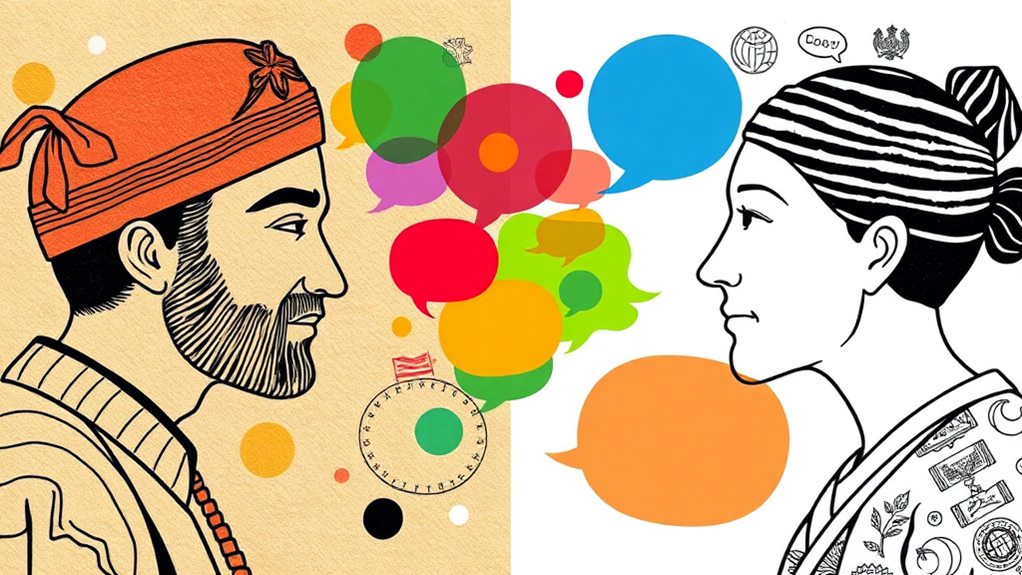
Understanding cultural differences is essential, as these variations can lead to significant misunderstandings in communication. When you interact with individuals from diverse backgrounds, your assumptions about social norms, values, and behaviors may not align with theirs. This disparity can create confusion and conflict, undermining your ability to connect effectively. Additionally, being aware of cognitive dissonance can help you recognize how conflicting beliefs may further complicate your interactions, as individuals may struggle to reconcile their cultural norms with those of others, leading to stress and misunderstanding in communication psychological conflict.

Cultural dimensions, such as individualism versus collectivism, influence how you perceive responsibility and relationships. In individualistic cultures, personal achievements are celebrated, while collectivist cultures prioritize group harmony. If you don't recognize these differences, you might misinterpret a colleague's focus on group consensus as indecisiveness.
Moreover, non-verbal communication varies widely across cultures. Gestures, eye contact, and personal space may carry distinct meanings that could lead to unintended offense. For instance, what you consider a friendly gesture could be seen as intrusive in another culture.
Being aware of these factors allows you to navigate cross-cultural interactions more sensitively. By adapting your communication style and remaining open-minded, you enhance your ability to foster understanding and collaboration, ultimately reducing the likelihood of misunderstandings and improving interpersonal relationships.
Language Barriers and Translation Issues

Even when you navigate cultural differences effectively, language barriers can still pose significant challenges in communication. These barriers can lead to misunderstandings, frustration, and even conflict. You might find that words carry different meanings or connotations across languages, complicating your interactions. This complexity often requires careful translation, which isn't just about words; it involves context, tone, and intent.
Consider the psychological impact of these barriers:
- Misinterpretation of messages can erode trust and rapport.
- Feelings of frustration may arise when expressing complex ideas.
- The fear of making mistakes can inhibit open dialogue.
- Cultural nuances may be lost in translation, affecting relationships.
Addressing language barriers requires more than just learning a new vocabulary; it calls for an understanding of the underlying cultural context. Effective communication hinges on your ability to bridge these gaps, fostering a deeper connection. By recognizing the psychological effects of language barriers, you can approach conversations with empathy and patience. This awareness not only enhances your communication skills but also enriches your relationships across diverse linguistic landscapes.
Nonverbal Communication Challenges


Nonverbal communication can often lead to misunderstandings, as body language varies considerably across cultures and personal experiences. You might find that a gesture you perceive as friendly could be interpreted as offensive in another context, creating friction in interactions. Additionally, the tone of voice you use carries emotional weight that can dramatically alter the message's reception, complicating your attempts to communicate effectively.
Body Language Misinterpretations
Body language plays an essential role in how we communicate, often conveying more than words themselves. However, misinterpretations can arise, leading to misunderstandings that hinder effective communication. You might think you're expressing openness, but your crossed arms could signal defensiveness to someone else. These discrepancies can greatly impact interpersonal relationships and professional interactions.
Consider these common misinterpretations:
- Facial Expressions: A neutral face may be perceived as disinterest or annoyance.
- Eye Contact: Direct eye contact may be interpreted as confidence, but for some, it can feel intimidating.
- Posture: Leaning forward could indicate engagement, while others might see it as invading personal space.
- Gestures: A thumbs-up in one culture could be offensive in another.

Understanding these nuances is vital. You need to be aware of your body language and how it might be perceived by others. It's not just about what you say; it's about how you present yourself nonverbally. By developing awareness, you can minimize misinterpretations and foster clearer communication, enhancing both your personal and professional interactions.
Cultural Differences Impact
Across diverse cultures, nonverbal communication can vary considerably, leading to potential misunderstandings. You might interpret a gesture in one way, only to discover that it conveys a completely different message in another culture. For instance, while maintaining eye contact is often seen as a sign of confidence in Western cultures, it can be perceived as disrespectful in some Asian cultures. This divergence highlights the psychological underpinnings of cultural norms, where nonverbal cues are deeply rooted in historical contexts and social structures.
When you engage with individuals from different backgrounds, you must remain aware of these cultural nuances. Misreading a simple nod or a hand gesture could result in confusion or offense. The theoretical framework of intercultural communication suggests that these nonverbal behaviors stem from varying cultural values—collectivism versus individualism, for example.

To navigate these complexities, you should adopt a mindset of curiosity and openness. Observing and adapting to the nonverbal cues of others can foster better understanding and reduce the likelihood of miscommunication. Ultimately, recognizing and respecting cultural differences in nonverbal communication is essential for successful interactions in our increasingly globalized world.
Tone of Voice Issues
Understanding cultural differences in nonverbal communication is only part of the picture; tone of voice plays a pivotal role in conveying messages and emotions. Your tone can shift the interpretation of your words, influencing how your audience perceives your intent. This is particularly true in contexts where verbal and nonverbal cues intersect, often creating ambiguity.
Consider these aspects of tone of voice that can lead to communication barriers:
- Pitch: Higher pitches may signal excitement or anxiety, while lower tones can convey authority or calmness.
- Volume: Speaking too softly might suggest insecurity, while excessive loudness can be perceived as aggression.
- Pacing: Rapid speech can indicate urgency but may also come off as nervousness; slow speech can reflect thoughtfulness or condescension.
- Emotion: A flat tone might imply boredom or disinterest, while a warm tone fosters connection and engagement.
Technological Barriers in Communication
Technological barriers in communication can considerably hinder effective interaction, often leading to misunderstandings and frustration. You might find that reliance on technology can create gaps in clarity, especially when messages are conveyed through text without the nuances of body language or tone. The absence of immediate feedback in digital communication can lead to misinterpretations, as you may not grasp the sender's intent without visual or auditory cues.
Moreover, the speed at which technology evolves can create discrepancies in communication skills. If you're using outdated platforms or tools, you may struggle to connect with peers who are more adept with modern technologies. This gap can foster feelings of exclusion or inadequacy, further complicating interactions.
Additionally, issues like connectivity problems or software malfunctions can disrupt communication flow. When you experience delays or dropped connections, your ability to convey thoughts effectively diminishes. This can result in frustration and a sense of isolation, as you may feel unable to express yourself fully.
Ultimately, recognizing these technological barriers is the first step toward mitigating their impact. By adapting your approach and seeking alternative methods, you can enhance your communication effectiveness in an increasingly digital world.
Psychological Factors Affecting Communication

While technological barriers can impede communication, psychological factors play a significant role in shaping how we interact with others. Your thoughts, feelings, and beliefs influence not just what you say but also how you perceive messages from others. Understanding these psychological elements can enhance your communication skills and foster better relationships.
Consider these psychological factors:
- Perception: Your interpretation of messages is often colored by personal experiences and biases.
- Emotional State: Feelings like anger or anxiety can distort your ability to communicate effectively.
- Cultural Background: Different cultural norms can shape your expectations and responses in conversations.
- Self-esteem: A lack of confidence may make you hesitant to express your thoughts or engage openly.
These factors can create barriers that hinder clear communication. When you're aware of your psychological influences, you can better navigate interactions and work toward mutual understanding. Remember, effective communication goes beyond words; it involves a complex interplay of mental and emotional elements that shape your interactions with others. By acknowledging these influences, you position yourself to communicate more effectively.
Overcoming Communication Barriers
Overcoming communication barriers requires a strategic approach that addresses both the psychological and contextual elements influencing interactions. You need to recognize that personal biases, emotional states, and preconceived notions can distort your understanding. Start by cultivating self-awareness; this enables you to identify your own barriers and how they affect your communication.
Next, consider the context of your interactions. Environmental factors such as noise, physical distance, or cultural differences can hinder effective communication. Adapt your approach based on these situational variables. For instance, if you're communicating in a noisy environment, you might choose to use non-verbal cues or written communication instead.
Additionally, practice active listening. This involves not only hearing the words but also understanding the underlying emotions and intentions. Paraphrasing what the other person says can help clarify misunderstandings and demonstrate your engagement.
Building Effective Communication Skills

Effective communication skills are fundamental for fostering understanding and collaboration in both personal and professional settings. To enhance your ability to connect with others, you need to focus on several key components. This includes active listening, which involves giving your full attention to the speaker and responding thoughtfully, as well as being mindful of nonverbal cues such as body language and facial expressions. Additionally, using effective communication techniques, like asking open-ended questions and practicing empathy, can help build stronger and more meaningful relationships. By consistently applying these strategies, you can create an environment where ideas and perspectives are shared freely and collaboratively.
- Active Listening: Engage fully with the speaker, demonstrating empathy and understanding. This helps in decoding both verbal and non-verbal cues.
- Clarity and Conciseness: Express your thoughts clearly and directly to avoid misunderstandings. Use simple language and get to the point.
- Body Language: Be aware of your non-verbal signals; they can reinforce or contradict your message. Maintain eye contact and adopt open postures.
- Feedback: Encourage and provide constructive feedback. This not only improves communication but also fosters a culture of openness.
Understanding the psychological underpinnings of communication can further enhance your skills. For instance, recognizing cognitive biases can help you navigate misinterpretations and assumptions that often cloud interactions. Embrace the idea that effective communication is not just about speaking; it's a dynamic process that requires awareness, adaptability, and a commitment to continuous improvement. By honing these skills, you'll create a more inclusive and productive environment in all your interactions.
Read The Next Blog Post –
In today's interconnected world, the ability to navigate communication barriers isn't just an advantage; it's a necessity. By recognizing the psychological and cultural factors at play, you can transform misunderstandings into meaningful exchanges. Imagine a world where clarity reigns and genuine connections flourish—this is within your reach. Embrace active listening and adaptability to dismantle the walls that hinder communication, and watch as your relationships deepen and your understanding of others expands.


