


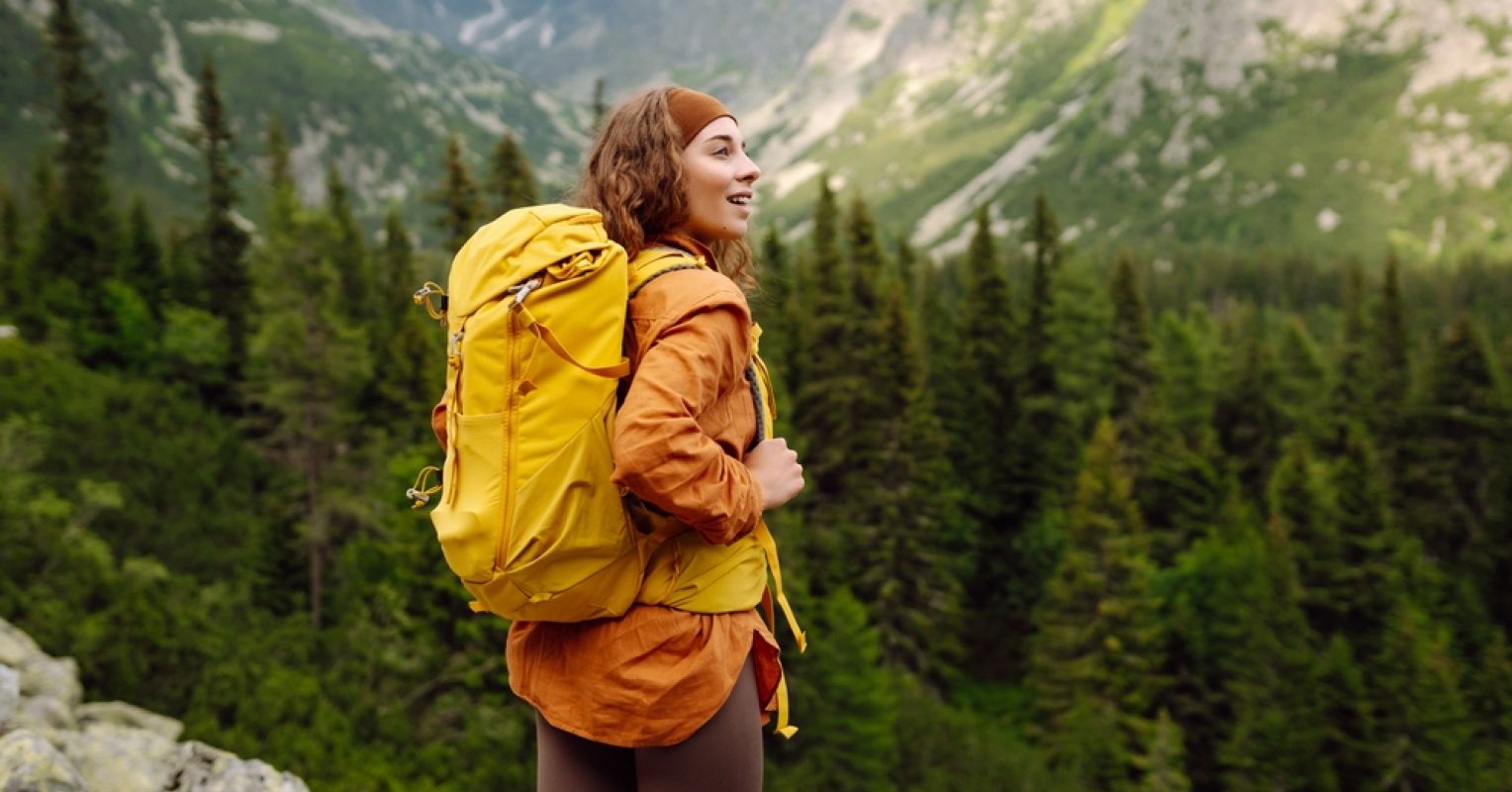
Human beings have apparently always treasured scenic outdoor beauty, and this tendency has only increased as the world has become a more urban place. One of the benchmarks of the English Romantic movement of the early 19th century was the belief that nature had an uplifting, comforting, and beneficial effect on us. Romantics, who were almost all city dwellers, sought out natural settings and painted and wrote about the magnificent feelings those settings inspired.
Nature Can Inspire Awe
The most dramatic aspects of nature, especially mountains and the sea, have long induced a mixture of awe, fear, and reverence in people. According to the geographer Yi-Fu Tuan, virtually every society has had a sacred mountain that served as a focal point in its cosmology: Mounts Olympus (Greece), Meru (India), Tabor (Israel), and Fuji (Japan) are but a few examples. The legends from different cultures are particularly revealing. Moses received the Ten Commandments on a mountaintop, and it was on a mountain that Abraham prepared to sacrifice his son, Isaac, to Yahweh. Noah’s Ark came to rest on a mountaintop, and it was in the mountains that Jesus was tempted by the Devil. Prometheus of Greek Mythology was shackled to a mountain peak by Zeus, and everyone knows that “Mohammed went to the mountain.” The Chinese Emperor Wu (140 – 87 BCE) sacrificed to heaven in the mountains, and it was in the mountains that Dr. Frankenstein pursued his creature and sought tranquility and refuge from his torments.

Clearly, nature in its grandest form has figured prominently in human thinking throughout history.
However, our encounters with nature need not be spectacular to be satisfying to us. Even common everyday encounters with a tree in peak autumn foliage or a flower garden in the full bloom of spring can make us feel good.
Research confirms that outdoor experiences such as hiking or canoeing in beautiful places reduce stress, promote positive moods and feelings, and can even facilitate recovery from illness. Simply viewing pictures of natural scenes can have similar, albeit less dramatic, effects.
The Green Experience

Environmental psychologist Rachel Kaplan describes our encounter with the natural world as The Green Experience. The drive to seek out nature and have the green experience can be very strong, and many of us go to considerable trouble and expense to commune with nature in almost any form.
As I write this post, I am eagerly awaiting a trip to Costa Rica, driven almost entirely by my desire to experience for the first time the wildlife and lush tropical rainforests that I will find there. Closer to home, I regularly notice people sitting in automobiles in our city parks and near our local lake, eating their lunch or simply gazing out the car window with no apparent motivation beyond spending a few moments in the presence of nature.
Nature Restores Us
There are many reasons why nature can have such restorative, therapeutic effects on us. Nature is usually more subdued and peaceful than the complex, stimulating environments that surround most of us in day-to-day life, and it has been proposed that we have been programmed through evolution to respond positively to natural environments. Because patterns in nature are inherently gripping, we do not have to work as hard to screen out and suppress irrelevant stimuli. As a result, we find ourselves more relaxed and at ease in natural surroundings. One of the reasons that it can be annoying to encounter other people in these places is that it “breaks the spell” of solitude and escape that we seek.
The lasting impact of natural environments on individuals is illustrated in a series of studies in which adults were asked to name the places that were most significant to them in their childhoods. In each study, an overwhelming majority of the participants selected outdoor settings such as parks, woods, or seashores as the most significant places of their youth.
So, the next time you are feeling a bit down or simply wish to clear your head of the stressful clutter from a hard day at work, remember that a leisurely stroll in a nearby park may be just what you need.


