


This is Part 3 of a three-part series. Read Part 1 here and Part 2 here.
“You have to find things that you’re passionate about to drive you,” asserted former rock-and-roll musician Lee Mars. “That’s an important factor in getting kids engaged, whatever that may be, so that they can thread the needle and keep going. You have to get the fire lit to keep it going.”

Wise wisdom for young people to achieve true lifetime meaning from a guy who enjoyed success in a wide-ranging musical career.
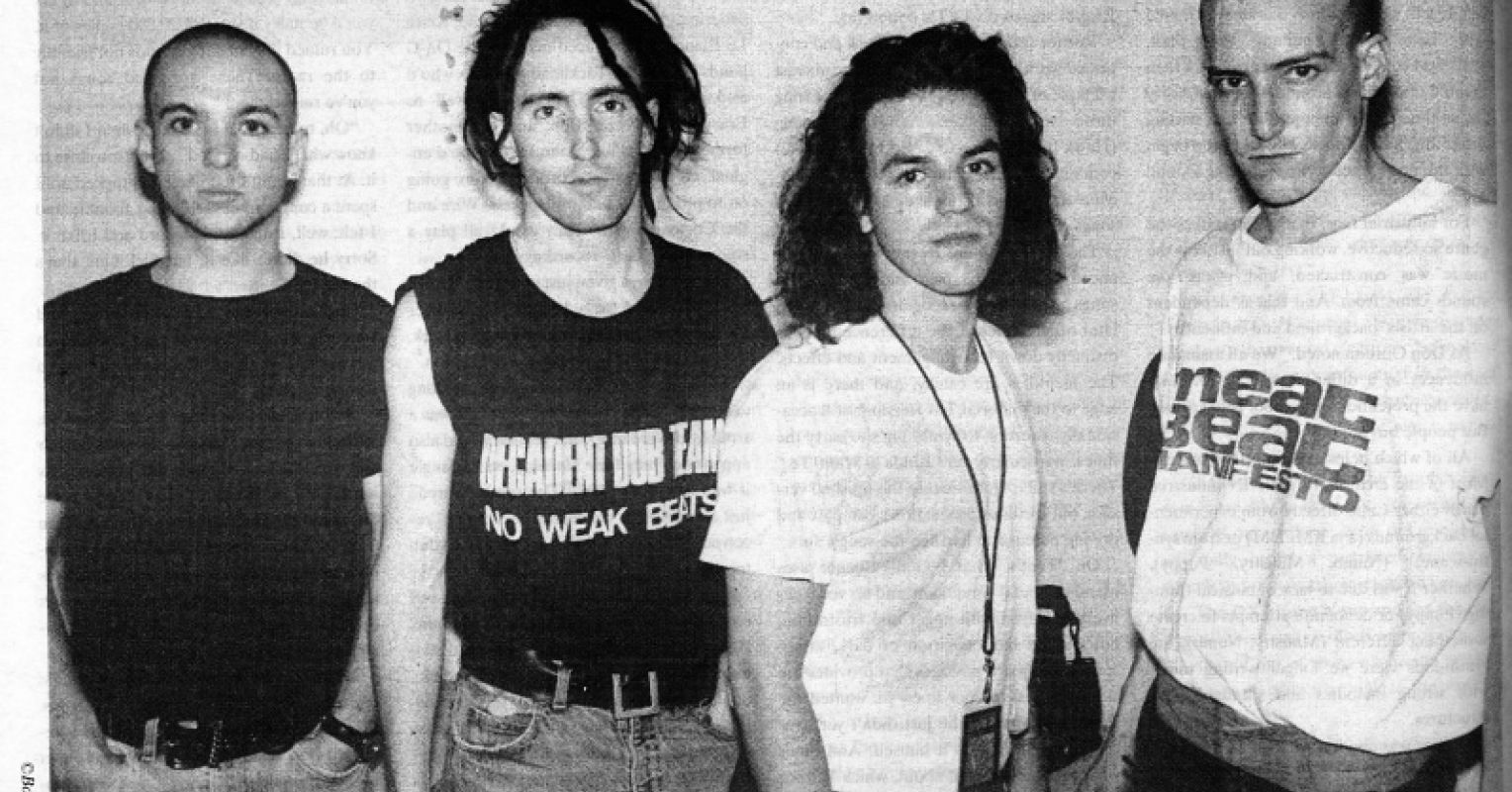
Mars is an early member of Rock and Roll Hall of Fame band Nine Inch Nails, venturing on to do sound engineering work for several popular recording artists, including Bone Thugs-N-Harmony, Eric Carmen, Silk, and Jessica Simpson. He has also done such work for commercials and in the movie industry, including for Jack Black’s iconic film, School of Rock.
Adolescence is a swampland of tough challenges that can throw teenagers, including athletes, into lifelong disarray if they fail to “thread the needle” through difficult obstacles to discover a true passion that empowers their ultimate life meaning.
Setting the Stage

Before taking a deeper dive into Lee Mars’s insights, here’s some background context.
This is the final installment of a three-part series reflecting on the youthful years of a pair of rock-and-rollers—Lee Mars and John Bell. Bell’s insights were detailed in Part 2. He is the frontman and founder of iconic southern rock band Widespread Panic. He recently sang the National Anthem for the Texas-Georgia collegiate football game.
What’s the point of this series? To provide life-guiding wisdom for teenagers, including young athletes, from people who successfully navigated their way through the adolescent swampland and onward to meaningful, successful careers.
Both Mars and Bell were guys I knew during their youth. No, I was not their psychologist. Mars attended a junior high school where I worked in the late 1970s and early 1980s, where I knew most kids in the building. I was John Bell’s camp counselor in the summers of 1971 and ’72.
I’m old, I know….
Both were different from other kids who can get caught up in nonstop attention seeking, popularity, and approval from the cool kids. Such efforts can trap many teenagers in a fruitless, endless loop, in a futile attempt to mitigate their social insecurity. Those pursuits may deliver temporary relief from unpleasant feelings but can give rise to serious problems and interfere with the discovery of personal meaning and passion, undermining long-term success.
“Creepy” is how Bell described such attention-seeking behavior, as detailed in the previous installment of this series.
While they experienced the perfectly normal awkwardness of the teen years, neither Mars nor Bell caved into it. They were too busy “threading the needle” to a meaningful life with their passion for music.
Mars’s Wisdom
“It’s a dance,” as Mars aptly described adolescence. “Kids are constantly figuring out what serves them, and what their voice is. It starts off, maybe, with people pleasing. As a kid—the hormones, there’s so much in play—and trying to navigate all that is difficult. Some people, it takes them in a bad direction, and it can be difficult for them to figure it out.”
“But that’s part of the process,” he continued. “You’re gonna fine-tune how you present yourself, and what your values are, as you learn through mistakes and positive reinforcement. There is a moral code. To have a friend is to be a friend. If you want to have a friend, you have to be loyal to that person. And you’ll find out, if you talk sh*t about them, there’s a trust broken. These are the life lessons that you learn from relationships over time, but it’s a problem if you don’t.
Adolescence Essential Reads
Mars addressed the importance of defining guidelines by moral principles, not an obsessed need for attention, popularity, or fitting in.
“That particular time in the ’80s, the kids were socialized by the culture, the music, the movies, so there’s a strong pull to whatever is happening,” reflected Mars. That’s a timeless phenomenon of youth, not just in the 1980s. Kids get socialized by the prevailing culture they are embedded with.
“You can fall into a trap and fail to launch,” he continued. “Sports in a lot of areas in the country is where the gravitational pull is,” he continued. “A lot of kids get pushed into that direction and may find that’s what they enjoy doing and excel at. Team sports are great, but for some, sports are not the thing that they fit in or excel at.”
Sports can be such a trap. Many kids pursue athletics because everybody else is doing it, and they are seeking peer approval and status. Some are being pushed into it by parents, coaches, and other adults. They may enjoy the sport, but are doing it just to fit in, or to please and avoid upsetting coaches and parents. Those kids end up spending so much time on sports for the wrong reasons and burn out as a result. They never discover or experience things they’re truly passionate about or have a special talent for.
“The sports thing can be problematic,” observed Mars. “Anybody that’s laser-focused at too early an age, that’s really detrimental. Let the kid develop. The kids don’t even get to socialize and hang out because it’s such a strict, regimented schedule.”
A “strict, regimented schedule” forced upon kids by overzealous coaches and parents is exactly what’s going on in today’s world and can be problematic. It deprives young people of choosing and living their own lives.
That was not the experience of Lee Mars. Music was his passion, which he was allowed to discover and pursue on his own accord.

“The power of every musician has an origin story,” explained Mars. “They see someone else doing it, and they’re mesmerized, and they’re captivated by the power of music. How you feel when you listen to music, whether you’re watching somebody play and you see how it captivates an audience, or whether you listen to music and how it makes you feel, and you decide that’s really powerful, and you want to explore that.”
“These are the things that motivate young people to get into that,” he continued. “For me, I remember sitting around at summer camp, and there was a Godfrey guitar being played. Sort of a campfire scenario. I was just blown away. That kind of sparked my interest, and I wanted to be able to play the songs.”
His fire was lit!
Takeaways
Both Lee Mars and John Bell had talent and careers that evolved and thrived from self-discovered meaning and pure passion, not by an obsession with getting attention, fitting in, status, or not disappointing others. This is a lesson we can all benefit from.
Young people and parents, please take note.
- Teenagers: Steer away from the superficiality of attention seeking and popularity and go find true passions and meaning that will “thread the needle” through the perils of normal adolescence. Go light your fire!
- Parents: Empower your kids’ pursuit of a self-defined, impassioned, and meaningful life. Don’t blindly go along with what other families do, pushing your kids into sports or anything else, just because everybody else is doing it.
Amen.
