


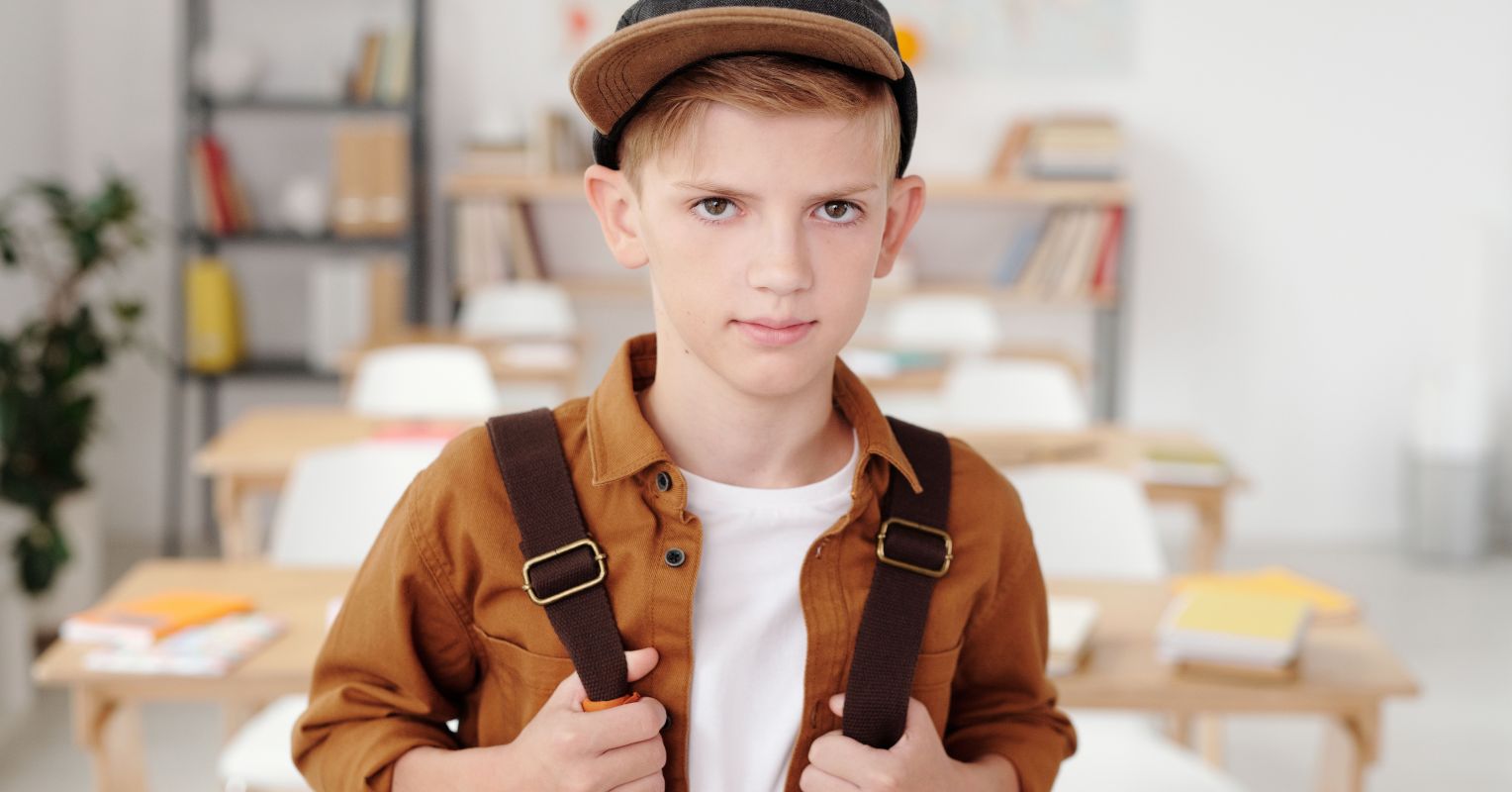
Let’s set the scene. You watch your child walk through the door after getting home from school. You smile and ask, “How was your day?” Imagine your surprise when your child responds, “FINE!” or “Just leave me alone!” You back off, but their younger sibling tries to give them a hug, which they resist. And suddenly… your sweet child is unrecognizable. There are tears. There’s yelling. They tell you they hate you. They run to their bedroom and slam the door.
You are dumbfounded. You reach out to your child’s teacher only to find out that their behavior at school was perfect, as usual. And you’re standing there thinking: What happened to my child? Sound familiar? This is called after-school restraint collapse. This term was developed by Andrea Loewen Nair, a psychotherapist and parenting educator. After-school restraint collapse explains a child who copes well emotionally during school, but when they get home, things get ugly. The child releases their stress and frustration in a dramatic manner. They may throw a temper tantrum, shut down, break objects around the house, or laugh uncontrollably.

This is a difficult situation. Yet your child is not intentionally saving their worst behavior for you. On the contrary. They may finally let go and release their emotions because home is the place where they finally feel safe enough to stop holding everything together. And that distinction matters.
After-school restraint collapse has received quite a bit of attention recently, but the underlying concept isn’t new. It is important to note that after-school restraint collapse is not a medical diagnosis. It is simply a term to describe a pattern of behavior. Children do not have fully developed brains. Their capacity to manage stress, regulate their emotions, and express appropriate behavior can vary tremendously. There is only so much they can take within a given day.
View your child’s ability to regulate themselves physically, mentally, and emotionally as a battery. They wake up with a defined amount of battery life. Then they go to school, where there are rules and expectations. Think about everything that is asked during a typical school day. Sit in your seat. Listen. Complete your work. Wait in line. Raise your hand before talking. Don’t interrupt. Transition to another activity seamlessly. Ignore the kid who is distracting you. Get on the bus. Manage frustration without distracting other students. Each task, each expectation slowly drains the battery.

When your child gets home, that emotional battery may be at 1 percent. And then you say, “How was your day? or “Do you have any homework?” And then everything falls apart. Cue the tantrum. The yelling. The slamming of doors or destruction of property.
Your child’s undesired after-school behavior indicates: “I kept it together all day. I’m spent.” That does not mean children are allowed to be disrespectful or hurtful, or to break things around the house. Understanding behavior is not the same thing as allowing the behavior, and that’s an important distinction. We can enforce, “I understand why this is hard for you, and I’m still going to provide effective discipline.”
If after-school restraint collapse is happening regularly in your home, I want you to experiment with the following five steps:
- Connect
- Refuel
- Validate
- Reduce demands
- Reconnect
Step one is to connect. When your child gets home from school, simply smile at them. Say “I’m happy to see you.” Offer a hug. Resist the urge to ask them questions about their day, at least initially.
Step two is to refuel, physically and emotionally. Offer your child a snack. Give them time and space to decompress, even if that means using an electronic device.
Step three is to validate their emotions. Read their body language. If they seem upset, say something to the effect of, “You seem angry. Do you want to talk about it?” Or, “You seem really happy. I’d love to hear why.”
Step four is to temporarily reduce demands. After school, children need a transition period. Try saying, “Welcome home. Do you need anything from me?” Provide time and space for your child to self-regulate, physically and emotionally. Maybe your child needs to read for 15 minutes. Or jump on a trampoline. Or cuddle with their dog.
Step five is to reconnect and remind them of the tasks at hand. This is important, as it reinforces the concept that children have expectations that need to be met. Homework needs to be completed. The backpack needs to be packed and put away. Teeth need to be brushed, and baths or showers need to be taken.
Parenting Essential Reads
Behavior is a form of communication. Pay attention to the patterns because patterns of behavior are powerful. Don’t judge. Collect data. You might discover: “Yikes. Wednesdays are challenging because band practice starts at 7:30 a.m. and softball practice is from 5:30 to 7:30 p.m. Or, “The days she doesn’t eat much at lunch are consistently harder.” Or, “He does much better when he has 30 minutes of downtime before starting homework. Now you’re not guessing. You’re learning your child.
Greeting your child after school does not need to lead to an emotional meltdown. You can connect with your child without fueling a meltdown.
