


When I was five, on Halloween I dressed up as a cat. My mother sewed my costume from felt and painted whiskers on my face using her black liquid eyeliner. I stood happily in our front yard, excited to try on the identity of someone other than myself. When I was eight, my costume preference changed: I was a nurse. At eleven, I was the Queen of Hearts.
Halloween is a time when many of us transform ourselves into an “other” for a day. Go inside any Home Goods or TJ Maxx right now and you’ll find a plethora of costumes and masks.

The word “mask” is rooted in the ancient Latin term, “persona.” In the early 20th century, Carl Jung defined a persona as a social mask, one that makes an impression upon others while masking one’s true self. (A side note on Jung’s doggedness: As a young man, Jung suffered from debilitating mental health issues. His response to his own suicidality was to engage in self-analysis, which led him to transmute his own pain into purpose: he originated the school of psychoanalytic psychology.) Long ago, stage actors wore masks to represent or project the personality of a character.
Making an Impression on Others
In psychology, the term “enclothed cognition” refers to how what we wear influences our thoughts, feelings, and behaviors, and how what we wear can also influence how others see us. Wearing a suit, for example, may elicit the idea that we are professional, have high standards, or that we belong to a certain social class. Dressing up as a superhero on Halloween may make us feel empowered, creative, or transcendent, and garner respect from others.
Sometimes we’re required to wear a certain outfit for our occupation. The Amazon uniform, for example, includes a company vest, identifying the wearer as its official representative. Such gear emits the philosophy and values of the organization, which may be in conflict with the wearer’s own sensibilities.
Our chosen costumes and masks create responses—thoughts, beliefs, and emotional reactions—in those around us. My dog, Beau, for example, considers everyone who wears a USPS, UPS, or FedEx uniform as safe, good people. He will seek them out on the street, in a building lobby, or in their vehicles, smiling and wagging his tail. However, show him someone dressed as the Grim Reaper, or a drug dealer, and he will bark and lunge and show his teeth.
Deceiving Others
At its worst, masks can trick or deceive: a wolf in sheep’s clothing. In The Wizard of Oz, the “great and almighty” Oz isn’t really “great and almighty,” but small, petty, and weak.
A few years ago, when Beau was attending doggie daycare, on Halloween they had a bobbing for biscuits party with a costume contest. The manager asked me if Beau would be willing to dress up as Sharkboy so that she could be his Lavagirl. She called Beau the daycare’s “best behaved dog.” Beau was not into wearing a costume but he donned some shark fins (which I provided) for a few seconds, looking at the daycare’s camera with what appeared to be ghastliness. Not long after, the manager began drinking on the job and her negligence resulted in a problem dog viciously attacking Beau, causing severe injury. The manager dismissed Beau from daycare and allowed the offending dog to stay. Beau and the manager’s projected Sharkboy-Lavagirl bond had been for appearances only. In reality, it was nothing but a sham.
Concealing or Showcasing Ourselves
Do all masks deceive or conceal our authentic selves? It depends on the wearer. As a five-year-old, I wasn’t a feline species, but my cat costume was an expression of my true self: playful, loving, curious, and at times feisty and defiant.
One study, “Playing Dress-Up: Costumes, Role Play, and Imagination,” found that in wearing costumes, we learn more about ourselves.
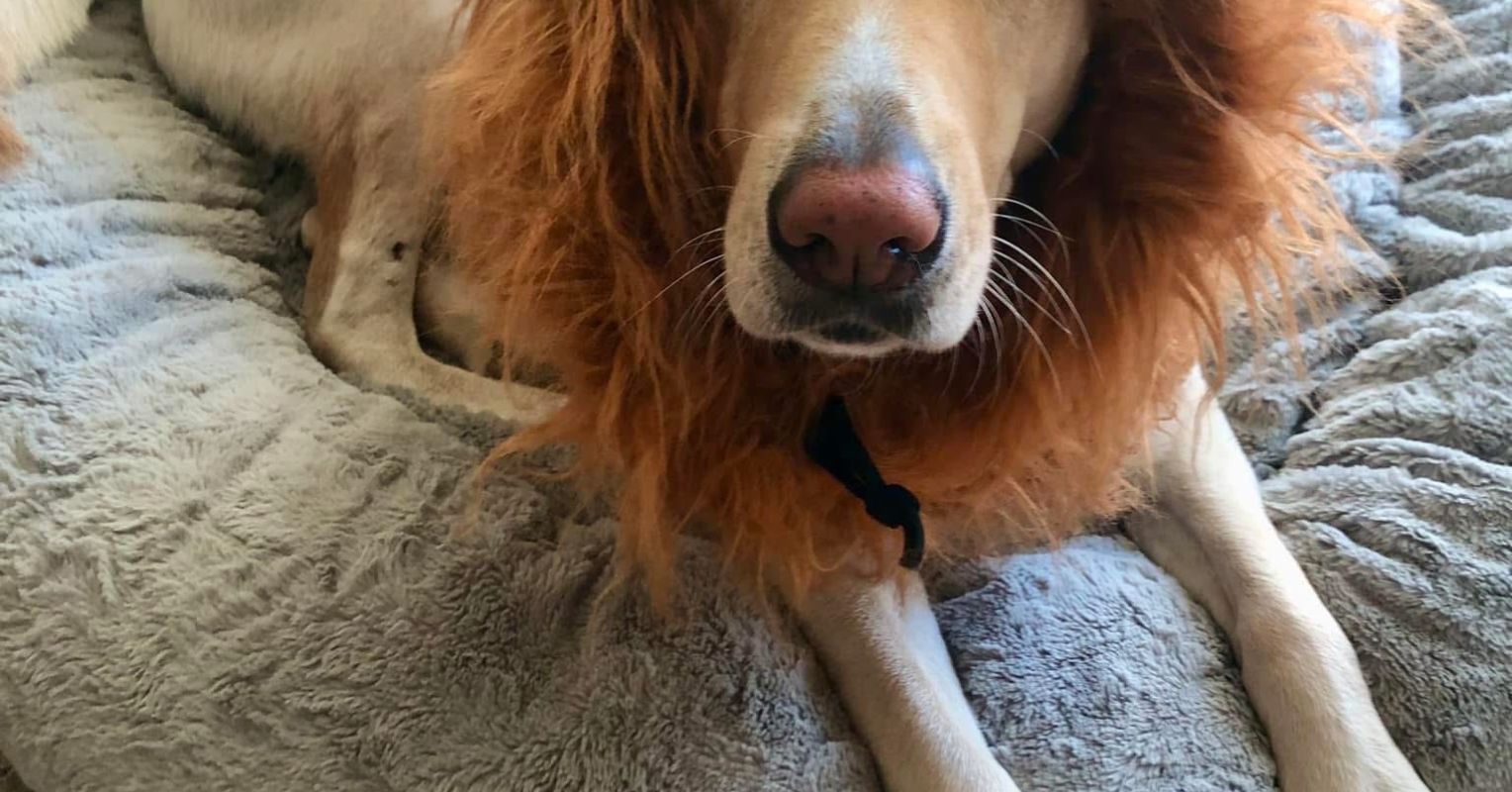
Beau’s preferred costume wear is a lion’s mane. For Halloween, two years in a row, he dressed as the cowardly lion from The Wizard of Oz; although he had an anxiety disorder, as he recovered from the daycare assault, he learned that he had more courage than he ever knew.
Today, Beau prefers to go as himself: a dog. As a dog, his true self is unencumbered by any costume. He doesn’t tolerate masks. He expresses himself in uncensored ways, in any situation.
Over our years together, Beau’s doggedness—of species and of spirit—and has taught me a lot about persisting, unapologetically, as our true selves.
This Halloween, if you find yourself donning a mask or a full costume, take a moment to notice what that mask or costume expresses about your underlying wishes, values, or even your pain. Remember that, at the end of the day, there’s nothing and nowhere to hide. When you remove the mask and doggedly embrace your genuine self, that’s when true transformation, and happiness, happen.
