


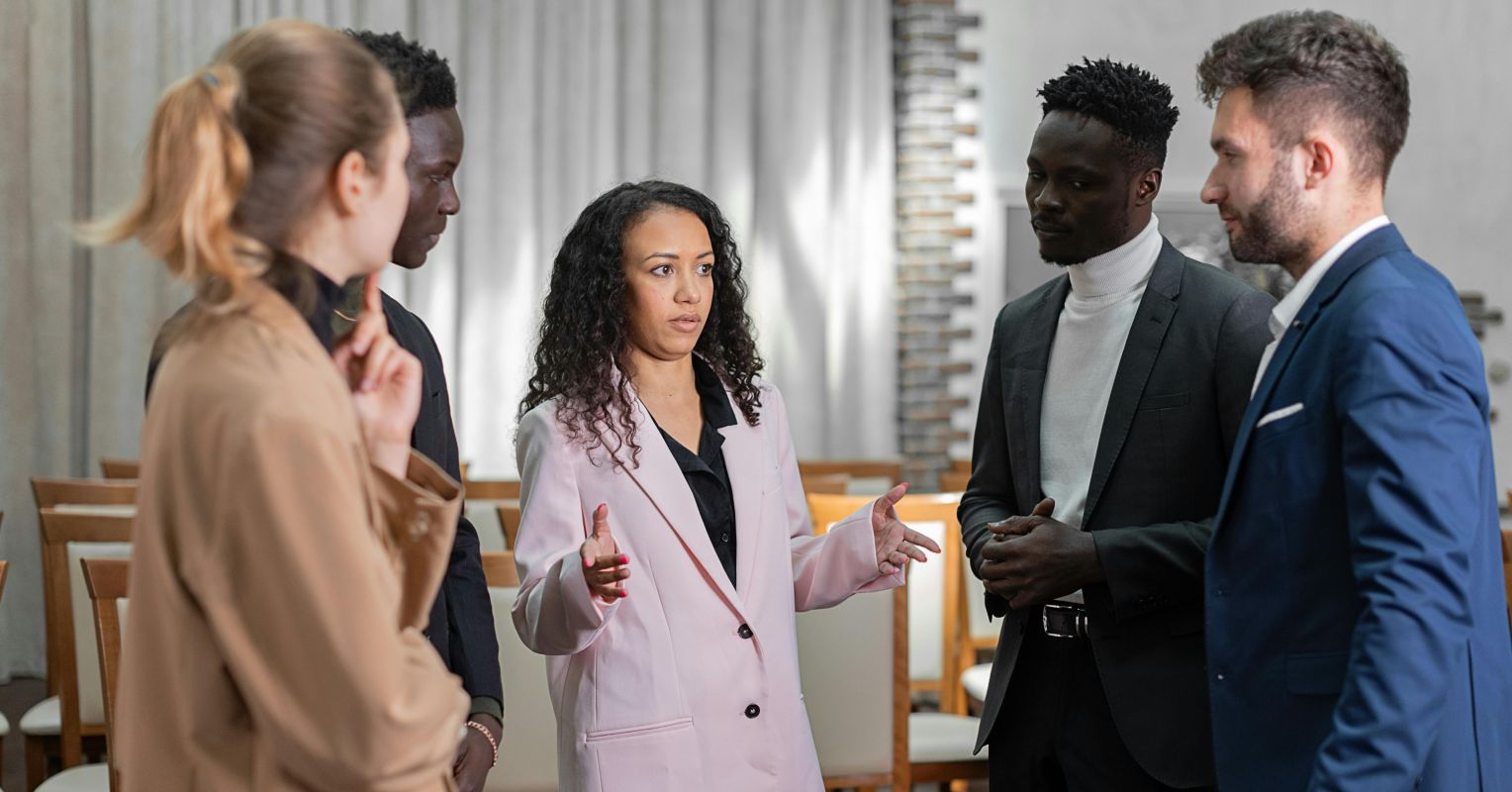
Remembering what was said in a conversation can be considered an indication of how much we care about the people we talk to. As such, remembering conversations helps us maintain our romantic relationships, our friendships, and our collegial connections.
So, how well do we remember conversations? It depends on our level of participation.
Potential Effects of Conversational Participation

Active participation in conversation demands considerable attention.
We need to listen, monitor the understanding of other participants, quickly accommodate changing subjects, and think about what to say next, providing enough context for what we say, but not too much.
It’s possible that being directly engaged in these tasks leads to more active and thorough encoding of what’s being said. It’s also possible that being excused from this cognitive load allows for a more complete and reliable representation of what’s said. Overhearers, for example, do not need to attend to the demands of conversational turn-taking, so they have more attention to devote to the contents of the conversation.
New Research

A 2025 study1 examined for the first time the impact of someone’s conversational role as a speaker, addressee, or overhearer on their subsequent memory of the conversation. One main focus of this study was the difference in memory between active participants and people who were overhearing.
Two conditions in the study are particularly relevant. In one condition, participants directly engaged in three different conversations. In another, the participants overheard these same conversations but did not actively participate. After each conversation, everyone wrote down as much as they could recall from the conversation, trying to remember it word-for-word with as much detail as possible. In addition, they indicated who said what.
Activity Level and Memory: The results clearly show that speakers and addressees recalled significantly more content from conversation than overhearers. As activity level increased, so did recall.
Remembering Who Said What: Overhearers were significantly less accurate than active participants in remembering who said what.
More Agreement Among Active Participants: The content recalled among active participants was more similar than the content recalled by overhearers, which was more variable. This variability may have come about because overhearers included more individual commentary in their memory descriptions instead of details.
Remembering What We Say: Conversational participants recalled significantly more of what they said themselves compared to what was said to them.
Accurate Recall of Gist: In general, everyone remembered the gist of the conversations well, but not the details. Active participants recalled less than half the details, but their detail recall was still more accurate than the recall of those who did not participate.
Common Ground: The lower recall among overhearers came about in part from not participating in the formation of common ground. As conversational participants interact with each other, they learn what information is mutually known, and they develop shorthand ways of referring to this shared knowledge, or common ground. Awareness of the common ground grows as each participant provides information, and this awareness can be assessed by noting how previously mentioned references are shortened as the conversation proceeds.
Notably, in this study, people shaped how they elaborated or abbreviated topic references for those actively participating, but not for those who were more passive or overhearing. Overhearers, in particular, were not part of the collaborative process of forming common ground.
Application to Relationships
Overhearers are not as accurate as active participants in remembering the source of a comment. So if an acquaintance overhears and reports that a particular person made an insulting or undermining comment about you or a romantic partner, that comment can be acknowledged, but then set aside.
Suppose you hear this: “At lunch, I heard Jacob say your office crew thinks you’re really slacking off.” In this case, the statement itself is based on overhearing, and so is Jacob’s initial comment. As such, it has minimal validity.
Legal Implications
Two legal concerns are suggested by this research.
What someone else said can be admitted as evidence in a trial if it’s an applicable exception to the hearsay rules. If so, such testimony would be judged as having the same relevance as statements made out of court by an active witness—a judgment that this research calls into question.2
When a jury observes a prosecutor or defense attorney interrogating a witness, the resulting testimony is essentially an overheard conversation. Of course, members of the jury are attending carefully, and they may receive instructions from the judge, but they are still in the role of overhearers.
