


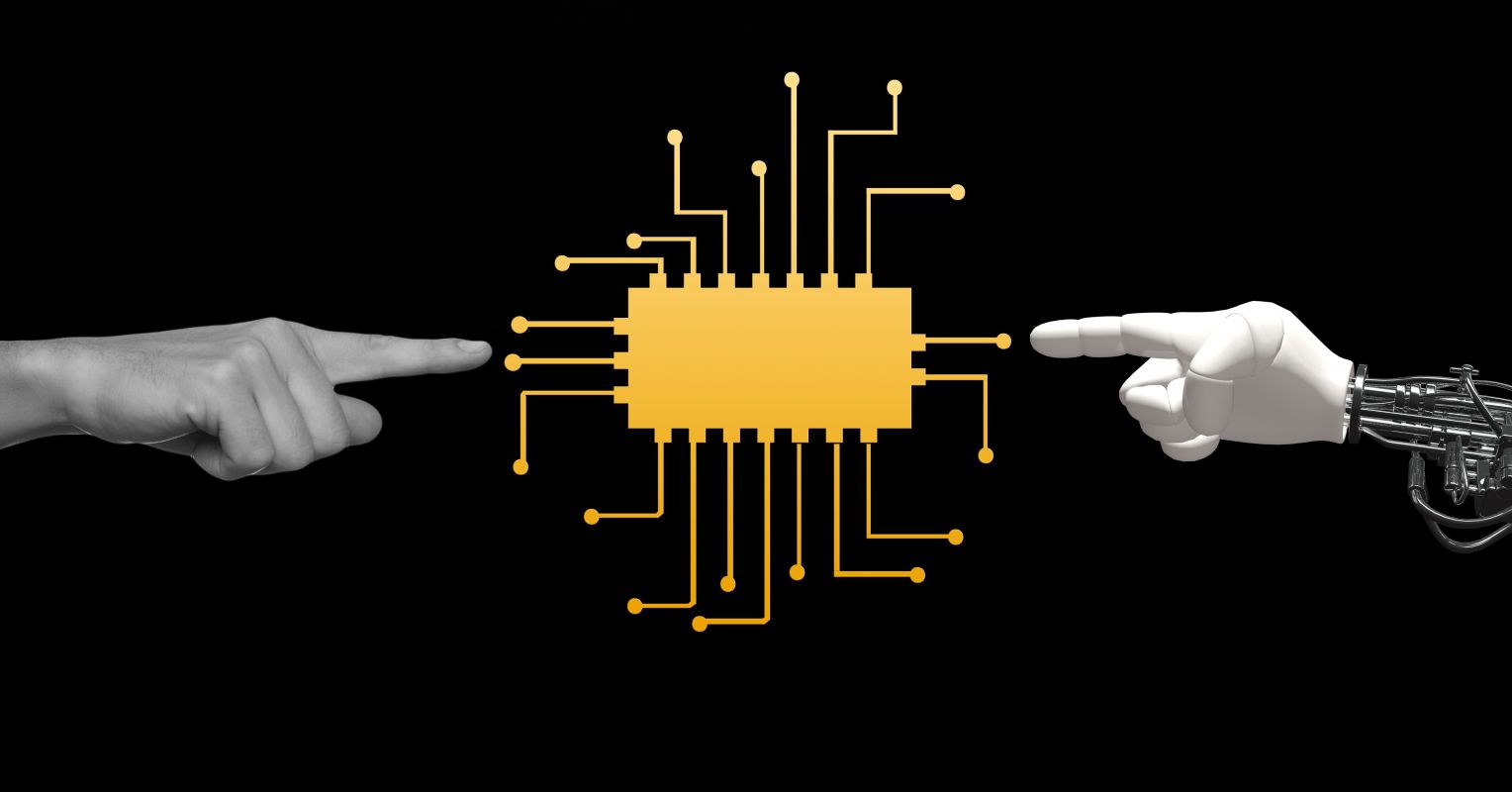
I began writing professionally in 1985, something that feels like a lifetime ago. I was a young copywriter, and the pencil was still very much a tool of my trade. The Macintosh was new, and so was I. In a curious way, we grew up together, and I don’t think that’s inconsequential.
I watched the tools of writing change around me. Pencil and paper gave way to point and click, and eventually the internet and search became integral to the mechanics of writing. I embraced most of those changes But the basic relationship remained rather mechanical and the graphical user interface was a tool to write something. That’s what I thought.

But Large language models changed that relationship, almost overnight. Here was a technology that could work directly with an unfinished idea and do something with it. I could offer the machine a bit of a thought and get something back that might actually move the thought forward.
I jumped in head first, not realizing that my head (brain) was at the heart (soul) of this transformation.
I used LLMs a lot. From the exploration of ideas to a timely debate, I found something that I’d never experienced before. And I wasn’t particularly interested in defending the ownership boundaries around writing. More importantly, I wanted to understand what happened when AI entered the process, with me, for me, and at times, without me.
Knowledge Answers Back

Let me be blunt. In the beginning, I was a techno-optimist and maybe even one of those “tech bros” that populated social media. I became fascinated with an LLM’s ability to move across tremendous bodies of information to bring distant concepts to my screen (and mind).
I eventually described this as the Corpus Cognitionis Humanae. I described how human knowledge was becoming accessible through a conversational interface. Suddenly, we could engage with knowledge rather than searching for it. From there came iterative intelligence, the back-and-forth process through which a person and an LLM can develop an idea. The back-and-forth process, for me, became sort of cognitively hypnotic or even metatative.
I still find this one of the most compelling and fascinating aspects of our interactions with LLMs. We begin with a prompt that is incomplete—by design. Now, what matters next is enlightening. Iteration builds insight and new thinking that can often take us on a journey where neither the path nor destination was previously known
AI didn’t just hand me an answer, it put an unexpected idea in front of me that changed the direction of my thinking.
I’ll argue that this is important and it’s why I’m skeptical of those who reduce AI to just a tool for intellectual outsourcing. My experience doesn’t support that conclusion at all. And after spending enough time inside that cognitive loop, I began to reject this over-simplification. In fact, I’ve recently become more interested in what was happening to the (my) thinking itself—the cognitive addition and subtraction and how that was potentially changing me.
Where Did the Thought Happen?
Think about it. When an idea develops through many iterations with an LLM, it becomes difficult to determine where that thought really lives. I may start with the idea, but what comes back changes what I think next. And there you have a loop in the spirit of Douglas Hofstadter.
I’ve recently described this as thought losing its address. It pushes on the idea that thought has a biological home—there was a thinker somewhere in the process. Now, the recursive relationship with an LLM, particular agentic AI, makes that address less obvious in not downright invisible.
My long career as a writer gives me a unique comparison. I distinctly remember what it was like to have an idea that couldn’t find its way to paper. There was no “second intelligence‘ waiting in the wings with a logical and coherent completion. So, I had to force ahead, often bound to a deadline.
However, some of that cognitive friction was pointless, and appropriately, technology got rid of it. But I’m no longer convinced that all this friction is something you just throw away in the pursuit of efficiency. The rub of the unfinished sentence against that unfinished thought is the friction of progress. And while LLMs are extraordinarily good at shortening that path, I’m not sure we understand everything that disappears when they do.
An Ongoing Surrender
The “displacement” of thought brings me to common claim of cognitive surrender. The phrase defines itself, but what makes this unusual and powerful is that we often don’t notice it happening.
Less cognitive participation can exist along with better cognitive output.
This also connects to another idea I’ve written about, ghost thought. A traditional (and well accepted) ghostwriter writes for you, but the underlying thinking is generally considered to be yours. Ghost thought pushes that construct further. The machine can become the thinker as well as the writer, even presenting the finished idea for our approval. At that point, we haven’t just shortened the cognitive journey but abdicated it.
The unsettling part about ghost thought is that the result can still feel like yours.
Living Inside the Loop
Do you sense a struggle here? I hope so, And I guess what I’m trying to articulate here is that the human engagement with AI might be as complicated as the technology itself. I still remain a big fan of AI and I’m sure it has helped me think thoughts that I might never have had. I’m equally certain there have been times when I defaulted to AI’s output too quickly. And when that happens, I precariously allow the machine to do the heavy lifting that I should (must) be doing.
After several years of working this way, I’m still not sure where the tool ends and my own cognition begins. And that’s the question that keeps me up at night. I started writing when a pencil was still part of my working day. Today I work with a technology that can enter an unfinished thought and help determine where it goes. And I’m still trying to understand what that change means.
Nevertheless, my pencil remains sharp.
