


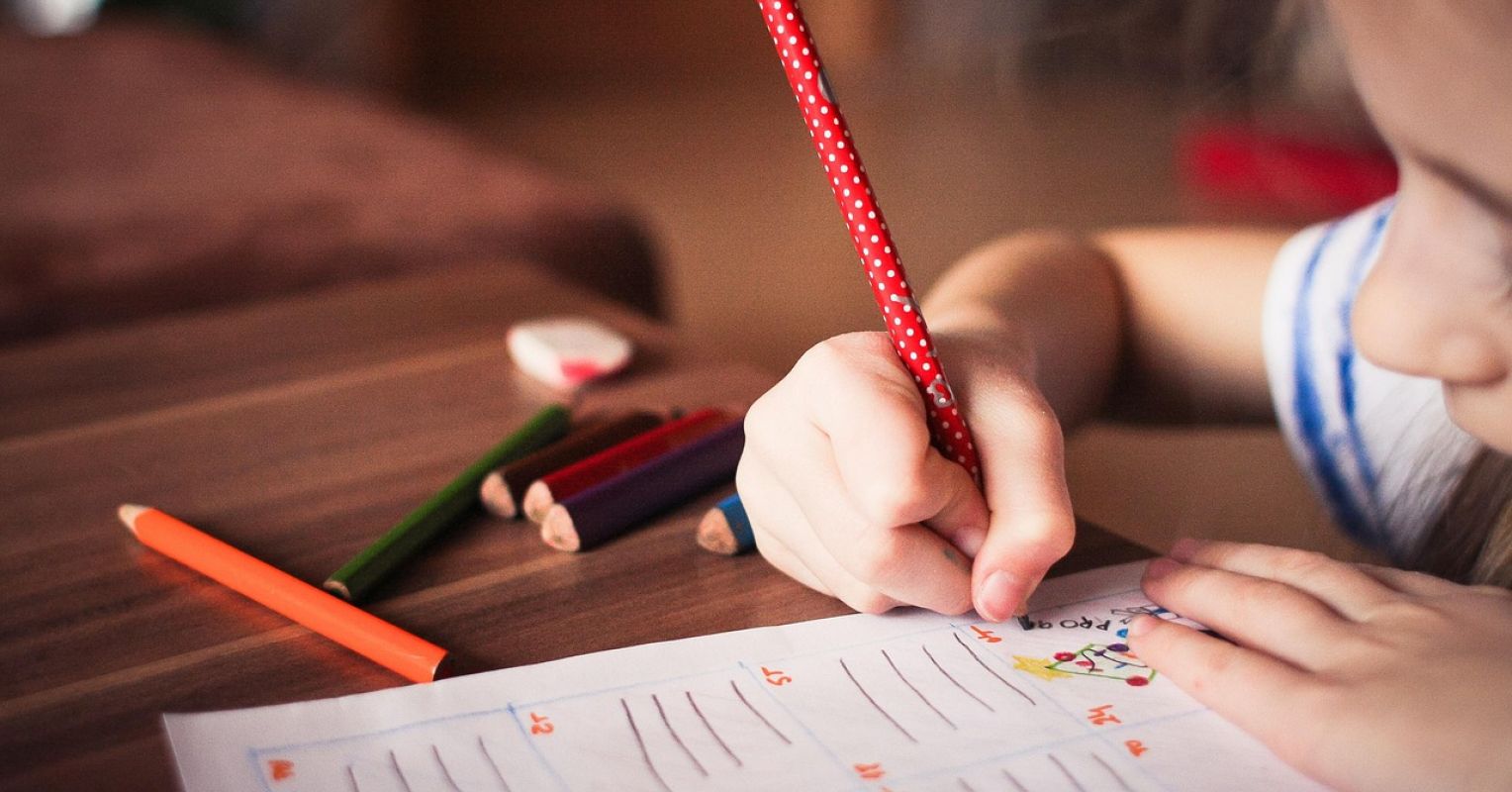
Homework has been tied to school for as long as most of us can remember. Ask any student what school is like, and you’ll hear about tests, teachers and homework. But with the way learning shifted during the COVID-19 pandemic, it’s fair to ask: Is homework still relevant, or is it a leftover from a different time?
A Brief History of Homework
No one knows exactly when homework started, but the idea of giving students work to do outside of class goes back a long way. According to Britannica ProCon (n.d.), historians trace this practice all the way back to ancient Rome. Pliny the Younger, a Roman official and teacher from around AD 61 to 113, encouraged his students to practice public speaking at home to sharpen their skills. It wasn’t written homework like we know today, but it was clearly learning outside the classroom.

Homework evolved slowly over the centuries. It took on a more formal role during the Industrial Revolution, when school systems expanded and curricula became standardized. Activities outside of class became part of the educational routine.
In the U.S., homework started becoming more common in the early 20th century. Some educators, like John Dewey, pushed back against it, believing learning should be more hands-on and experiential. But when the Soviet Union launched Sputnik in 1957, the U.S. scrambled to catch up in science and math. Schools responded by piling on homework, seeing it as a way to increase academic rigor (Gill & Schlossman, 2004).
By the 1980s, another wave of concern hit. A report called A Nation at Risk warned that American schools were falling behind. Homework was once again seen as a key to academic success, no longer just extra practice, but proof that students were taking school seriously.
Does Homework Work?

The question of whether homework actually helps students is tricky. The short answer: sometimes, and for some students more than others.
For high schoolers, there’s a consistent link between homework and academic performance. Cooper, Robinson, and Patall (2006) found that homework has a positive, though moderate, effect on achievement in older students. But for younger kids, especially in elementary school, the data doesn’t show much benefit. According to the same study, students under 12 don’t seem to gain much from traditional homework.
Then there’s the question of who’s doing the homework. Are good students succeeding because of homework, or are they just more likely to do it in the first place? That’s where traits like motivation, time management, and parental involvement come in. Research by Trautwein et al. (2009) suggests that students who are already responsible and supported at home are the ones most likely to complete assignments and benefit from them. For these students, homework reinforces what they already know and strengthens good habits.
But not everyone has the same support at home. Students from lower-income families might lack internet access, a quiet place to study, or help from parents. In those cases, homework can actually widen the gap between students instead of helping close it.
COVID-19 and the Rise of Learning From Home
Then everything changed. When the COVID-19 pandemic hit, schools shut down almost overnight. Homework didn’t just supplement the school day—it became the school day. That massive shift raised a big question: What happens when all learning is homework?
The results weren’t encouraging. Some students adapted quickly to learning at home, enjoying the flexibility and freedom to work at their own pace. Others struggled without daily structure, face-to-face instruction, or access to reliable technology. A study by Kuhfeld et al. (2020) found that overall academic progress slowed, especially in math. Students with good home environments and internet access did better. Those without fell further behind.
Teachers had to rethink everything, too. Traditional worksheets and reading logs gave way to project-based assignments, Zoom lessons, and asynchronous tasks. In many ways, the line between homework and classwork disappeared altogether. However, just assigning tasks wasn’t enough. Without engagement, feedback, and support, homework lost its effectiveness just as remote learning did for so many students.
Reimagining the Role of Homework
So, what do we do with homework now? Keep it, change it, toss it? The thing is, homework isn’t automatically good or bad. It all comes down to how it’s used. When it’s just something to keep kids busy or unfinished classwork, it doesn’t do much. But when it’s thoughtful, clear, and actually fits what a student needs, it can teach real-life skills like how to manage time, solve problems, and work independently. That kind of homework has a place. The rest might just be noise.
Questions for the Future
As school keeps changing and the world moves forward, we’re still trying to figure out where homework fits in. The pandemic proved that learning doesn’t have to happen in a classroom, but it also showed how much kids rely on structure, support, and a fair shot. So what now? Can we come up with a kind of homework that actually helps all students not just the ones who already have Wi-Fi, quiet spaces, and help at home? Should schools prioritize the quality of assignments instead of the quantity? Is it time to rethink traditional homework entirely and explore new, more flexible models? Maybe the biggest question of all is in a world where information is instant and everywhere, but attention is harder to hold onto, what exactly is the purpose of homework?
Homework might not be dead. But it’s definitely ready for a fresh look.


