


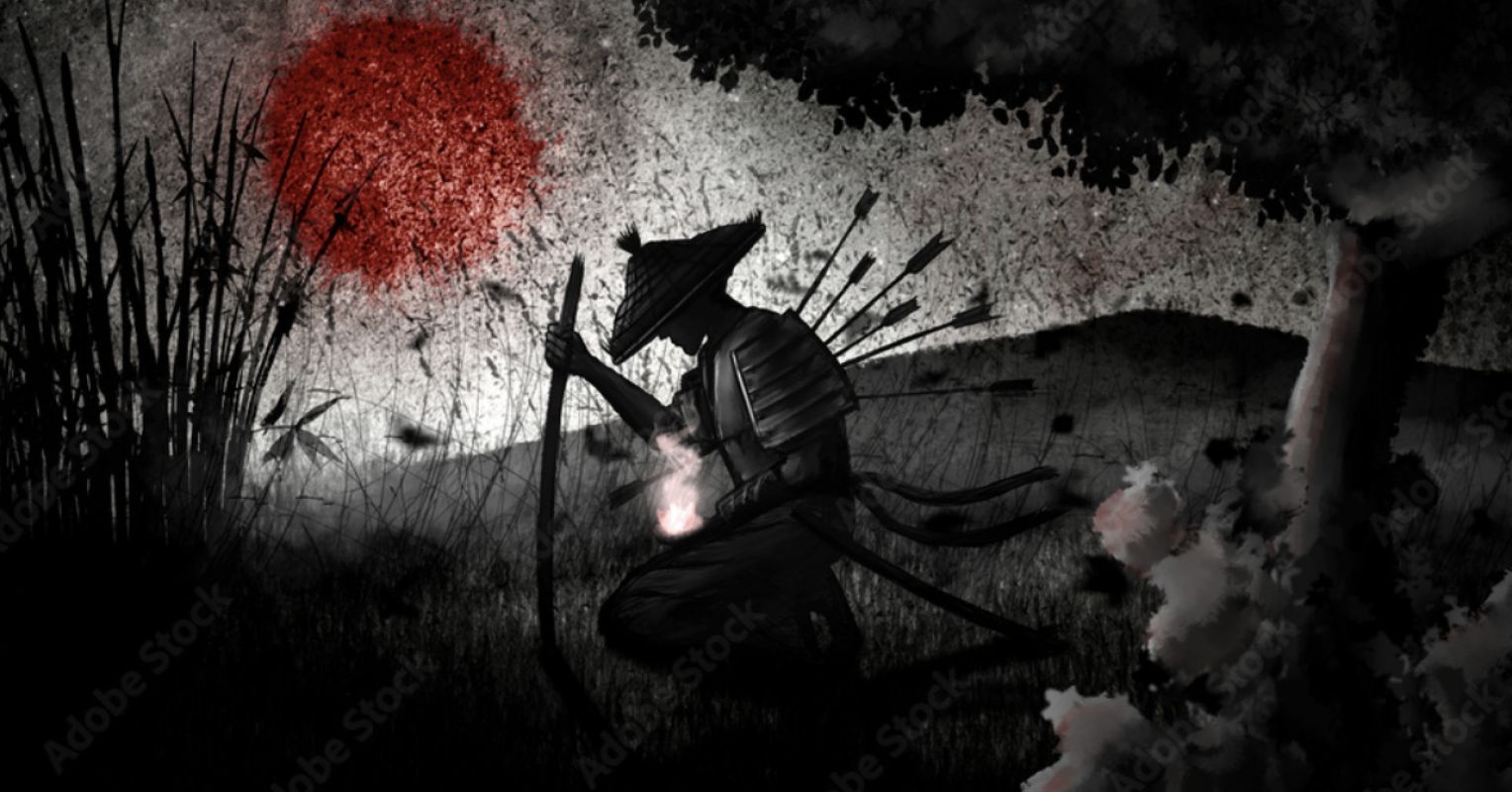
There is an oft-quoted aphorism in the samurai tradition, which, loosely translated, intones “Fall down seven times, get up eight.” The Hagakure, from which the axiom is taken, is an often-misinterpreted treatise on Bushido (the warrior’s way) as a code of death. In fact, it is a discourse drawn from conversations between Yamamoto Tsunetomo and Nabeshima Mitsushige, between 1709 and 1716, on the warrior’s path of both living, and dying, well.
Like Miyamoto Musashi’s Sho Rin No Go (Book of Five Rings) and Sun Tsu’s Art of War, the Hagakure, although lesser known outside martial arts circles, has become a staple for those seeking counsel on self-reliance, resilience, effective leadership, and success. At no point in modern times have these ancient tools been more important. Our social media-informed culture, where a single misstep, misunderstanding, casual comment, or simple presence, can bring about ad hominem attacks and abject ruin, demands it.
On Resilience

In terms of social interaction, one of the most important things to recognize is, in the vast majority of situations, it’s not about you. It’s about the other person, and the elements of their own ego they are imposing upon you. Your boss doesn’t marginalize you, or give you menial tasks because they feel you can’t do the job—it’s because they feel threatened. Your supervisor doesn’t criticize you because you’re doing something wrong; it’s because, in their heart of hearts, they know you do the job better than they do. Your partner doesn’t talk down to you because they want to demean you—it’s because they are unsure of you, and—more to the point—unsure of themselves.
Recognizing these dynamics—and emphasizing empathy, rather than our own ego—is key to a kind of social salvation. It is a mercy and a grace we visit upon those who would do us harm, in word, deed, and action, that allows us to stand and move forward, after we’ve been knocked down, whether figuratively or literally. Resilience often relies more on patience—patience for others, patience for us, and patience for the circumstances we confront—than on being strong, whatever that means, and toughing it out. It also relies on accepting and allowing—a trait touted by Buddhist teaching, that can teach us a great deal about how to be in the world with grace and dignity.
On Redemption
Redemption—to redeem—sounds like we’re getting something back from outside ourselves. In this context, what we are reclaiming is, in fact, simply ourselves. Over the past several decades, it has become easier and easier to lose sight of who we are, and our place in the world. Reclaiming ourselves requires us to reset our personal perspective by releasing our attachment to the people, places, and things outside of ourselves, and recognizing we are, quite literally, the captain of our own ship. Our decisions, choices, and actions steer the course. When we fall into the trap of believing others are driving the boat, we lose sight of the shore, and ourselves.

This perspective, and hopefully, this reset, speaks directly to the notion of accepting and allowing. A hyper-aggravating phrase that has seeped into the collective conscience, and, by association, nomenclature, is “It is what it is.” Annoying yes, but also a universal truth. We can’t control the externals; we can only experience them as they are and get a glove in front of that double-hop grounder, before it gets past us.
Redemption, then, is not about get back at those we perceive as having wronged or slightest us, as has, to some extent, become the rule of the day. It is about releasing that petty, and often pointless, perspective to reclaim ourselves, for us. We take back what was stolen from us, by our own misadventure.
On Resurrection
When we think of resurrection, Christian or not, we typically think of the Risen Christ. It’s not nearly that complicated, or amorphous. Resurrection simply means renewal. Like the Phoenix, we rise from the ashes and restore ourselves to an even greater glory—a version of ourselves that has suffered the slings and arrows of outrageous fortune—whether they be self-created, other-imposed, or simply happenstance—and we have stood against that storm to rise, and rise again. This is the essence of dignity, grace, and, most importantly, transformation.
And, there it is—we are the crucible. Whether our social distortion—interior or exterior—is visited upon us by fate, misfortune, or simple chance, we get to remake it—and ourselves—into something, not only helpful, but useful, and, ofttimes, better. Like Johnny Tremain, we find not only renewed purpose, but build a legacy far surpassing those damned slings and arrows. We can, by choice, be reborn into a larger life, painting upon a larger canvas.
Resilience Essential Reads
© 2026 Michael J. Formica, All Rights Reserved.
