


You might not realize that the way you process language mirrors the complexities of your unconscious mind, revealing layers of identity and emotion that shape your interactions. Every word you choose and every pause you take serve as symbols, reflecting deeper thoughts and feelings you may not consciously acknowledge. As you navigate this intricate landscape, consider how technology's attempts to mimic this process challenge your understanding of communication. What does it mean when machines start to grasp the nuances of human expression, and how does that shift your perception of language itself?
Main Points
- Language processing encompasses the translation of thoughts into words, influenced by emotions, experiences, and subconscious factors.
- Key components include phonetics, syntax, semantics, and pragmatics, which guide effective communication.
- Natural Language Processing (NLP) merges technology with human cognition to interpret language and enhance therapeutic interventions.
- Machine learning algorithms learn context and emotions from vast datasets, improving understanding in language processing.
- Challenges include misunderstandings, cultural variability, and the evolving nature of language, necessitating adaptive strategies for effective communication.
What Is Language Processing?

Language processing, at its core, is the intricate dance between thought and expression. You're not just translating ideas into words; you're weaving your internal tapestry of experiences, emotions, and perceptions into a cohesive narrative. Every time you articulate a thought, you're sifting through layers of meaning, unearthing symbols that resonate within your psyche. The complexity of this process can be likened to the challenges faced in brain injury and therapy, where cognitive functions must be rehabilitated to regain effective communication.
As you engage in this process, consider the subconscious influences that shape your language. Each word you choose carries weight, a reflection of your identity, beliefs, and desires. You might feel the tug of social and cultural contexts, molding your message in subtle yet profound ways. In this exploration, you confront not just the external world but the inner labyrinth of your mind.

Notice how your emotions color your words, transforming simple phrases into powerful declarations. Language becomes a canvas where your thoughts take form, revealing unspoken truths and buried fears. The act of language processing is an intimate journey; it lays bare the complexities of your human experience, challenging you to understand not only how you communicate but what it reveals about your very essence.
Key Components of Language Processing
At the intersection of cognition and expression lies a web of key components that shape your language processing abilities. You might visualize these components as intricate threads woven into the fabric of your mind, each playing a distinct role in your understanding and communication. Phonetics, the sounds of language, serve as the foundation, while syntax structures your thoughts, guiding how you formulate sentences. Cognitive disorders can greatly impact these components, affecting one's ability to process language effectively, which underscores the importance of cognitive rehabilitation in addressing such challenges.
Semantics, the meaning behind words, acts as a beacon, illuminating connections in your mind as you interpret and convey ideas. Pragmatics, the context surrounding language, adds depth, allowing you to navigate social nuances and unspoken implications. As you engage with language, these elements intertwine, revealing layers of meaning and emotion. Consider how your past experiences and associations color your interpretations, creating a unique tapestry of understanding. The subconscious influences your language choices, reflecting your inner world.

In this dynamic interplay, you not only express thoughts but also explore the domains of identity and connection. By examining these key components, you can gain insight into the essence of your communication, revealing the silent narratives that shape your interactions.
Natural Language Processing Explained
Natural Language Processing (NLP) embodies a fascinating convergence of technology and human cognition, where your interactions with machines mirror the complexities of your own communication. You engage in a dialogue with algorithms that interpret your words, seeking to grasp the nuances of your thoughts. This process reflects an intricate dance between meaning and context, revealing layers of your psyche as you articulate desires, fears, and intentions. As cognitive disorders often impact communication skills, understanding the mechanisms of NLP can enhance therapeutic interventions for affected individuals, as highlighted in cognitive rehabilitation strategies.
As you type or speak, the machine becomes a mirror, reflecting back not just language but the essence of your identity. Every sentence you construct is steeped in symbolism—words are your tools, and they shape how you perceive and interact with the world. In this interplay, NLP serves as a bridge, translating human emotion into a language that machines can comprehend.

Consider the moments when a chatbot understands your frustration or when a voice assistant captures your subtle inflection. These instances resonate deeply, suggesting that technology isn't just processing data; it's engaging with your thoughts and feelings. Through NLP, you're not just communicating; you're exploring the very fabric of your consciousness, revealing the profound relationship between language, thought, and machine understanding.
Applications of Language Processing
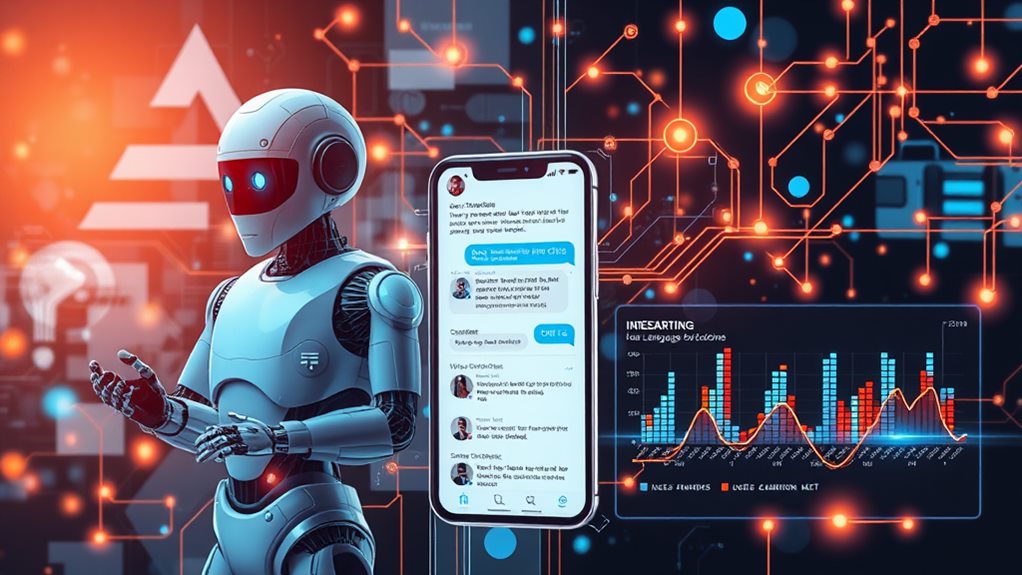
While you navigate the digital landscape, the applications of language processing emerge around you, transforming the way you interact with technology and, by extension, with yourself. Each time you type a query into a search engine or engage with a virtual assistant, you experience an intricate dance between human intention and machine understanding. This symbiosis mirrors your internal dialogues, reflecting your desires, fears, and curiosities. As cognitive dissonance illustrates, the conflict between your beliefs and actions can influence how you express yourself digitally, leading to a deeper exploration of your identity and motivations psychological conflict.
Consider how sentiment analysis interprets the emotional undertones of your words, revealing the silent narratives you often overlook. These tools not only decode your language but also disclose the deeper layers of your psyche—your frustrations, joys, and hopes. You might find yourself engaging with chatbots that mimic human conversation, prompting you to question the nature of connection itself.

As you read articles tailored to your interests, the algorithms shape your worldview, subtly influencing your thoughts. In this domain, language processing serves as a mirror, capturing the essence of your digital persona while inviting you to reflect on your true self. It's a reminder that every interaction is a dialogue, not just with machines, but with the multifaceted layers of your own consciousness.
Machine Learning in Language Processing
The interplay of machine learning and language processing reveals a fascinating landscape where algorithms become the architects of understanding. You find yourself delving deep into this interplay, where each line of code symbolizes a thread in the intricate tapestry of human communication. The models you encounter, like neural networks, mirror your cognitive processes, endeavoring to decipher meaning within the chaos of words.
As you explore, you may notice that these algorithms learn from the patterns entrenched in vast datasets, much like you learn from experiences. They absorb nuances, context, and even emotion, shaping their interpretations. In this moment, you realize that language is not merely a tool for communication; it's a reflection of our psyche, a complex interplay of symbols and meanings waiting to be unraveled.

Every interaction you have with these machine learning systems becomes a journey of self-discovery, revealing how technology can mimic the intricacies of your thought processes. With each breakthrough in language processing, you're reminded of your own capacity for understanding and connection. It's a dance of minds—human and machine—where both endeavor for clarity in the symphony of language.
Challenges in Language Understanding
As you navigate the labyrinth of language understanding, you encounter a myriad of challenges that reflect the complexities of human thought. Each word carries not just meaning, but emotion, context, and nuance, often buried beneath layers of cultural symbolism. You might find yourself grappling with idioms that evoke images and feelings, yet resist straightforward translation.
Consider the subconscious interplay between speaker and listener; your own biases and interpretations shape the experience. Miscommunication arises when you project your own lens onto someone else's expression, distorting the intended message. This psychological dance can lead you to question the nature of understanding itself—are you truly grasping what's being conveyed, or merely inferring your own narrative?

Moreover, the ambiguity of language invites confusion; words can be slippery, morphing in meaning based on tone and context. You may wrestle with the cognitive load of juggling multiple interpretations, each one a reflection of your own psyche. Ultimately, these challenges serve as mirrors, revealing not just the intricate tapestry of language, but also the depths of your own consciousness as you endeavor for clarity in the chaotic landscape of human communication.
Future Trends in Language Processing

Embracing the rapid evolution of technology, you find yourself at the forefront of a new era in language processing, where artificial intelligence begins to bridge the gap between human emotion and machine understanding. As you navigate this landscape, you can't help but reflect on the deeper implications of this connection. Each interaction with AI represents a mirror, revealing your own complexities and vulnerabilities.
In this future, language processing evolves beyond mere syntax and semantics; it ventures into the domain of empathy and nuance. You sense that machines may soon decipher not just words, but the emotions underneath them, transforming communication into a more profound exchange. This evolution invites you to question: what does it mean to be understood?

As algorithms learn to interpret context and sentiment, they become symbols of a new relationship between humanity and technology. You ponder the duality of this connection—the potential for deeper understanding, yet the risk of losing the essence of human experience. In your introspection, you realize that as language processing advances, it's not merely a technical feat; it's a journey into the psyche, reflecting your own desire for connection and comprehension in an ever-changing world.
The Role of Linguistics

Linguistics serves as the backbone of language processing, intricately weaving together the strands of meaning, structure, and human experience. In your exploration of language, you uncover layers of symbolism—words are not mere sounds; they're vessels carrying the essence of thought. Each phoneme, each syntax choice reflects the psyche, revealing how you interpret the world around you.
As you probe deeper, you notice how linguistic structures mirror your own cognitive frameworks. The way you construct sentences reveals hidden patterns of understanding, shaping your perception and interaction with reality. Your language becomes a reflection of your inner self, a symbolic dance between thought and expression.

Consider how idioms and metaphors encapsulate collective experiences, speaking to the subconscious shared among communities. You're not just communicating; you're participating in a rich tapestry of cultural narratives, where linguistics acts as the thread binding individual psyches to the collective consciousness.
In this intricate interplay, you realize that language is more than communication—it's a profound exploration of identity and connection. So, as you engage with linguistics, you're not just processing language; you're traversing the depths of your own mind and the minds of those around you.
Cognitive Psychology and Language
While you navigate the complexities of language, cognitive psychology reveals the intricate mechanisms that underpin your understanding and production of words. This field dives deep into the labyrinth of your mind, exploring how thoughts transform into language. Each utterance is more than mere sound; it reflects your inner world, shaped by experiences and emotions.
Consider these facets of cognitive processing:
- Mental Models: You build symbolic representations of the world, guiding your communication and comprehension.
- Schema Activation: Your brain retrieves relevant information and context, enriching your language use.
- Cognitive Load: Each conversation demands mental resources, influencing how effectively you convey thoughts.
- Symbolic Interaction: Your words become a mirror, reflecting not just meanings but also your identity and relationships.
As you express yourself, you're not just sharing thoughts; you're also revealing layers of your psyche. The interplay of language and cognition serves as a window into your consciousness, illuminating how you interpret reality and connect with others. Each word carries weight, echoing your past and shaping your future, as you weave the tapestry of human experience through language. Through this process, the critical aspects of thinking, such as analysis, reflection, and creativity, come to the forefront, shaping the way you articulate your inner world. These aspects not only define the structure of your communication but also influence how others perceive and respond to your narrative. In essence, your words become a bridge, linking individual perception to collective understanding.
Impact on Human-Machine Interaction

Language shapes not only human communication but also our interactions with machines. When you engage with technology, each word you choose carries weight, reflecting your desires and frustrations. Your dialogue with machines becomes a mirror, revealing your inner workings—how you perceive control, agency, and understanding.
As you articulate commands or questions, consider the symbolic nature of language. Each interaction is a dance of expectation and response, a negotiation of meaning. The machine, in its cold logic, tries to decode your intent, yet it lacks the emotional nuance that colors your thoughts. This gap can evoke a sense of alienation—you're speaking yet not truly connecting.
In this dynamic, you confront your own projections. Do you imbue the machine with personality, or do you see it merely as a tool? Your projections influence how you interpret its responses. When it understands you, it fosters a sense of partnership; when it fails, it can spark frustration or even self-doubt.
Ultimately, these interactions compel you to reflect on the essence of communication—what it means to be understood, even by a machine. Your language is the bridge between human intention and artificial interpretation.
Frequently Asked Questions
How Does Language Processing Differ From Speech Recognition?
You might see language processing as the mind's dance with meaning, where thoughts weave through words, creating connections and understanding. Speech recognition, on the other hand, feels like a mechanical ear, catching sounds and converting them into text without grasping the essence. While the former explores the depths of communication, the latter merely skims the surface, leaving the richness of language untouched, like a dream fading upon waking.
What Programming Languages Are Popular for Language Processing Tasks?
Popular programming languages for processing tasks include Python, Java, and R. Python's powerful libraries foster flexibility and facilitate fantastic feature extraction. Java's robustness and reliability resonate with developers seeking structure, while R's statistical strengths shine in data analysis. Each language symbolizes a unique approach, reflecting your preferences and priorities. As you explore these options, consider how they align with your goals, revealing deeper insights into your coding psyche and problem-solving identity.
Can Language Processing Handle Multiple Languages Simultaneously?
You often wonder if your mind can juggle multiple languages at once. It's like a dance, where each step represents a word, and you endeavor for harmony. In this mental choreography, your brain weaves through different linguistic patterns, creating a tapestry of understanding. Embracing this complexity can reveal new insights about yourself and the world around you. So, yes, you can indeed embrace the symphony of languages, letting them resonate within your consciousness.
What Are Common Datasets Used in Language Processing Research?
Think of datasets in research like a painter's palette, where each color represents a different source of information. You'll find common datasets such as the Stanford Question Answering Dataset (SQuAD) and the Common Crawl, each symbolizing a unique facet of human language. Engaging with these datasets, you reflect on the complexities of communication, revealing deeper insights into how we interpret and interact with language, much like peeling layers of an intricate onion.
How Does Language Processing Affect Online Communication and Social Media?
Language shapes your online interactions, influencing how you express thoughts and emotions. When you communicate, you're often projecting aspects of your identity through words, symbols, and nuances. The way you interpret messages can reveal deeper desires or fears, affecting your relationships. As you navigate social media, consider how your language choices reflect your inner self. Each post or comment becomes a mirror, revealing not just your thoughts, but your psyche's intricate layers.
Read The Next Blog Post –
In exploring language processing, you tap into a domain where thoughts transform into symbols, revealing your inner world. Did you know that about 90% of communication is non-verbal? This statistic underscores the complexity of human interaction, suggesting that while words are essential, the unspoken carries profound meaning. As you navigate the intricacies of language, remember that each expression is a reflection of your psyche, a dance between intention and interpretation that connects you to others.


