


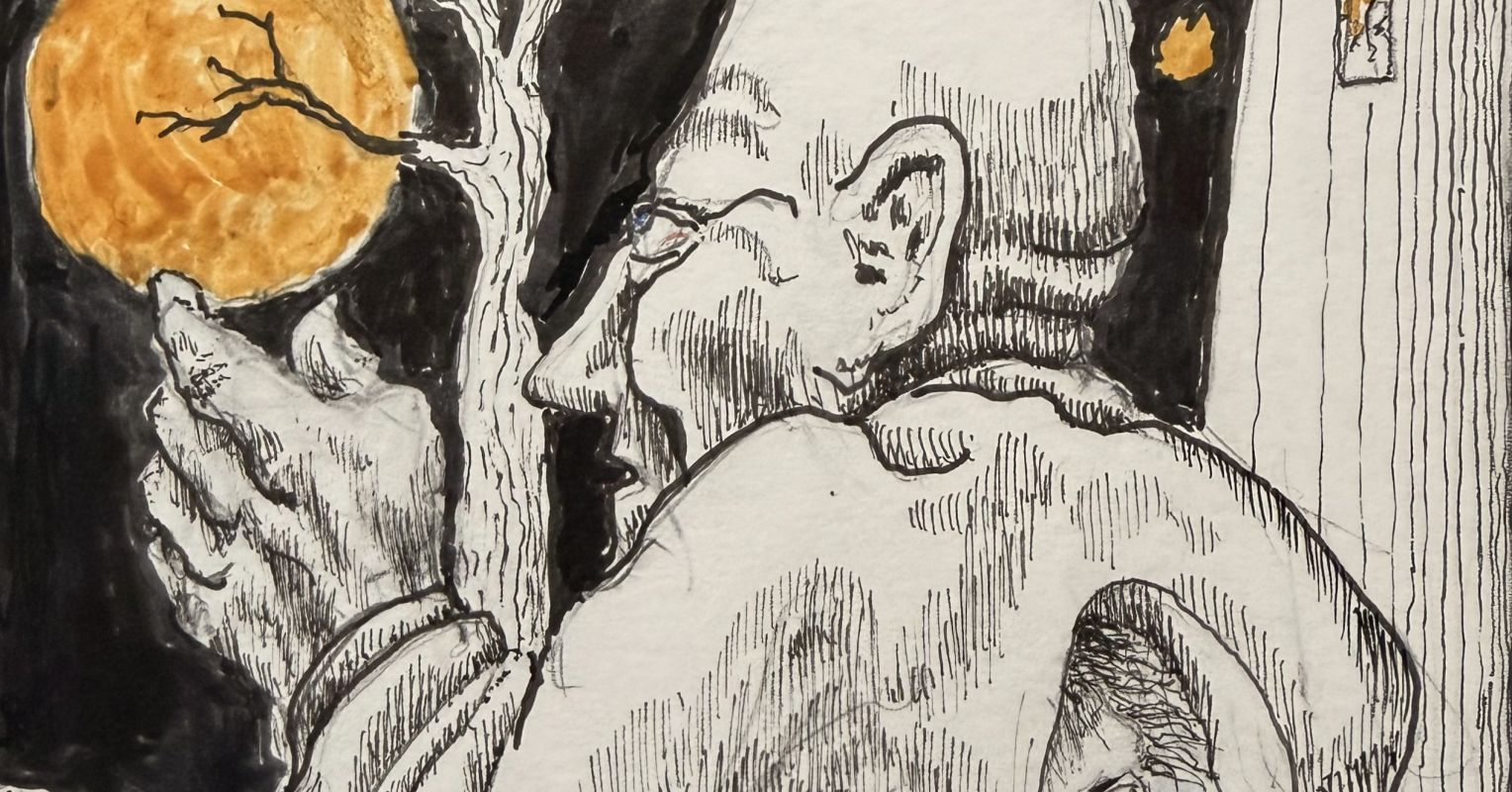
Someone I know well recently attended a Buddhist retreat at which they described their heartbreak at learning a person they were in love with—a person with whom they knew they had no future—had started, quite openly, to date someone else. The teacher told them, “You are addicted to hopeless… tragic longing,” adding the student would never have pursued that relationship if there’d been a chance of winning the beloved. (The student, for the record, vehemently disagreed.)
None of this was meant as a compliment, and it got me thinking about the kind of longing that has no chance of being fulfilled—after all, a not uncommon human emotion—and why it is so often treated with disapproval, if not pity or even contempt.

The most specific term for hopeless longing, coined by psychologist Dorothy Tennov in the 1970s, is “limerence,” a state of intense, involuntary romantic attachment to a person who does not reciprocate the feeling. It is often characterized by obsessive behavior.
Quite apart from excessive preoccupation and obsession, which we’ll get to in a second installment, the negative effects of limerence are obvious. Burning energy on something or someone the person cannot hope to possess, in whatever sense, must surely waste time better spent pursuing attainable goals such as completing more tiers in GTA 5, or improving one’s pickleball skills—or, in the student’s case, looking for someone who might actually love them back and want to be with them.
Moreover, the implied strength of longing—a strength paradoxically distilled, dammed up, and augmented by the very impossibility of attaining what is longed for—can result in syndromes or behavior with damaging, if not downright dangerous, consequences. The Buddhism student in question, for example, in an attempt to palliate heartbreak, took the classic escape route of drinking to the point of near-unconsciousness. The student ended up, one night, passing out on a subway train and waking up in a section of New York City that, as Humphrey Bogart said in Casablanca, “I wouldn’t advise [even the German army] to try to invade.”

That kind of limerence—which bears a close resemblance to pathological grieving (see a previous post)—clearly induces stress, triggering the amygdala to flood the body with hormones such as cortisol and adrenaline, which in the long term can weaken the immune system and lead to heart disease.
And yet, with all that being said, unrequited longing has for centuries been the source of some of the greatest cultural achievements humanity has to offer. Where would our understanding of art and human nature be without the description of Genji’s forbidden love for Fujitsubo in The Tale of Genji, the hopeless love of Petrarch for Laura, that of Dante for Beatrice? Wouldn’t The Odyssey be the poorer if Calypso wasn’t forced by Zeus to give up Ulysses, or if the Montagues and Capulets got together and said, “Hell, Romeo and Juliet are so in love, let’s give the kids a break”? In more modern terms, the emotional force driving Tolstoy’s Anna Karenina, Ian McEwan’s Atonement, Fitzgerald’s The Great Gatsby, Ondaatje’s The English Patient, De Niro and Streep in Falling in Love—yes, even Casablanca—principally stems from someone being in love with a person they can’t have.
In fact, for a good stretch of European history, the concept of amor de loin, or “love from afar”—aka “courtly love”—in which a man (typically) reveled in his passion for a woman unattainable by him (usually because she was married) was revered as an ideal emotion immortalized in ballads by the Provençal troubadours, as well as in stories about Lancelot and Guinevere, or Tristan and Isolde.
Of course, many if not most such tales don’t end well, in good part because the characters concerned cannot, as practicality demands and well-meaning friends usually advise, give up on the object of their desire. Classical Freudian analysis might link this kind of limerence to sublimation, as in the mechanism whereby Shakespeare’s love for his unattainable “Dark Lady” got alchemized into beautiful sonnets. But what about the poor SOB who doesn’t have Shakespeare’s talent yet still suffers Hamlet’s “pangs of despised love?” Is limerence always a mistake for the ordinary mortal? And is the victim’s refusal to give in to reality a sign that limerence possesses an addictive quality which might be addressed, even palliated, in personal life and in analysis? I will examine these aspects in my next post.
