


After all is said and done, we can raise two cheers for the technology that enabled parents, educators, and even some students to avoid entirely losing instructional advantage during the long pandemic interval. The interactive videoconferencing, the ability to deliver content digitally, and the innovations in managing assignments proved close to miraculous in enabling the virtual classrooms that helped relieve the isolation that pandemic lockdowns imposed on kids. And then, for most, what alternative was there?
Surely some liked the results, especially noteworthy for those kids who preferred learning on their own and those unnerved by the dense, demanding social experience of modern schools. Some families liked the flexibility that the digital means permitted. Digital means also empowered innovative ways to collaborate.

Yet a chorus of voices called the expedients a failure and hoped to soon forget the stress of the interval’s technical difficulties, the distractions of the poorly adapted home setting, the deadening sedentary routine, the brand-new human phenomenon of “screen fatigue,” and the general physical torpor that long intervals of virtual learning imposed.
Snow Day on the Way: Weather in the Weather
Imagine a sliding scale between pandemic-era compulsory e-learning and the voluntary, enriching play that kids get up to during a snow day, and you will see a range between duty and exuberance.
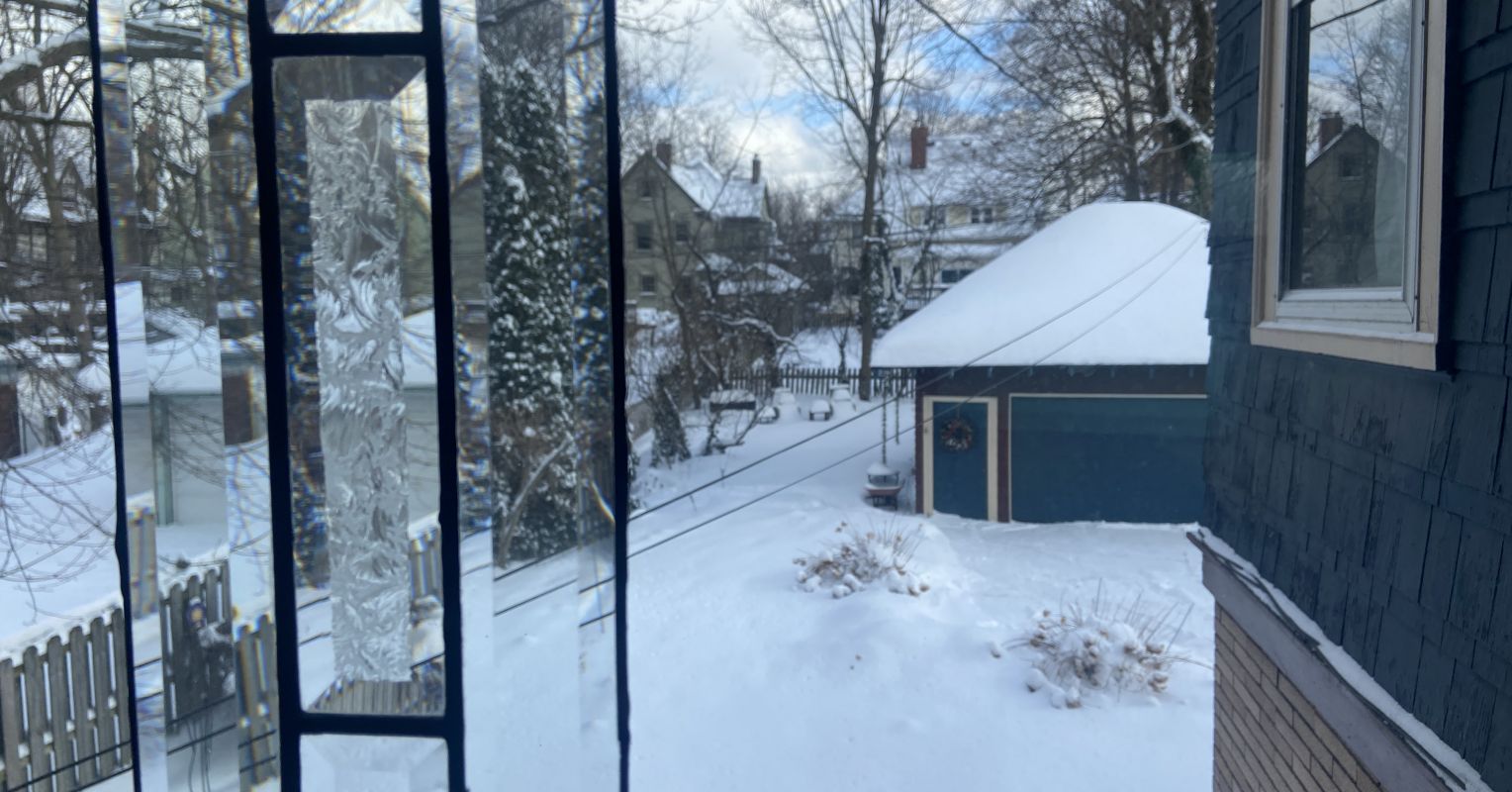
Snow days begin with a buzz as weather reports gather and school administrations decide whether to cancel classes. Better forecast models now allow closure announcements a day in advance. And in that stretch, kids will listen for the wind and look out the window for the first flakes to appear.

The prospect of novelty and relief from routine fuels their keenness. They mentally suit up. To anticipate playing is to be already at play.
The Virtue of “Voluptuous Panic”
Besides the reprieve from pressure and routine that snow days offer, the free day offers opportunities to sample the benefits of novel, borderline risky play.
Begin with the material itself. Snow is invitingly slippery. Bundled against the chill and yielding to the temptation to run and slide promises surprise. If a hill lies nearby and if a sled is handy, sliding promises speed, an added delight. Settle on a plastic snow saucer, grab the handles, and scooch toward the edge of the slope and the uncontrolled, gleeful glide that follows promises deep fun.
The play theorist Roger Caillois searched for a word in French and English for this emotion, and finding none, he mined Greek for a similar term, “ilinx,” which he re-defined as a voluptuous panic. (We enjoy the ilinx vibe while dancing, spinning, tumbling, high-diving, mogul-skiing, and roller-coaster riding.) The kind of sled that steers around other riders, the Flexible Flyer of yore, offers a measure of control and calculation and promises greater speed—a dizzying downhill thrill of itself, that becomes goofier if a second sledder piles on top.
The other virtue of new-fallen snow? It yields. It cushions. It forgives as it enables play. Dive into a shoveled snow pile on a snow day and you are let down easy and pleasurably. Sink deep enough and you will momentarily disorientate and wonder which way is up. Or crash a toboggan into a snowbank and you will tumble harmlessly. More ilinx. More fun. More joy.
Building Play
Other properties of snow afford more complex play. Wetter, heavier snow is sticky, packable, and moldable—all learning opportunities and occasions for creativity. If you haven’t done it in decades, re-enact the pleasures of creating a snow angel. Or for more skills-building, encourage kids to build a snow fort, and leave them to their discoveries.
You might encourage a kid to roll a snowball across a lawn, accreting layers with forward motion. Once of size, this first ball makes a base. A slightly smaller, more easily handled one, when piled on top, makes a middle. And one smaller still in diameter, famously makes for a head made more believable with the addition of a carrot for a nose, two eyes made out of Oreo cookies, and a Buffalo Bills knit cap for local street cred. Tie a scarf around the “neck” for whimsy.
If you require an educational objective for the activity, note that the snowwoman or snowman is a once a physical challenge and an art project.
Likewise, snowballs. If you’re looking for justification beyond play, note that packing one teaches you about heft and viscosity. Lofting one teaches you about trajectory.
Websites meant to counsel kibitzing adults urge them to construct a target and train for accuracy. But, please, kids don’t need targets or training. They do need the experience of discovery and agency. Leave them to it. They will find their own targets, including their playmates.
Rough-and-Tumble Snow Days
Which brings us to the virtues of rough-and-tumble. Think back to your snow-day play. Likely you will recall the wrestling and tumbling that snow-padding afforded, or if you have forgotten, watch kids play in the snow, and it will all come back.
Some will scramble atop a snowbank for precedence, temporarily defying those coup-plotters below who are looking to depose the victor. (We called it a king-of-the-mountain game once upon a time.) This is not simply about blowing off steam as an antidote to cabin fever, though that benefit is not to be sneezed at. Group play often invites literal sorting via rough-and-tumble competition, winter or summer, or whatever the game is called.
The dividends besides hilarity? Self-reliance. Resilience. Endurance. Curiosity about the natural world and its properties. And learning to bounce back for more.
Snow Days and Mental Health
The play theorist and developmental evolutionary psychologist Peter Gray notes that the kind of unstructured, free, outdoor play that the snow day encourages is crucial to understanding how to manage physical risk while building self-confidence.
Gray notes that, if deprived of social play experimentally, laboratory rats will be socially delayed and emotionally stunted.
Similarly, developing humans, those millions of overscheduled American children with deficient, restricted play-lives, for example, will less successfully manage fear and anger. Further, Gray believes that the steep rises in teenage anxiety and depression, a precipitous five-to-eightfold increase since the 1950s, are most easily and directly chalked up to an erosion of personal control and the restricted latitude and responsibility that result from play deprivation.
A Simple Message
So. For those municipal school systems that mean out of earnest motives to replace the occasional, propitious, potentially joyous, surprising, voluntary, and educationally yielding snow day that is full of discovery, with a day of dreary remote learning? Mental health advocates and free-play apostles have a simple message. Give it a rest.


