


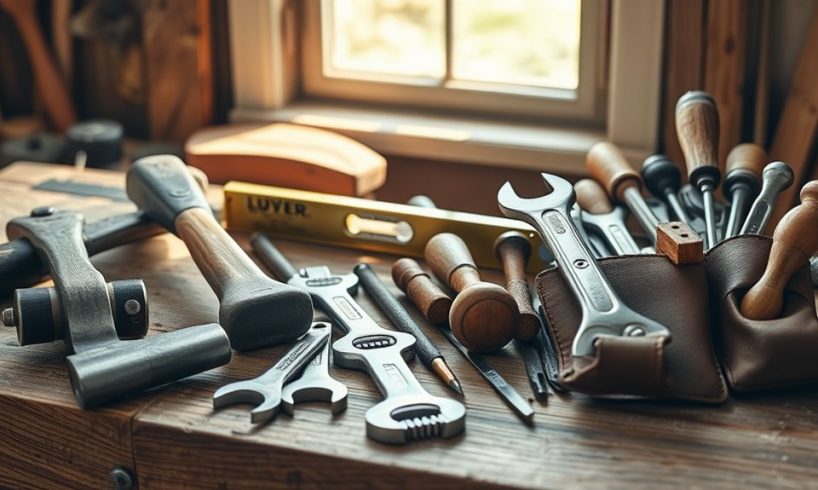
The relationship between humans and tools spans millions of years, marking a clear distinction between our species and others on Earth. From the first stone implements to modern quantum computers, tools have defined the advancement of civilization and shaped how societies develop. While early humans used basic implements for survival, today's sophisticated devices solve complex problems across every industry. This evolution reveals not just how tools have changed, but how they have fundamentally transformed human potential.
Key Takeaways
- Tools are implements or devices designed to perform specific tasks, ranging from primitive stone tools to modern digital technologies.
- Power tools enhance efficiency in construction and manufacturing through electric, pneumatic, or battery-powered operation.
- Digital tools like CAD and BIM software revolutionize design, planning, and collaboration across various industries.
- Modern tools incorporate smart features, sensors, and AI capabilities to improve safety, precision, and automation.
- Tools have continuously evolved over millions of years, shaping human civilization and advancing technological capabilities across sectors.
The Evolution of Human Tools
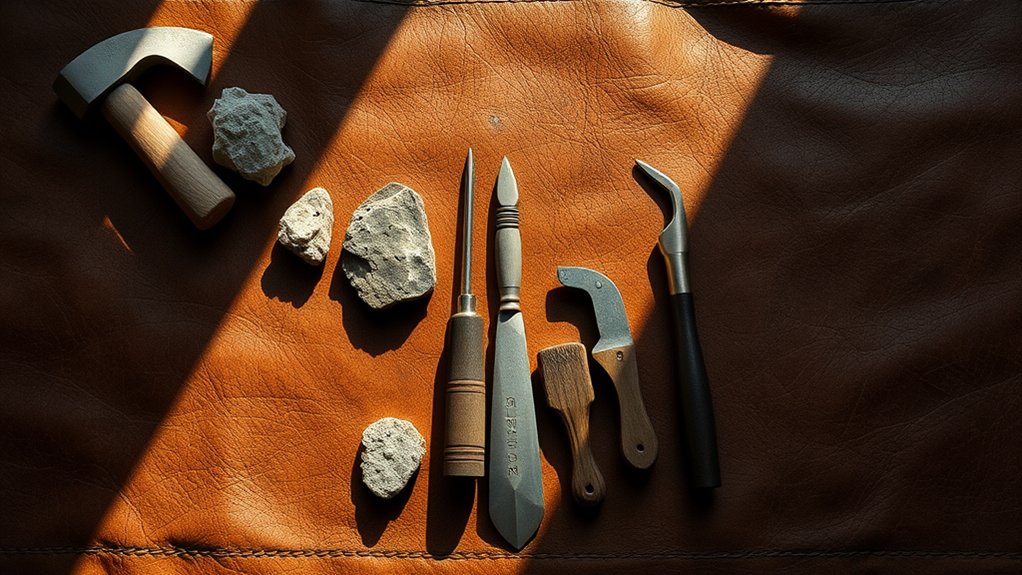
Early humans began crafting tools over 3.3 million years ago, marking a pivotal shift in their ability to survive and adapt. Through primitive engineering, they transformed raw materials like stone, wood, and bone into implements for hunting, gathering, and shelter construction.
Tool making techniques evolved from simple stone flaking to more sophisticated methods, including pressure flaking and hafting. The progression from basic choppers to refined hand axes demonstrated increasing cognitive abilities and manual dexterity. By the Upper Paleolithic period, humans developed specialized tools for specific tasks, such as needles for sewing and harpoons for fishing.

This technological advancement continued through the Bronze and Iron Ages, with metal tools replacing stone implements. Each innovation built upon previous knowledge, establishing the foundation for modern human civilization and technological development.
Ancient Tools That Changed History
Throughout the course of human civilization, several revolutionary tools fundamentally altered the trajectory of society. From stone axes to early pulleys, these innovations enabled humans to shape their environment and build complex civilizations. The shift from wooden spears and flint knives to more sophisticated bronze chisels and copper tools marked significant technological leaps.
| Tool Type | Primary Use | Historical Impact |
|---|---|---|
| Stone Axes | Woodcutting | Forest clearing |
| Bronze Saws | Construction | Building advancement |
| Iron Plows | Agriculture | Food production |
| Primitive Hammers | Manufacturing | Tool creation |
| Agricultural Sickles | Harvesting | Crop cultivation |
These ancient tools laid the foundation for modern technology. The development of agricultural implements like iron plows and sickles revolutionized farming, while bronze and copper tools enabled sophisticated construction and craftsmanship, fundamentally transforming human capabilities and societal development.
Power Tools in Modern Construction


Modern construction sites showcase the remarkable evolution from ancient hand tools to sophisticated power equipment. Power tools have revolutionized the construction industry, dramatically increasing efficiency and precision while reducing physical strain on workers. Construction safety protocols have evolved alongside these technological advances, requiring proper training and protective equipment for all operators.
Key aspects of modern power tools in construction:
- Advanced battery technology enables cordless operation, improving mobility and reducing workplace hazards
- Digital sensors and smart features prevent accidents by detecting unsafe conditions and automatically shutting down
- Ergonomic designs minimize repetitive stress injuries and operator fatigue
- Integrated dust collection systems protect workers from harmful particulates
These innovations continue transforming construction processes, making projects faster, safer, and more cost-effective while maintaining high-quality standards in modern building practices.
Digital Tools and Software Revolution

As construction and engineering practices have evolved into the digital age, software tools and computerized systems have become indispensable for project planning, design, and execution. Building Information Modeling (BIM) platforms enable teams to create detailed 3D models while managing project data efficiently. Computer-Aided Design (CAD) software has revolutionized architectural drafting and engineering design processes.
Digital collaboration tools now allow project stakeholders to communicate and coordinate seamlessly across different locations, greatly improving productivity and reducing errors. Software integration between various platforms has streamlined workflows, connecting project management, cost estimation, scheduling, and design tools into cohesive ecosystems. Cloud-based solutions provide real-time access to project data, ensuring all team members work with the most current information, while enabling remote work capabilities and enhanced version control.
Essential Hand Tools for Every Home
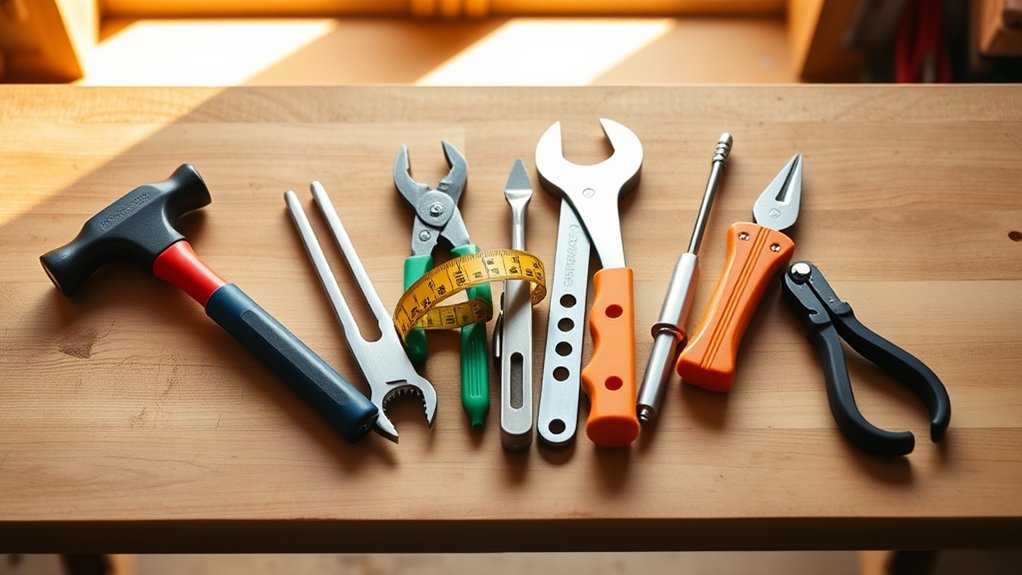
A well-equipped home requires a core set of reliable hand tools for basic repairs, maintenance, and DIY projects. When assembling basic toolkit essentials, homeowners should focus on versatile, durable tools that address common household needs. Maintenance toolset recommendations typically emphasize quality over quantity, guaranteeing each tool serves multiple purposes.
- A hammer, screwdriver set, and adjustable wrench form the foundation of any home toolkit, enabling most basic repairs
- Measuring tools like tape measures and levels guarantee precise installations and alignments
- Pliers, utility knives, and putty knives handle various gripping, cutting, and scraping tasks
- Safety equipment, including work gloves and safety glasses, should complement every home toolkit to protect users during repairs
Agricultural Tools and Food Production

Successful food production relies heavily on specialized agricultural tools that have evolved alongside farming practices throughout history. From basic hand tools like hoes and spades to sophisticated machinery such as tractors and harvesters, these implements enable efficient cultivation and harvesting of crops.
Modern agricultural tools support sustainable farming methods through precision equipment that minimizes waste and environmental impact. Advanced irrigation systems deliver water efficiently to crops, while GPS-guided machinery allows for accurate planting and fertilizer application. Traditional tools remain relevant in smaller operations and regions where mechanization is impractical.
The integration of technology with agricultural tools has revolutionized crop irrigation and monitoring, enabling farmers to manage larger areas with greater efficiency. These innovations continue to shape the future of food production while addressing environmental concerns.
Medical Tools and Healthcare Innovation


Modern medical tools have revolutionized healthcare delivery and patient outcomes through continuous technological advancement. Surgical advancements, including robotic-assisted procedures and minimally invasive instruments, enable physicians to perform complex operations with unprecedented precision. Telemedicine tools connect healthcare providers with patients remotely, expanding access to medical expertise across geographical boundaries.
- AI-powered diagnostic equipment delivers faster, more accurate disease detection and treatment planning
- Smart wearable devices monitor essential signs and transmit real-time health data to medical professionals
- 3D printing technology creates customized prosthetics, implants, and surgical guides
- Virtual reality systems enhance medical training and surgical procedure visualization
The integration of these innovations has transformed patient care, reducing recovery times and improving treatment efficacy while making healthcare more accessible and efficient.
Future Tools and Emerging Technologies
The technological landscape of tools continues to evolve with AI-powered workflow solutions streamlining complex processes across industries. Virtual reality design tools enable engineers and creators to prototype and test products in immersive 3D environments before physical production. Quantum computing applications promise to revolutionize problem-solving capabilities, offering unprecedented computational power for tasks ranging from molecular modeling to cryptography.
AI-Powered Workflow Solutions

As organizations increasingly embrace digital transformation, AI-powered workflow solutions are revolutionizing how teams collaborate, automate tasks, and optimize business processes. These intelligent systems leverage machine learning applications to streamline operations while providing data-driven insights for better decision-making. Through adaptive workflow mechanisms and automated task management, teams can focus on high-value activities while AI handles routine operations.
- Advanced AI automation enables seamless process optimization across distributed teams, enhancing remote teamwork capabilities
- Intelligent task management systems learn from user behavior to suggest workflow improvements and prioritize activities
- Collaborative tools powered by AI facilitate real-time communication and project coordination across multiple platforms
- Innovation acceleration occurs through predictive analytics and automated resource allocation, maximizing productivity enhancement across organizations
Virtual Reality Design Tools
Virtual reality design tools represent a paradigm shift in how professionals conceptualize, create, and test products across industries. These advanced platforms enable designers to work within virtual environments, manipulating 3D modeling elements and testing user interfaces in real-time.
Modern VR design systems leverage sophisticated rendering techniques to create immersive experiences that facilitate design collaboration among remote teams. Through interactive simulations, professionals can evaluate prototypes and gather user feedback before committing to physical production. Prototyping software integrated with VR capabilities allows for rapid iteration and refinement of designs.

Hardware integration continues to evolve, with new devices offering enhanced haptic feedback and precise motion tracking. These improvements enable designers to interact more naturally with virtual objects, leading to more efficient workflows and better final products.
Quantum Computing Applications
Beyond current design tools, quantum computing represents the next frontier in technological advancement, promising revolutionary capabilities across multiple industries. Quantum algorithms are transforming complex problem-solving capabilities, enabling computations that traditional computers cannot achieve. The integration of quantum cryptography guarantees unprecedented security measures for sensitive data transmission and storage.
- Optimization of supply chain logistics through quantum-enabled route calculations
- Drug discovery acceleration by simulating molecular interactions at the quantum level
- Financial modeling enhancement with quantum algorithms for risk assessment
- Climate change prediction improvement through quantum-powered weather simulations
These applications demonstrate quantum computing's potential to revolutionize existing tools and create new possibilities across diverse sectors. As the technology matures, its impact on tool development and problem-solving capabilities will continue to expand, offering solutions to previously intractable challenges.
The Impact of Tools on Society
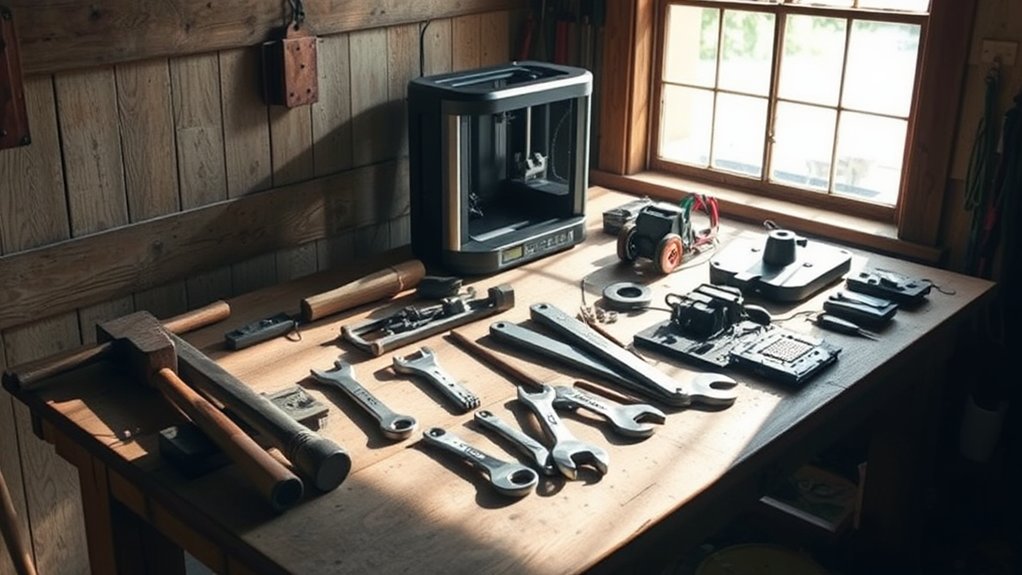

Progress throughout human history has been fundamentally shaped by the development and use of tools. The social impact of tool innovation has transformed societies, from simple stone implements to complex digital devices. Tool accessibility continues to influence economic influences worldwide, creating technological divides between communities and nations.
The historical significance of tools extends beyond their practical applications, carrying deep cultural significance in different societies. As tool evolution accelerates, environmental concerns regarding resource extraction and waste have emerged. However, this has also sparked a craftsmanship revival, emphasizing sustainable practices and traditional techniques.
Tools remain central to productivity enhancement in modern economies, reshaping work patterns and social structures. Their development reflects humanity's ongoing quest to solve problems and improve living conditions, though questions about equitable access and environmental sustainability persist.
Frequently Asked Questions
How Do Archaeologists Determine the Exact Age of Ancient Tools?
Archaeologists determine artifact ages through multiple methods, primarily radiocarbon dating for organic materials and stratigraphic analysis of soil layers. They also use comparative analysis and technological features to establish chronological sequences.
Why Do Some Traditional Craftsmen Prefer Handmade Tools Over Machine-Manufactured Ones?
Traditional craftsmen cherish craftsmanship values and tool making traditions, favoring handmade tools for their unique characteristics, personal connection, and precise customization. These artisans believe each tool carries the maker's soul and expertise.
What Safety Certifications Should I Look for When Buying Power Tools?
Important safety ratings include UL (Underwriters Laboratories), CSA (Canadian Standards Association), and ETL certifications. Tool standards like OSHA compliance and CE marking (European Conformity) guarantee power tools meet established safety requirements.
How Often Should Professional Tools Be Calibrated and Maintained?
What drives ideal performance in professional equipment? Calibration frequency varies by usage intensity, typically ranging from monthly to annually. Maintenance schedules should follow manufacturer guidelines, with daily inspections and quarterly detailed servicing recommended.
Can 3d-Printed Tools Match the Durability of Traditionally Manufactured Tools?
3D-printed tools generally cannot match traditionally manufactured tools in durability. While 3D printing materials continue improving, current limitations in material strength, layer adhesion, and manufacturing precision affect their long-term reliability and performance.
See The Next Blog Post
Tools have fundamentally reshaped human civilization, with studies showing that the global power tools market alone reached $32.2 billion in 2020. From primitive stone implements to sophisticated AI-driven systems, these innovations continue to drive progress across industries. As technology evolves, the integration of smart features and sustainable designs promises to further transform how humans interact with and utilize tools in addressing future challenges.


