


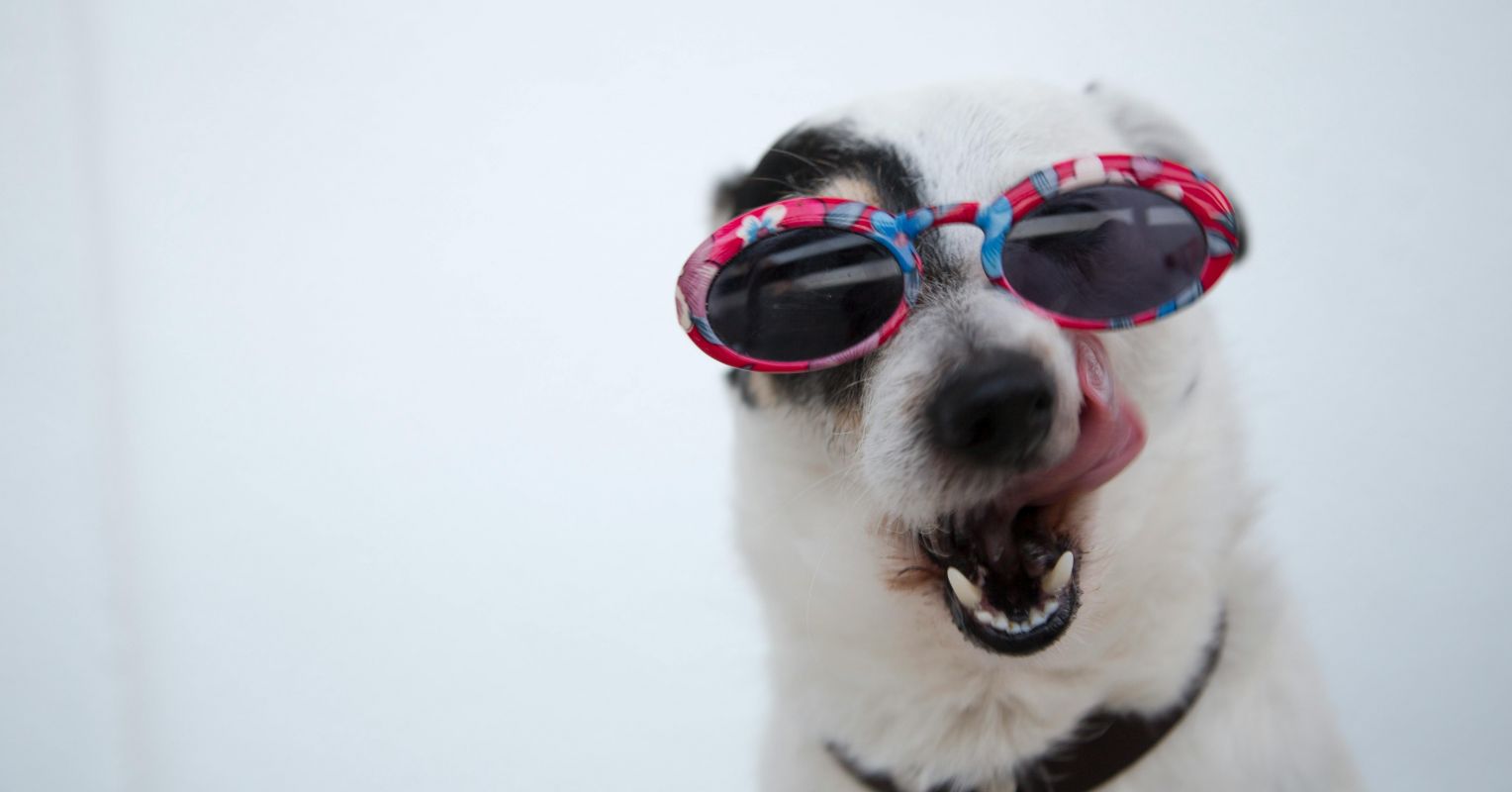
Do pets really have the wonderful lives we think they have? What do dogs and other animals really think and feel about their captive lives? Is it possible that some dogs and other animals might be better off without us?
After a few people wrote to me about award-winning journalist Jay Ingram’s latest book The Science of Pets, I couldn’t wait to read it and find about more about his new insights into the hearts, minds, and bodies of the animals who supposedly love us. I’ve always argued that dogs, for example, are not our best friends nor are they unconditional lovers and that for companion animals—aka “pets”—to have the best lives possible, the people who choose to bring these individuals into their homes and hearts must become fluent in the languages they speak and how we must learn what they are telling us in the myriad ways they communicate what they’re thinking about feeling about their lives in our homes.1

Of course, dogs and cats aren’t the only animals who routinely become captive companion animals, and some other pets such as fully sentient rats, fishes, and reptiles (lizards and snakes) often suffer greatly when held captive because some people mistakenly think they’re having great lives because people believe they don’t need much social or physical enrichment.2 For a wide variety of reasons, I’m pleased Jay could take the time to answer a few questions about his most important new book about the lives of a wide array of pets, those who compose what he calls a “petscape.” I’m sure the animals themselves would surely welcome this thoughtful study of what they need to thrive.
Marc Bekoff: Why did you write The Science of Pets?
Jay Ingram: I was tossing around book ideas with my publisher at Simon & Schuster at that time, Kevin Hansen, and he got excited about building on the legendary Beach Boys album Pet Sounds with a book called Pet Science. He even wondered if the chapter titles could be the song titles. A quick glance at the album killed that idea, but the idea of The Science of Pets survived.3

MB: Who do you hope to reach?
JI: I always try to connect with a general audience. When I was hosting the CBC Radio program Quirks and Quarks, we used to characterize that audience as ‘curious but not expert.’ Implicit is the hope that such an audience wants some depth on subjects of interest. Yes, pet owners are the most likely audience for The Science of Pets but I’d hope that even those who are pet-less (or pet-free?) might be curious about the billions who do have pets and have done so for millennia. Given that it’s impossible to learn about any pet without considering the associated human, the science of pets is as much the study of people as animals.
MB: What are some of the topics you cover and your major messages?
JI: One of my major messages is that pets and humans are inextricably connected; you can’t have one without the other. A colony of feral cats is indeed a collection of “house” cats, not their wild ancestors, but they are not pets. This relationship is significantly deeper than most people realize. We are the only species that keeps pets. (No, the TikTok videos of an elephant with a kitten or a dog with a penguin do not count, because those are unnatural circumstances.) Over several decades in the wild, there might be a grand total of three or four observations of usually closely related, like a macaque monkey with capuchin, but it’s hard to tell whether the associate is a pet, adoptee, or hostage. How in fact would you ever be able to tell?
Dogs were likely domesticated around 30,000 years ago or more, and cats roughly 10,000, both before any other animals, so it’s clear pets are integral to human society. It’s fascinating to me that dogs and cats, our most familiar pets, took very different routes to becoming human companions. Ancient wolves, to use a human term, “ingratiated” themselves with bands of traveling humans, although it is still unclear who took the initiative. Nonetheless, as both sides benefitted, those early animals gradually underwent the genomic changes to become dogs. On the other hand, wild cats started keeping grain harvests free from rats and mice—that was ingratiation enough.
And just a note on dogs and cats: they, together with fish, hamsters, lizards, and birds, are the most familiar pets, but by no means do they represent the global community of pets. Wherever there are humans, there are pets and, in a majority of those cases, it’s local animals that fulfill that role, from eels in Polynesia to weasels in Siberia. The enormous roster of global pets underlines their essential role in human life.
MB: How does your work differ from others that are concerned with some of the same general topics?
JI: One of the early reviews of my book described it as “idiosyncratic,” and that was exactly what I intended. The “petscape,” if I can call it that, and the dazzling array of interactions pets have with humans may not all be integral to the science, but when you have a math prof arguing that his Corgi uses calculus to fetch a ball, a British worker convinced her dog knows she’s on her way home from miles away, a pet owner so bereft that pet taxidermy is an option, and debaters convinced that dogs align themselves with magnetic north to poop—this calls for idiosyncratic treatment.
MB: Are you hopeful that as people learn more about who these amazing animals are, they will treat them with more dignity, respect, and compassion?
JI: Absolutely. There is a tendency among pet owners to think they understand what is going on in their pet’s mind. This is largely harmless and may in fact contribute to better treatment, but the science is quite clear on this—much of what we believe they are thinking is not confirmed by data. But at least it acknowledges that the pet has a mind and has thoughts and feelings that should be taken into account. If a person wants to think their dog is a genius, I’m fine with that!
But I would also like to extend that loving attention to animals who are not pets: the birds that come to the feeder, the raccoons raiding the trash, even foxes, whose behavior in urban settings is reminiscent of the earliest wolves trying to be dogs. As more and more people become urban dwellers, and more wildlife hangs out in cities, greater benevolence on our part will be good for all.


