


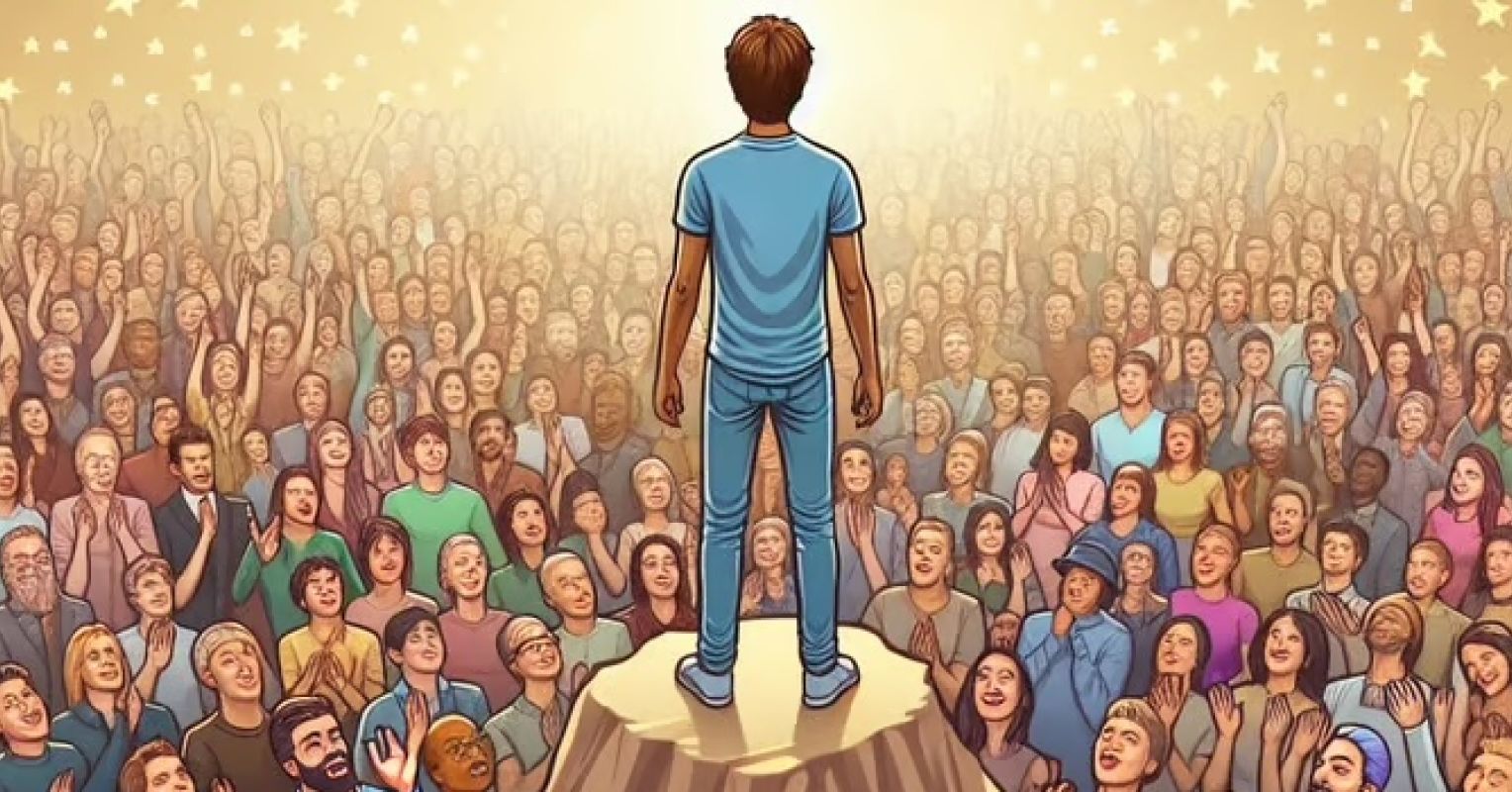
Are heroes real, or are they simply stories we tell ourselves?
Either heroes are objectively real—brave people who perform extraordinary acts of courage and sacrifice—or heroism is merely in our heads, a social construction shaped by culture, media, and wishful thinking. This debate shows up everywhere: in classrooms, in popular culture, and even among scholars who study heroism for a living.

At the heart of many debates about heroism lies what psychologists would call a false dichotomy—the mistaken belief that heroism must be either objectively real or merely socially constructed. This either-or framing is deeply misleading. Heroism is both real and constructed, and its power comes precisely from the way these two dimensions intertwine.
On the objective side, heroism is undeniable. People do step forward in moments of danger. They protect others, speak out against injustice, take personal risks, and make sacrifices that genuinely matter. Firefighters run into burning buildings. Whistleblowers expose corruption. Ordinary people perform extraordinary acts that change lives. To deny the reality of these actions would be absurd—and insulting.
Yet heroism never arrives as a raw fact. We do not encounter heroic acts in a vacuum. We encounter them through perception, interpretation, and story. We decide which acts count as heroic, who deserves recognition, and why certain individuals stand out while others remain invisible. This is where construction enters—not as illusion, but as meaning-making.

Psychological research shows that humans are natural storytellers. We are especially drawn to movement, emotion, and agency. We infer character from posture, intention from timing, courage from stillness under pressure. Long before we evaluate outcomes or moral philosophies, we respond to how people move in moments of tension. Heroism often begins not with deeds, but with perception.
This helps explain why two people can perform similar actions and receive very different reactions. One is hailed as heroic; the other is overlooked or criticized. These differences are not arbitrary, but rather are shaped by social expectations about gender, race, age, status, and role. Cultural narratives guide us toward certain heroic prototypes and away from others, often without our awareness.
Importantly, this does not mean heroism is “made up.” It means that heroic reality and heroic meaning are co-created. The act matters. The perception matters. The story that follows matters. Remove any one of these elements, and heroism loses much of its social force.
Consider how quickly we build heroic narratives from limited information. A calm leader in crisis is read as morally grounded. A restrained response under pressure is interpreted as strength. A decisive step forward becomes evidence of courage. These judgments happen fast, often before we know the full story. Later facts may confirm or complicate the narrative—but the initial impression lingers.
This blending of reality and construction is not a flaw in human psychology; it is a feature. Heroism functions as a social signal. It helps groups identify who to trust, who to follow, and what values to uphold. For that signal to work, heroic acts must be both real enough to matter and symbolic enough to inspire.
Problems arise only when we treat construction as deception or reality as irrelevant. When we assume heroism is “just perception,” we risk cynicism. When we insist it is “purely objective,” we ignore bias and exclusion. The truth sits in the middle: Heroism lives at the intersection of action and interpretation.
Understanding this helps explain why debates about heroes are often so heated. We are not just arguing about facts; we are arguing about meaning. About who deserves admiration. About what kind of courage counts. About which stories we tell ourselves as a society.
Heroism, then, is not weakened by acknowledging its constructed side—it is strengthened by it. When we recognize how perception, culture, and narrative shape heroic recognition, we become better equipped to notice overlooked heroes, challenge distorted judgments, and expand our collective understanding of courage.
Heroes are real. But heroism is never just what happens. It is also how we see, interpret, and remember what happens—and why it matters.
