


As the lights go down in the movie theatre, you reflexively reach into the bucket of popcorn on your lap and start eating. You notice that the first bite is a bit stale, but you persist. By the time the previews are over, you look down and are shocked at what you see. How did you consume half the bucket without a thought?
The answer, in short, is the power of context.

A 2009 study at Duke University found that habitual moviegoers would eat popcorn in a theater regardless of whether they were full, and regardless of whether the popcorn was any good. Researchers intentionally made some of it stale. Didn’t matter. In a movie theater, habitual popcorn eaters ate popcorn.
But when those same people were moved to a school library, the spell broke. They rejected the popcorn when they were full. They rejected it when it tasted bad. As the research paper distills, “People, when they perform a behavior a lot, outsource the control of the behavior to the environment.”
The context cues the behavior, the behavior reinforces the context, and before long, we’ve handed over the keys without realizing we were ever holding them. This is true of snacking, and it’s true of something considerably more consequential: how we create.
What Is Audience Capture and How Does Context Influence Creators?

Audience capture is the process by which creators gradually orient their work around the perceived preferences of their audience. It’s driven by the social media feedback loop, and some of us are better than others at resisting the pull.
But audience capture is also a contextual phenomenon. Luke Burgis, in his new book The One and the Ninety-Nine, helps us zoom out on the bigger picture. Burgis, who writes extensively about mimetic desire and the social forces that shape what we want, explores environments that either reinforce or dissolve those forces. He draws on the anthropologist Victor Turner’s concept of “anti-structures”: social environments in which traditional roles, status hierarchies, and behavioral norms are temporarily suspended. They are, in effect, liminal contexts, devoid of traditional norms and expectations.
And the figure he returns to most vividly is the jazz musician Ornette Coleman. Coleman’s story, as Burgis describes it, is ultimately less about the musician himself and more about the rooms he played in, the ones he avoided, and the ones he eventually built.
The Hidden Psychology of Coleman’s Contexts
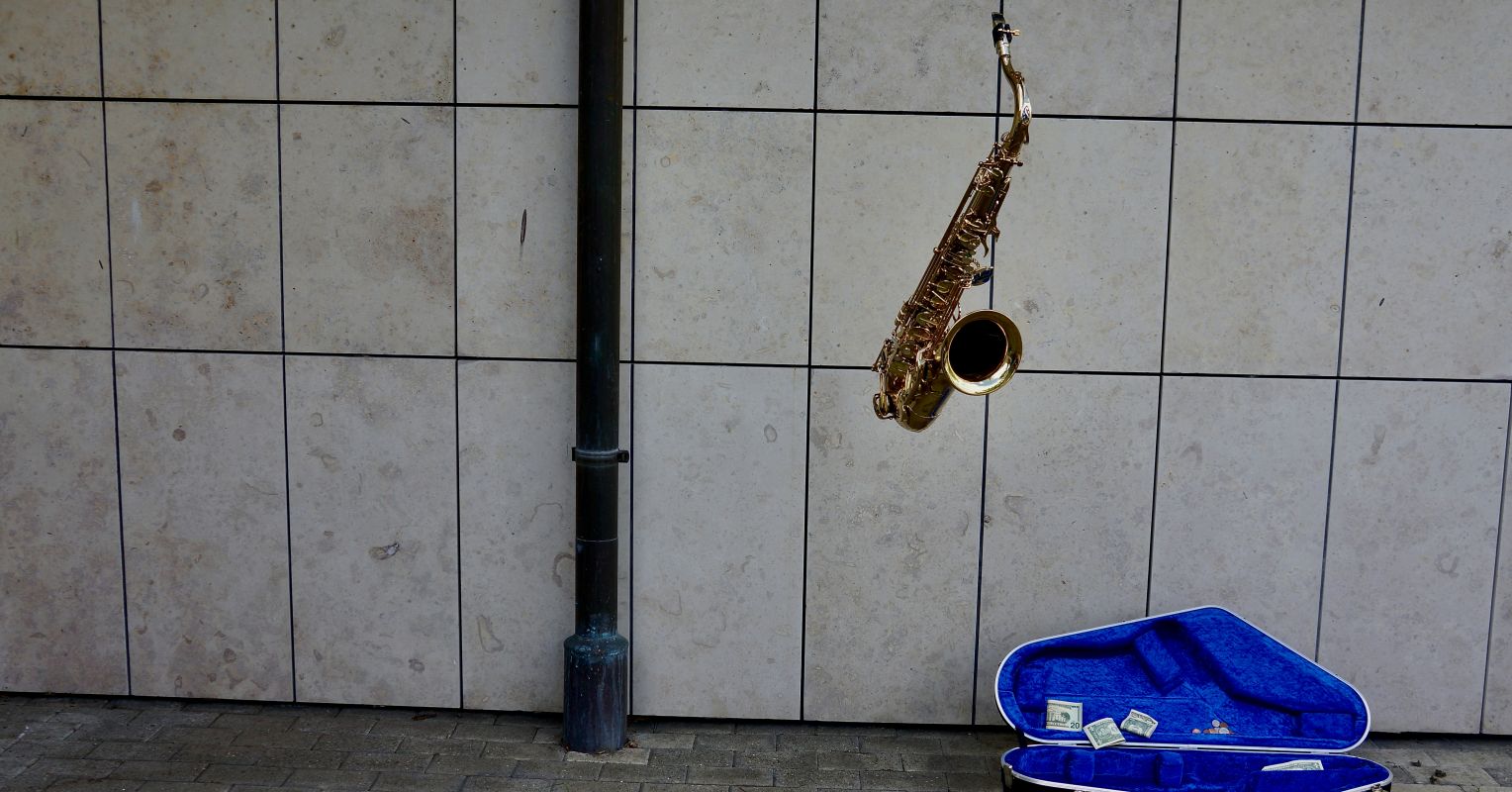
Coleman grew up in segregated Fort Worth, Texas, and started playing alto saxophone around age 14, with almost no formal training. What he had instead was a series of rooms.
The jazz clubs Coleman played as a teenager were unruly, liminal places that blurred the line between concert venue, gambling hall, and brothel. People came to leave their ordinary lives behind. As Burgis writes, quoting Coleman’s biographer Maria Golia, the jazz club “deserves a place alongside temple, amphitheater, and cathedral, for not just conveying higher values but generating them, night after night, dissolving the boundaries separating individuals from a shared experience of the present moment.”
These rooms lacked the ordinary cues. There were no fixed expectations about what the music should sound like. And it was in one of these rooms, during a solo on the 1927 standard “Stardust,” that Coleman first played the melody “from the outside,” following the notes the song inspired in him rather than the ones people expected to hear. He was fired immediately.
Over the next decade, Coleman endured poverty, violence, and obscurity for refusing to play what audiences wanted. As Burgis described in a recent conversation: “He was willing to endure poverty for almost a decade, and seemed to be very conscious of the price that he was paying to make the kind of music that he was making, economically and socially.”
Most creators can’t afford that price. The research on Grammy winners tells us as much: even being nominated but not winning pushes artists toward more conformist, genre-bound music. Proximity to recognition, without the recognition itself, makes the pull of the audience stronger. Is there a less punishing way to loosen the audience’s grip?
The Psychology of Context Meets the Power of Liminal Spaces
From a psychological standpoint, Turner’s anti-structures work because they reverse the logic of the popcorn study. Where the movie theater cues habitual behavior by providing familiar signals, the anti-structure liberates by removing them. You don’t know what’s expected of you, or of anyone else, and so the habitual pull weakens. There’s genuine jeopardy in this unpredictability, but there’s also a rare freedom. The environment provides no instructions.
Coleman seemed to understand this intuitively. He eventually stopped just finding anti-structures and started building them. In 1968, he bought a loft in SoHo at 131 Prince Street and turned it into a space he called “Artists House,” giving space to other musicians for almost nothing. There was no stage-audience divide, no traditional hierarchy, no familiar cues telling anyone what the music was supposed to sound like. As Burgis writes, “Coleman, at this stage in his life, was interested in creating places where new relationships could emerge outside of traditional contexts.”
The loft jazz era it helped spawn was short-lived, but the creative output was extraordinary. The lesson from Coleman’s lofts is that the spaces where audience capture loses its grip share specific features: the usual status markers are absent, the feedback loops are disrupted, and the people in the room don’t yet know what to expect from each other or from themselves.
These liminal spaces can be physical or digital, formal or improvised. Burgis describes a friend who hosts cocktail hours with a single rule: nobody is allowed to say what they do for work. That’s an anti-structure. So is seeking out people in their own in-between stages, and gathering in that shared uncertainty. One key insight from Turner, which Burgis emphasizes throughout the book, is that anti-structures aren’t meant to last forever. As Burgis put it: “Most of us spend almost none of our time in anti-structures. I’m not advocating to just live in it, but to have the right amount.”
The familiar context, trained on our past habits, has a vicelike grip on our behavior. You eat what you always eat, without thinking, without hardly tasting what you consume. In a liminal space, the unfamiliar context provides a greater, richer set of possibilities.
