


With growing anticipation for the A24 film debut of Backrooms, liminal spaces have become a viral symbol of psychological horror. These spaces unsettle us because they highlight our brain’s sensitivity to processing ambiguity and transition. Images of the film’s main characters, the backrooms themselves, evoke similarly disconcerting places we’ve all experienced: a narrow, dim hotel hallway, a long underground hospital corridor, or an empty airport terminal. By examining the neuroscience behind these spaces, we can better understand their impact and what they reveal about navigating transitions.
Trapped in Liminality
Recently, it has become more cost-effective to abandon malls, big-box buildings, and entire neighborhoods and construct new ones, rather than reuse or repurpose existing structures. This practice has resulted in a new typology of liminal spaces. These are liminal in time: spaces sitting empty, awaiting reuse or demolition, much like ghosts lingering before crossing over. These are not merely liminal spaces, but rather spaces trapped in liminality. This architecture of ambiguity, across both space and time, may resonate with many youth experiences about our world, as youth transition to adulthood.

Neuroscience shows that the systems we use to navigate physical space also organize our memories. Our brain is highly sensitive to liminal spaces because memory is organized around change – in space, time, and events. By exploring what the brain is doing while in liminal spaces, we can better move through change and avoid getting stuck in uncertainty.
Boundaries Structure Our Experiences
Spatially, liminal spaces physically demarcate change between one place and another. As circulation spaces, liminal spaces account for about one-third of buildings. They appear as corridors, stairs, and vestibules. Typically, these spaces do not stimulate us emotionally, engage us sensorily, or provide meaningful, goal-driven reasons to occupy them. They serve as connectors between other more meaningful spaces, and as boundaries between more important events.
The brain uses boundaries to decide where one experience ends and another begins. Studies on the Doorway Effect show we are less likely to remember objects after we move through a doorway than after moving the same distance in a room without a doorway. It is suggested that the door prompts our brain to update from the prior room to the current context.

Transitions keep us on alert. As we move through a transition space, our brain is actively processing the differences in context. Research suggests that when the spaces on either side of a door or boundary are too similar, the brain struggles to separate them into distinct experiences. When spaces start bleeding together, the way we remember them blends too.
The Backrooms exploit these processes, pushing our tolerance for uncertainty to the point of terror. They are designed to be destabilizing; the spaces literally start morphing and blending together just like our memories do. While our time occupying threshold spaces like doorways lasts merely an instant, in the Backrooms, liminality is stretched to an uncertain, or even seemingly infinite, duration. With doors in front of you, corridors intersecting behind you, and the opportunity for jump scares from every direction, we are constantly on alert; we cannot turn our attention inward and let the mind wander.
Context Cues Reduce Uncertainty
During change, our brain is trying to scenario-plan: to predict what lies on the other side of the boundary and chart the best path forward. It does this by comparing the current context with stored memory. Stable environmental cues help us feel oriented and safe.
When a space is featureless, there are few context cues to inform decision-making. It is like trying to put a puzzle together when all the pieces are the same color, or navigate an underground parking garage where everything looks the same. The Backrooms are designed with no clear exit, no global cues, and no windows to where you are in the larger context or even what time of day it is. You can’t remember how you got in, nor find your way to get out.
Lingering Helps Us Process Transition
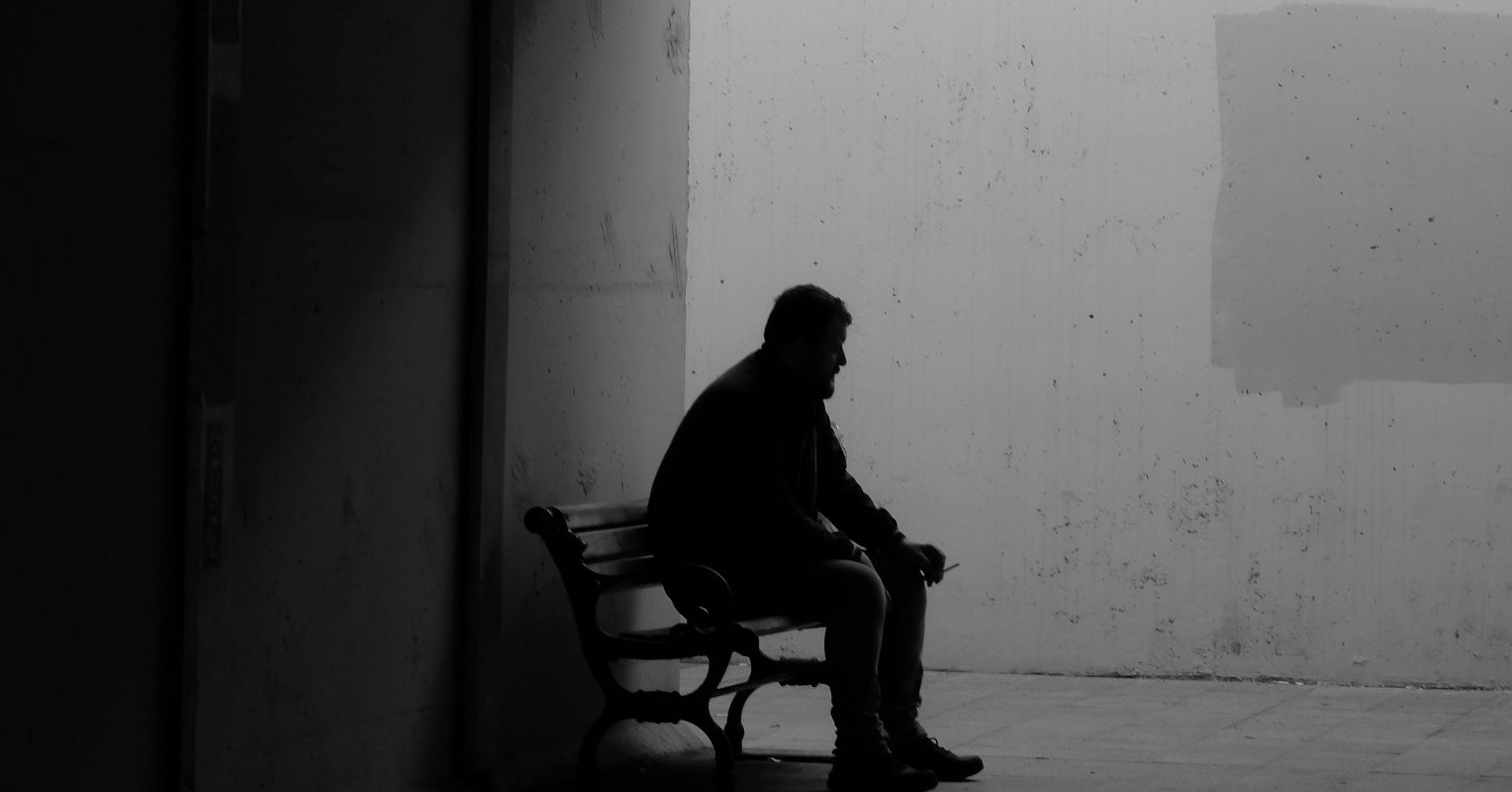
The healing version of a liminal space becomes a buffering instrument, allowing us to linger in transition without trapping us in uncertainty. When liminal spaces are intentionally designed for a supportive pause, we can move out of active scanning mode. There is a possibility of more meaningfully integrating context, reflecting internally, and preparing for what comes next. In her article, “Places of pause: The cognitive impact of wakeful rest”, Miriam Hoffman suggests that something as simple as a bench placed at a decision point in a complex environment can encourage pause and may support internal processing.
Neuroscience Essential Reads
Redesigning the Liminal Spaces in Our Lives
Currently, we are experiencing widespread transitions—social, technological, economic, and developmental for today’s youth. The outcome on the other side is difficult to predict. Occupying the in-between means there is uncertainty and potentiality, for harm or possibility, evoking a range of responses from fear and dread to curiosity and exploration. The current obsession with liminal spaces helps us recognize where they appear in our lives and how poorly we buffer transitions. Liminal spaces do not have to trap us; they can help us process change.
Because our brain interprets liminal spaces the same way it processes life transitions, architecture offers valuable strategies for managing uncertainty. By intentionally designing transitions—limiting simultaneous boundary moments, increasing context visibility, and creating spaces for reflective pause—we can move through change with greater psychological resilience and healing.
