


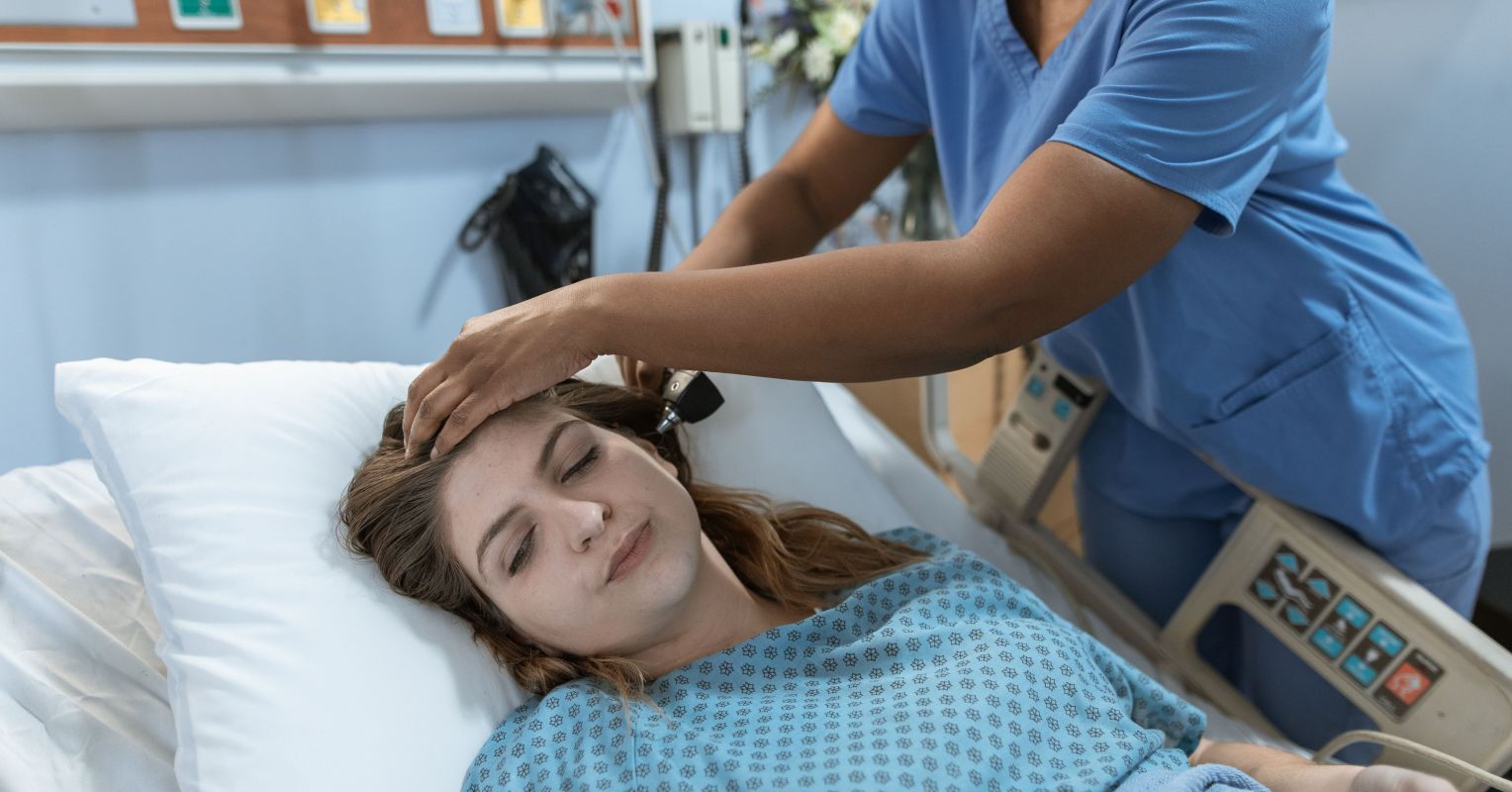
This morning, I woke up at 6 a.m. and willingly went to an imaging center to allow them to shove my body into a metal tube and take pictures of all of my organs. The technician became interested in my reason for being there once I disclosed that I was six months postpartum. I explained my months-long journey, which included one endoscopy, two colonoscopies, a CT scan, multiple blood tests, and now an MRI (with insurance still refusing to cover the medication I need to not die), along with the joking warning: You’ll be fine if you don’t get pregnant.
She leaned over and said, “I just found out that I am.”

At that point, I did everything I could to minimize. I had a higher risk. Autoimmunity runs in my family. I had unexplained symptoms from childhood. This would not happen to her.
Except it might.
She already has Hashimoto’s, she disclosed, and, as she put it, autoimmune disorders run in packs.

As I sat still in that metal tube, listening to the whirring sounds of the machine and Carly Rae Jepsen blaring through the headphones (I asked for Taylor Swift), I couldn’t help but think: Is this just a rite of passage into motherhood?
Two months after the birth of my second baby, I was diagnosed with Crohn’s disease. The diagnosis was a long time coming and not much of a shock. I finished talking to the doctor, wandered out to the car to meet my husband and my baby, and then went about my business. I did not have time to process the new, and massively life-altering, diagnosis. There was work to do and two young boys who needed me.
As a therapist working in maternal mental health, I tend to work with perfectionism quite a bit. The women I work with are over-functioning, high-achieving, and often—quite sick. I see women with unexplained stomach issues, headaches, high blood pressure, and chronic pain, many of them far too young to be feeling so old.
This is not surprising. Women in the childbearing years often experience extreme physical and psychological demands associated with pregnancy, childbirth, and parenting. Approximately 80% of individuals diagnosed with autoimmune diseases are women, with many autoimmune conditions first emerging during the reproductive years (Angum, Khan, Kaler, Siddiqui, & Hussain, 2020). There is no denying that something about the state of being a woman, especially a mother, is making us sick. Research titled Neglected Medium- and Long-Term Consequences of Labour and Childbirth has shown that more than one-third of women will experience a long-term health condition after childbirth (Vogel et al., 2024).
Chronic illness feels like the price you have to pay to be a woman, much less a mother, in our culture. And now, the culture at large is trying to convince you that it is your fault.
There is a new and increasingly concerning dialogue around chronic health conditions that is not unfamiliar: It’s all in your head—but not in the way that you think.
Spend a few minutes on TikTok or Instagram, and you’ll quickly encounter messages suggesting that chronic illness is simply a manifestation of unresolved trauma or poor self-care. While I do not want to discredit the role that unresolved trauma and mental illness have on the body, when you dig deeper into this type of messaging, it is often a new form of ableism in disguise.
When I finally came to grips with my diagnosis, the underbelly was deep grief that took the form of a call and response:
I did everything right, so why did I get sick?
Then, immediately:
So, is your illness your fault for not living life right?
I realized that this is the same Puritan-drenched thinking that we all know so well.
When you start seeing this messaging, you see it everywhere. You see it in ads for anti-inflammatory diets. You see it in doctors’ offices and from therapists on the internet. If you let go of your trauma, move your body, take this supplement, lose weight, go on a retreat, do a cleanse, start yoga, set small daily goals—you won’t get sick. And if you do get sick, you should have lived differently. Try again next time.
Chronic Illness Essential Reads
While I do not think that repressed emotions cause chronic illness, I do think that we have to have a reckoning with the fact that our bodies cannot carry on this way and that we have to find a way to start listening to them.
This is where the conversation can become more productive.
While I don’t think I caused my illness, I do think that it is forcing me to live my life differently. Living with chronic illness calls you to live differently. The over-functioning has to stop. The inflamed and exhausted body can no longer maintain the shoving down of emotions and people-pleasing. Perfectionism cannot live in a body that is inherently “imperfect,” and there is something very freeing about that fact.
So, if there is anything to take away here, it would be this: Women are getting sick, and they are getting sick at a much higher rate than men. We should look into this. We need research to find ways to stop these conditions from occurring.

Living “wrongly” did not cause this, and living the “right way” will not fix it.
And yet, chronic illness is calling you to live differently.
Listen to your body. Pay attention to how you are talking to yourself. Notice how you are metabolizing emotions, and allow your priorities to shift as your body needs. Above all, allow yourself time to grieve and process.
Your life is not over, and in many ways, it may be just beginning.
