


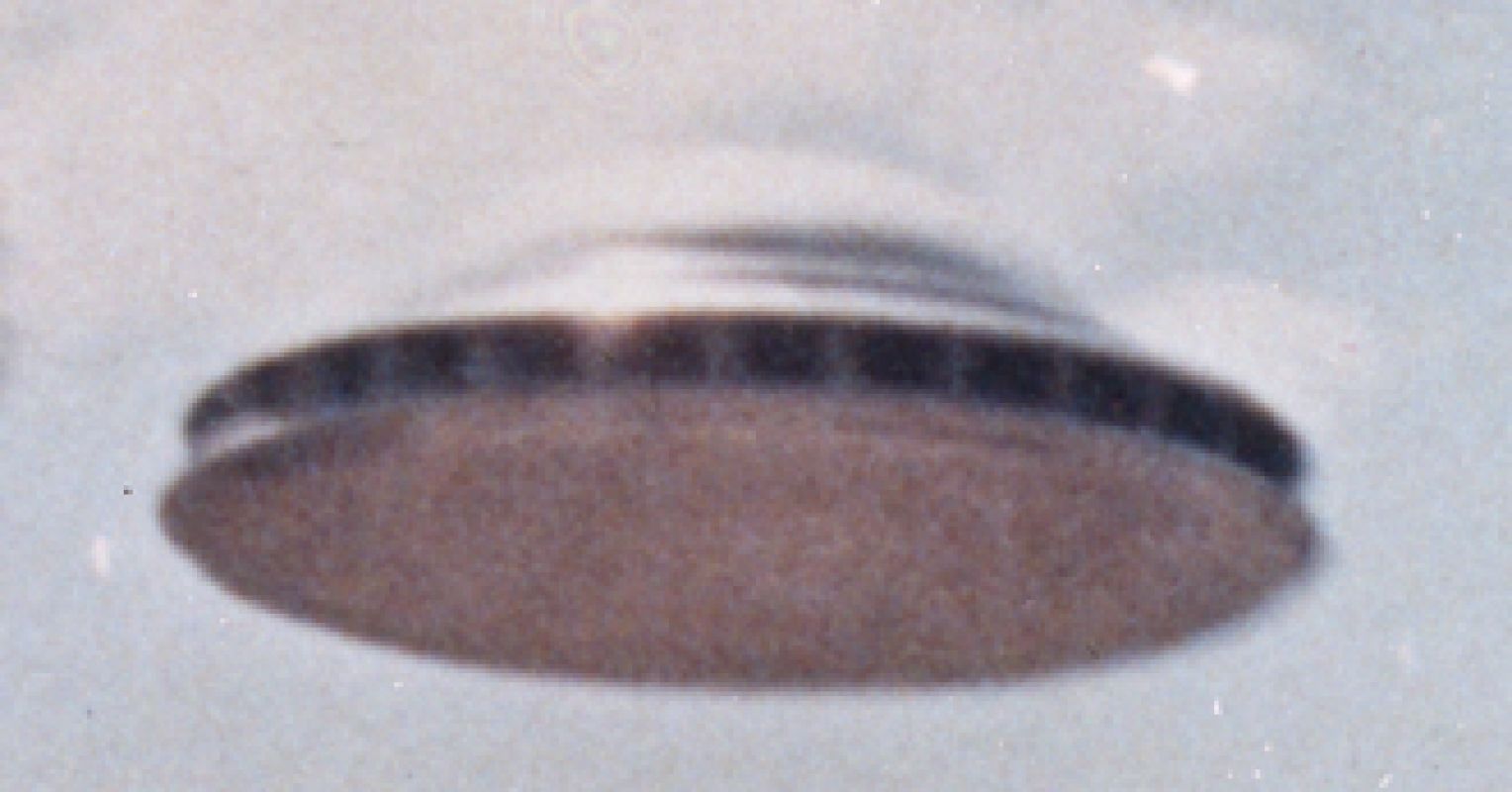
Though the phenomenon of evil has, with few exceptions (see, for example, Jung, May, Milgram, Fromm, Frankl, Lifton, Peck, Becker, Diamond, Baumeister, and Zimbardo among many others) been for the most part ignored, neglected, minimized, or dismissed by mainstream psychology up until now, it can no longer be denied or avoided today without potentially calamitous consequences.
For instance, what if we really are being visited by aliens from other worlds and they turn out to be aggressive, violent, malicious, and have evil intentions? How will the world cope with such an extraordinary existential crisis? As Carl Jung (1961) presciently put it shortly before his death, “Today we need psychology for reasons that involve our very existence…. We stand face to face with the terrible question of evil and do not even know what is before us, let alone what to pit against it.” (pp. 331-332). Every era or generation, it seems, must encounter the archetypal problem of evil in some new way or different form in order to be forced to recognize, acknowledge, and learn to confront it.

In this sense, the UFO or UAP phenomenon provides a real Rorschach-like receptacle for us to project both our greatest fears and hopes, and, maybe most of all, to give us something or someone we can see as evil rather than recognizing it in ourselves and our world. Confronting and coming to terms with the reality of evil in life is an existential, philosophical, ethical, moral, and spiritual challenge par excellence and one with which psychotherapists and their patients wrestle every day, whether consciously or unconsciously, explicitly or implicitly.
Xenophobia, a term derived from the Greek words xenos (stranger) and phobos (fear), is, by definition, an extreme or irrational dread, prejudice against, intense dislike, or outright hatred of that which is unfamiliar, foreign, other, or alien. Xenophobic tendencies are deeply rooted in the human psyche, perhaps representing a remnant or vestige of the tribalism and instinctual fears of our primitive forebears, whose very survival was constantly existentially threatened by the unexpected appearance of outsiders or strangers. More generally speaking, xenophobia, not unlike obsessive-compulsive symptoms, can be conceived of as an apotropaic response to or neurotic defense mechanism against encountering the existential reality of evil.
For many today, the growing possibility of our planet being visited by uninvited extraterrestrial aliens whose intentions and motivations are unknown triggers exactly this sort of classic xenophobic response in which we defensively assume the worst about those unknown to us, partly because we fear and project our own negative “shadow” onto them. (See my prior post.) On the other hand, in contrast to xenophobes, there are some people that tend to assume the best about aliens, strangers, foreigners, and others in general. Why is that? Are these individuals essentially more secure, trusting, and optimistic than the rest of us? If so, why? We could speculate that perhaps they are projecting what we might call their “positive shadow” onto the “other,” i.e., those latent constructive, prosocial, and creative qualities in themselves that have been previously ignored, neglected, and underdeveloped. Or, to take a slightly more cynical view, another possibility is that such exceedingly optimistic, trusting individuals are actually in a state of denial about the reality of evil in themselves, others, and the universe, a perilous naivete or pseudoinnocence (May, 1973) which renders them all the more vulnerable to it.

Belief (or faith) in UFOs and alien beings can be a way of wishing and hoping to be rescued from evil, much like the belief in a loving and good god or messiah (see my prior post on the messiah complex). This presumes and counts on the intrinsic benevolence and goodness of such aliens. But what if aliens turn out to be not so friendly and benevolent, but overtly or covertly evil? Is the problem of evil indigenous to the human race or could it be present in extraterrestrial civilizations as well? Whatever these increasingly reported foreign objects and their occupants (or remote or robotic pilots) are and wherever they come from, they have now become an integral part of our modern collective myth. If aliens, assuming for a moment that they do truly exist, eventually turn out not to be trustworthy, exhibiting hostility, aggression, malice, and evil deeds, and are found to pose a mortal threat to humanity, as depicted, for example, in H.G. Wells’ (1897) classic science fiction novel War of the Worlds, they will need to be fiercely fought and resisted despite their superior technology if humanity is to survive. The idea of extraterrestrial aliens even possessing or representing such a sinister potentiality for evil is, for some people, terrifying reason enough to deny or dismiss their existence entirely. Hear no evil, see no evil, speak no evil.
Indeed, it is equally possible that such enigmatic entities are benign, mean no harm by their presence, or may actually wish to help society and humanity survive and thrive, as some surmise. (See, for example, Steven Spielberg’s 1977 film Close Encounters of the Third Kind.) It is possible that their mission here is to save us from ourselves and the ever-present self-destructive possibility of nuclear annihilation. Have evolved extraterrestrials, unlike humanity, found some way to transcend, mitigate, or even eradicate the pernicious problem of evil that has plagued our species from time immemorial? Of course, another at least equally likely scenario in any true close encounter with aliens has humanity as the initial aggressor, hostilely attacking these seemingly well-intentioned, empathic, and peaceful, or at least neutral, strangers, as portrayed in another classic sci-fi flick, The Day the Earth Stood Still (1951).
Until we know much more about these supposedly extraterrestrial visitors, whoever or whatever they are, we would do well to keep in mind the archetypal capacity for evil, not only potentially in them but especially in ourselves. The perennial problem of evil may reside inherently and exclusively in the terrestrial human condition, but, then again, it could turn out to be a more pervasive, virulent, and ubiquitous cosmic presence, one which, as here on this planet, can lead to tragic and catastrophic consequences when denied, minimized, or ignored. The problem of human evil, if found to be indigenous and exclusive to our own species, can be conceived of as a kind of malignant cancer capable in the future of metastasizing to the farthest reaches of creation. Which is why it is so crucial for psychologists to better comprehend it and its evolution. It is only natural for us to hope that aliens, if they exist, have transcended, outgrown, learned to better control, or completely extirpated the evil proclivities we primitive humans still individually and collectively struggle with and suffer from. But realistically, the more likely scenario is that, if these visiting or invading aliens are proven to be real, they are, for better or worse, probably more like us: intelligent, creative, complex creatures intrinsically capable of both good and evil.
