


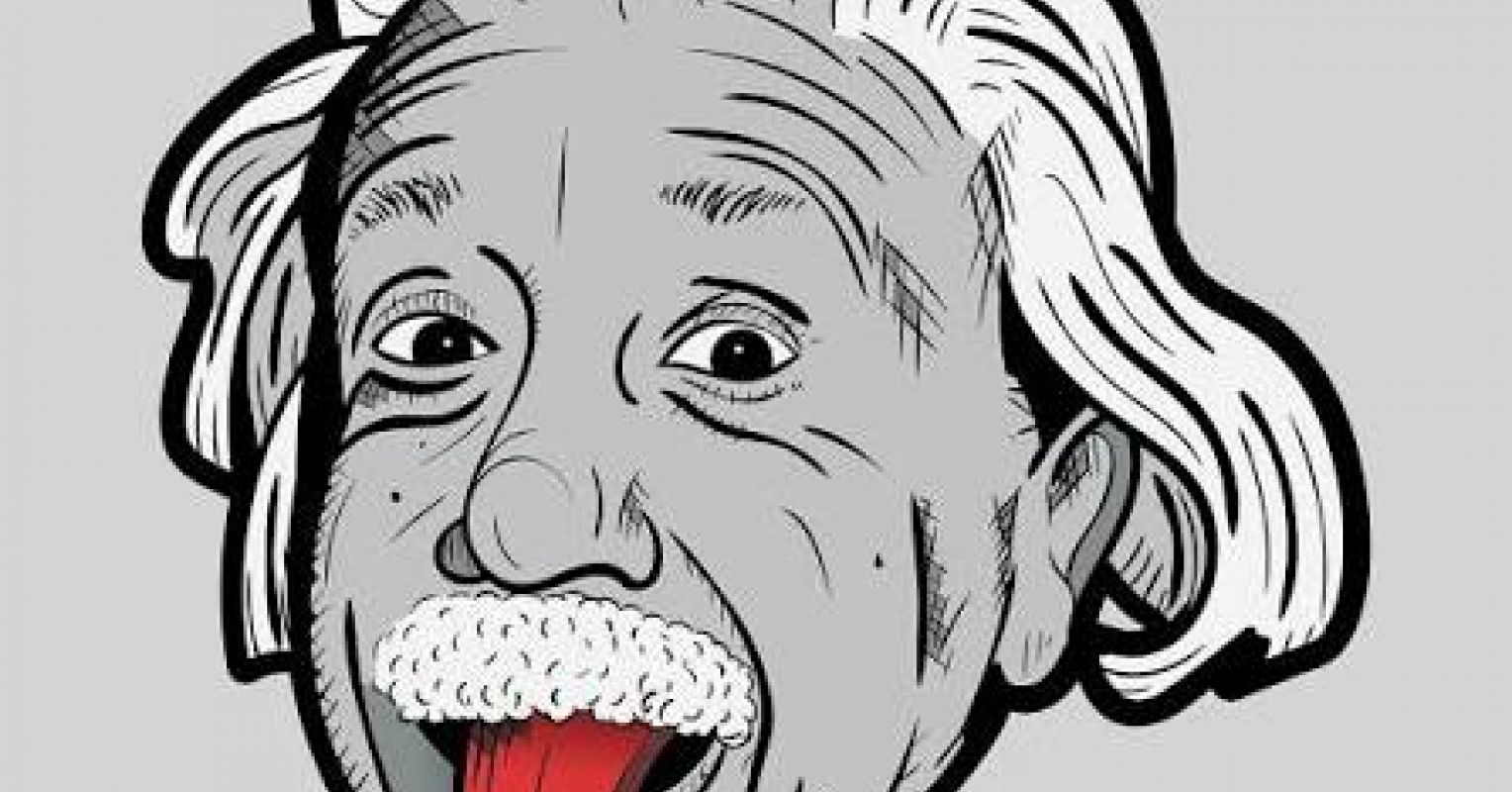
In surveying the landscape of current scientific knowledge about giftedness, I discovered the work of Rena F. Subotnik, an American psychologist and a prominent scholar in giftedness, talent development, and gifted education. Subotnik argues that giftedness should not be thought of simply as possessing an unusually high IQ or an exceptional ability in childhood. Early potential must be transformed through education, opportunity, motivation, and other psychosocial factors into increasingly sophisticated expertise and, in rare cases, eminence (her term for genius).
Notable Geniuses Who Defied Early Expectations
While people like Marie Curry, Mozart, or Picasso were conspicuously gifted as children, most gifted children do not rise to the level of geniuses. Some may become very successful but not geniuses.

The converse is also true. Many children who reach genius status later in life showed little promise in their youth.
Thomas Edison struggled with conventional schooling, while Albert Einstein, despite his early mathematical ability, failed the general portion of the entrance examination to the Swiss Federal Polytechnic at age 16.
William Shakespeare received only the standard grammar-school education until his mid-teens, when he had to quit to help the family financially. Importantly, there is no historical evidence of extraordinary literary precocity in his childhood. Yet he became arguably the greatest playwright who ever lived.

Leonardo da Vinci had even less formal education. Born illegitimate, he was instructed mainly in ordinary spoken and written Italian rather than in Latin and did not study Greek, philosophy, or mathematics available to children of nobility. Still, da Vinci became one of the greatest painters and most diverse scientific minds in history.
Defining a “Genius”
Giftedness and genius are not synonymous. Historically, both became enmeshed with IQ testing, but scientists now realize that this was a mistake. A child with an IQ of 160 is extraordinarily gifted, but we don’t automatically call that child a genius. Einstein is considered a genius not because someone measured his IQ but because he changed our understanding of space and time.
Apart from the studies on Einstein’s brain, which only showed greater connectivity between the two hemispheres, there is surprisingly little neuroscience that explores “genius” itself, for the obvious reason that the designation “genius” is generally retrospective. Hardly anyone is considered a genius in their lifetime. The strongest academic literature therefore comes from two overlapping areas: exceptional creativity and high intelligence.
The authors of these studies concluded that highly creative people do not necessarily possess different brain machinery. They may be unusually good at coordinating two normally competing mental processes: Letting the mind roam freely enough to produce unexpected ideas while maintaining enough control to recognize which ideas are worth pursuing.
Historical Context and Evolution of the Term “Genius”
Eric Weiner, in his book, The Geography of Genius, describes how creative genius flourished in specific places at specific times in history, such as Athens in 450 BC, Renaissance Florence, or Silicon Valley in the present, to name a few. These places provided opportunities to engage in stimulating intellectual frisson with other like-minded friends and rivals in a society that valued their achievements and provided them with financial support.
The Latin “genius” originally referred not to exceptional intelligence but to a guiding or generative spirit associated with a person. Only much later did the word migrate from a person having a genius to a person being a genius.
The Myth of the “Mad Genius”
Popular culture has long cherished the image of the “mad genius,” brilliant but eccentric, emotionally unstable, socially unconventional, and hovering somewhere near the border between inspiration and madness.
Intelligence Essential Reads
Many authorities report that highly creative scientists and artists tend to be open to experience, unconventional, self-confident, driven, and independent, while often being somewhat less conscientious in the conventional sense. However, any serious mental disorder itself would interfere rather than further the creative process. “What allows genius to flower is not neurosis, but its opposite, ‘ego strength,’ meaning among other things ordinary, Sunday-school virtues such as tenacity and, above all, the ability to survive disappointment,” wrote cultural critic and author Joan Acocella.
The Role of Serendipity in Genius
Consider the career of Sir Alexander Fleming, the discoverer of penicillin. He chose to attend St. Mary’s Hospital Medical School in London, partly because, as a teenager, he had played water polo against its team and made some friends there. While there, Fleming became an excellent shot, so his supervisor wanted to keep him at St. Mary’s on its rifle team. Thus encouraged, Fleming stayed at St. Mary’s to study bacteriology.
Then came the famous accident. A mold contaminated one of his bacterial cultures. Plenty of scientists might simply have thrown the spoiled dish away. Fleming noticed something peculiar: bacteria were not growing around the mold. He pursued the observation, and penicillin was born. People liked him, admired him, and wanted to keep him around. Doors opened. He was invited to enter. He entered.
The Complexity of Geniuses
Not all geniuses are like Fleming. Geniuses may not always be “nice” people or easy to get along with. They have their faults like the rest of us. But they have something that induces other people to take an interest in them. That “something” might be charm, confidence, usefulness, persuasiveness, or the extraordinary quality of the work itself.
What we know for certain is that genius is not about psychometric tests or brain architecture or creativity, though all these are contributing factors. In the scientific field. It is a sudden flash sometimes referred to as a “lightbulb moment.” A connection is made that no one else ever made, like Newton watching the apple fall. Or it is the gradual development in a person with talent and personality who patiently and often single-mindedly keeps perfecting their craft over time. A good example is Toni Morrison, whose linguistic originality, psychological depth, and treatment of history transformed American literature. She won the 1993 Nobel Prize in Literature.
Life throws you a pass. Catching it shows you are gifted. Convert it to a touchdown, and you enter the pantheon of geniuses. Giftedness is potential; genius is what you do with it.
Adapted from an article that also appears in The Globe and Mail.
