


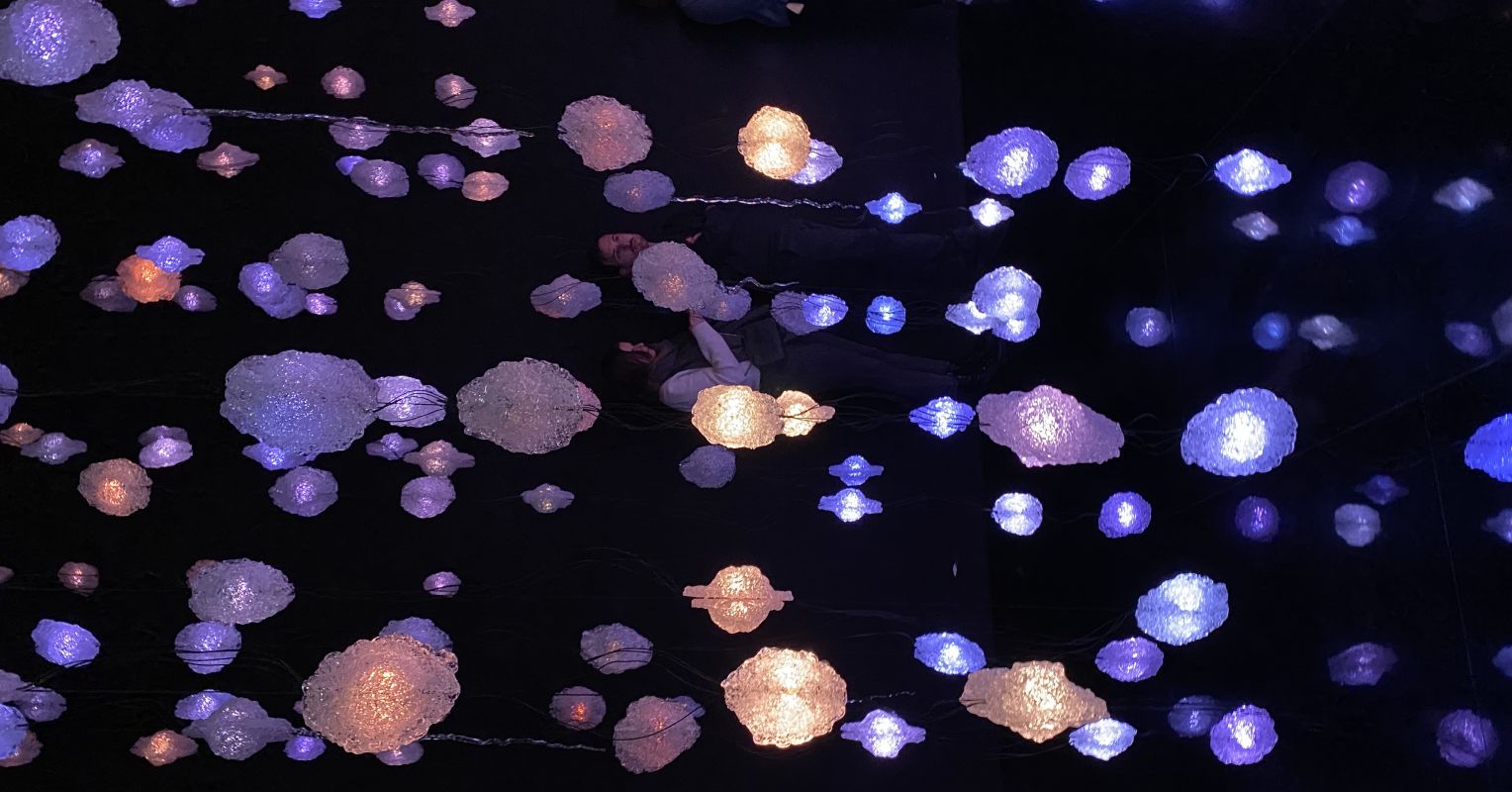
At the Indianapolis Art Center, “Awakened Infestation: AI in Contemporary Art” presents a bold examination of the complex relationship between creativity and artificial intelligence. The exhibition encompasses a diverse range of art forms, including painting, ceramics, photography, weaving, and AI-assisted works. It highlights artists who are not only experimenting with new tools but also actively questioning the dangers associated with them.
Rather than portraying art as a passive casualty of technological disruption, these pieces reflect the historical resilience of artists, who adapt, resist, and reinvent in the face of change. In a world flooded with machine-generated images, “Awakened Infestation” challenges viewers to sharpen their discernment and consider how uniquely human perception remains essential in defining what art means in the age of AI.

This conversation—between human creativity and technology—is playing out not only on gallery walls but also in the very architecture of museums. Across the United States, a wave of tech-focused institutions is rewriting what cultural spaces can be. Forget hushed halls and static frames; these are multisensory playgrounds where projection mapping, motion sensors, and algorithm-driven design transform visitors from spectators into participants.
Take the WNDR Museum in Chicago, where mirrored rooms, LED displays, and motion-responsive installations invite guests to “step into” art rather than merely view it. Santa Fe’s Meow Wolf has gone even further, building an entire narrative world: House of Eternal Return, a suburban home doubling as a portal to glowing forests and alien landscapes. Its Denver outpost, Convergence Station, expands the concept into a multistory cityscape that blurs the lines between science fiction and digital craft.
New York’s Mercer Labs shows that innovation doesn’t depend on scale. Tucked into a repurposed retail space, it offers high-design installations that merge architecture with interactive media. At the same time, Wonderspaces functions as a nomadic gallery, staging immersive exhibitions in multiple U.S. cities and spotlighting international artists.

Some spaces lean into spectacle. Miami’s Superblue fills cavernous halls with projection-based ecosystems by artists like teamLab, while Columbus’s Otherworld offers a hybrid of theater and escape-room adventure across 47 themed environments. In Houston, Seismique combines robotics, AI, and light art to create a theme park that showcases digital aesthetics. Los Angeles’s Wisdome LA utilizes dome-based 360-degree projections to immerse visitors in cinematic environments.
Then there’s ARTECHOUSE, the pioneer of tech-driven art spaces, with permanent venues in Washington, D.C., New York, and Miami. Known for its site-specific, constantly evolving shows, ARTECHOUSE collaborates with artists who harness algorithms, sensors, and immersive projections to create experiences that feel alive.
Together, these venues signal a cultural shift: Technology has leaped from behind-the-scenes infrastructure to the centerpiece of curation. These spaces attract audiences of all ages but resonate particularly with younger generations who crave participation over passive observation. They challenge traditional definitions of art, turning exhibitions into experiential storytelling platforms and demonstrating that technology, far from erasing humanity, can highlight the irreplaceable value of human imagination.
