


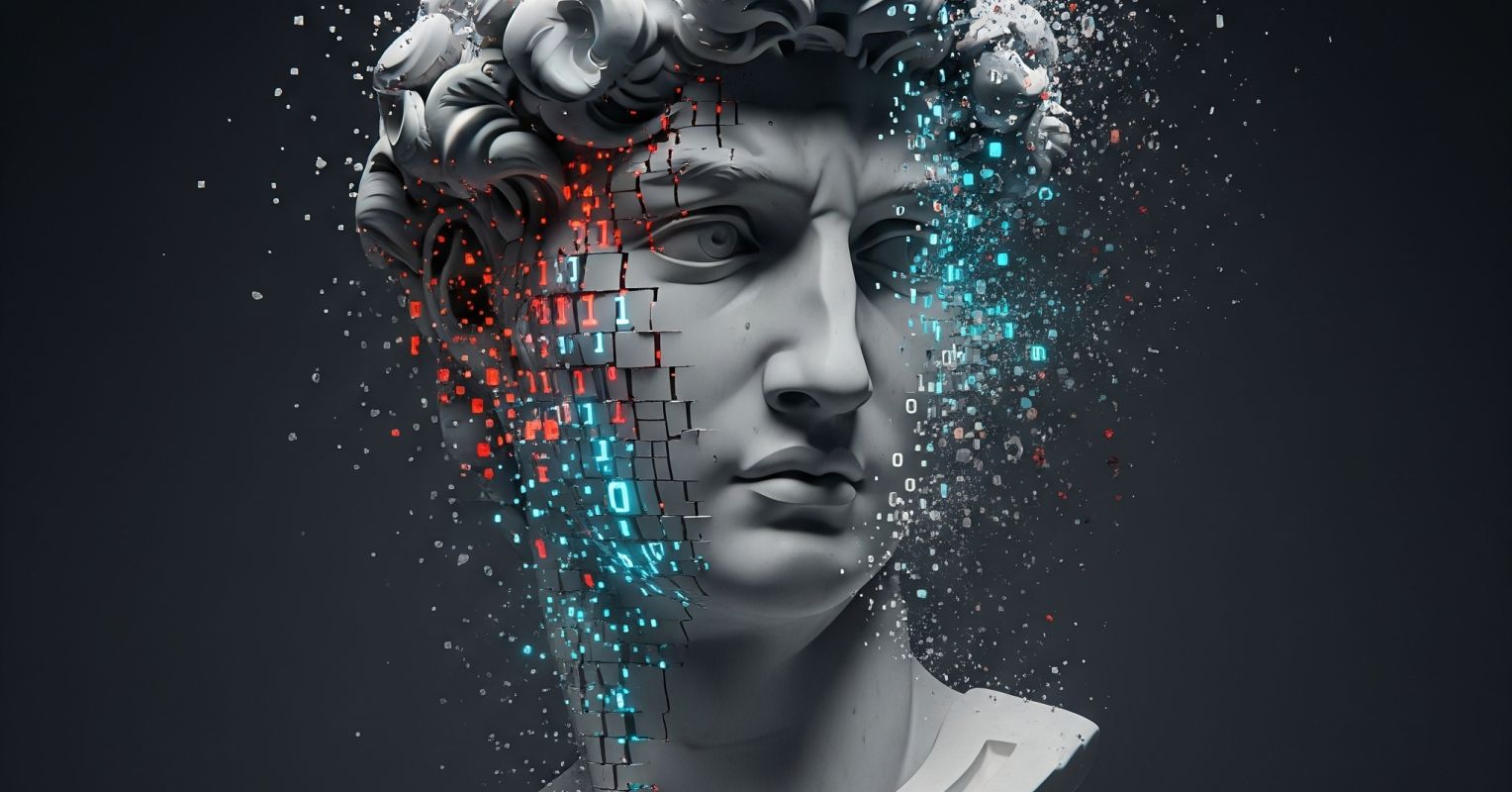
We are, by nature, agents of our own lives. The feeling of being in control, of our thoughts translating into actions that shape our world, is fundamental to our sense of self. This “sense of agency,” as neuroscientists call it, is not a mere philosophical concept but a complex and crucial brain function. It’s the subtle, implicit feeling that “I” am the one causing things to happen. But what if the very tools we’ve built to enhance our lives are quietly eroding this fundamental human experience? As we delegate more of our cognitive heavy lifting to artificial intelligence, we face a subtle yet profound threat: agency decay.
The Brain’s Authorship Loop
The human brain is a remarkably adaptive organ. Our sense of agency is intricately linked to its predictive capabilities. When we decide to act, our brain anticipates the sensory consequences. When the result matches the prediction, our sense of agency is reinforced. This process involves a network of brain regions, including the pre-supplementary motor area, the angular gyrus in the parietal cortex, and the cerebellum. It’s a constant, self-affirming loop: Intend, act, predict, confirm. This is what gives us the feeling of authorship over our lives.
The Psychology of Learned Helplessness

Psychology has long explored what happens when this sense of control is severed. The concept of learned helplessness, first identified in the 1960s, demonstrates that when faced with uncontrollable negative situations, we can learn to be passive, even when opportunities to change our circumstances arise. This isn’t a sign of weakness; it’s a learned adaptation. Now, consider our relationship with technology: the constant pings, the curated feeds, the automated suggestions — are we being subtly conditioned into a state of technological learned helplessness? The more we offload our decision-making to algorithms, the more the feedback loop of our own agency is disrupted.
The 4 Stages of Agency Decay
This brings us to the acute risk of agency decay in the era of AI. It’s not a dramatic, overnight takeover by machines, but a slow, insidious erosion of our capacity for independent thought and action. This decay often progresses through four stages:
- Exploration: We begin with curiosity, experimenting with new AI tools and marveling at their capabilities.
- Integration: We start to incorporate these tools into our daily routines, appreciating the efficiency and convenience they offer.
- Reliance: The tools become critical components of our workflow. We depend on them for recommendations, analysis, and even creative input.
- Addiction: We feel anxious or lost without our AI assistants. Our trust in our own judgment wanes, and we may accept AI-generated outputs without critical evaluation.
The Systemic Risk to Leadership and Innovation
This progression is a concern for individuals, but it’s a critical threat to businesses and leadership. Leaders with a strong sense of personal agency are typically more decisive, resilient, and inspiring. They believe in their ability to shape outcomes. But what happens when a generation of leaders is raised on a diet of AI-driven decision support? We risk cultivating a leadership style that is overly cautious, reliant on data to the point of analysis paralysis, and lacking in the intuitive, creative leaps that drive true innovation.

From a systems thinking perspective, the widespread decay of individual agency has cascading effects. An organization is a complex system of interacting agents. If those agents become less autonomous and more dependent on a central intelligence (be it human or artificial), the system as a whole becomes less resilient, less adaptive, and more vulnerable to systemic errors. A single flaw in an AI’s logic could be amplified across an entire organization, with devastating consequences. We need to foster a symbiotic relationship with AI, one in which human and machine intelligence augment each other, rather than one replacing the other. This requires what some are calling AI Thinking, a framework for understanding and interacting with AI systems in a way that preserves and enhances human capabilities. But more importantly it requires a deliberate investment in hybrid intelligence to curate consciously a symbiosis of natural and artificial intelligences.
A Call to Cognitive Action
The challenge is not to reject AI, but to engage with it mindfully. We must treat our agency as the result of a muscle that needs regular exercise. The convenience of AI is seductive, but the cost of unthinking reliance is the atrophy of our most essential human faculty. So, how do we counter this trend? Here is a practical framework to keep in mind:
- Be aware. Recognize that agency decay is a real phenomenon. Actively monitor your own reliance on AI and question whether it is augmenting your abilities or replacing them.
- Reclaim your judgment. Make a conscious effort to form your own opinions and make decisions before consulting an AI. Use AI as a tool for verification and expansion, not as a primary source of truth.
- Actively seek novelty. Step outside your algorithmic comfort zone. Explore new ideas, read books and articles from sources you wouldn’t normally encounter, and engage in activities that require unstructured, creative problem-solving.
- Insist on accountability. As leaders, we must build systems that keep humans in the loop. Human accountability for AI-assisted decisions is non-negotiable. This means understanding how the AI works, being able to explain its recommendations, and taking responsibility for the final outcome.
- Nurture your neural pathways. Engage in activities that strengthen your cognitive abilities. Learn a new skill, practice mindfulness, and engage in deep, focused work that challenges your brain. The more you exercise your mind, the more resilient your sense of agency will become.
The future of work and leadership in the age of AI will be defined by our ability to strike a delicate balance. We must embrace the power of artificial intelligence without sacrificing the core of our own. The choice, for now, remains ours. Let’s make it consciously.
