


After the horror of a disaster, common phrases include “recovery,” “return to normal,” “build back better,” and “closure.” The meanings and implications of these notions for mental health are not always clear. Timeframes, paces, and ways of healing and coping differ.
Same or different?
When family members perish, when homes are rubble or ashes, and when everything about community is altered, disaster recovery is not straightforward. Life continues for those remaining, while livelihoods, infrastructure, families, and networks can be created. Whether or not that means “re-created,” “rebuilt,” “recovered,” or other “re” words is uncertain and can be about supporting mental health.

Grief counselling, psychosocial support, and therapy might be essential in deciding to try to reconstruct as much as possible to be as similar as possible, or to follow life pathways that are completely different from before. Death is one tragedy from which there is no return. A return to normal is not possible.
Continuing to live might mean stumbling along day-to-day or decade-to-decade with a hole in one’s heart. It is not recovery. It is managing life and livelihood with grief and memory. Nothing is ever the same. Nothing can ever be the same.
Communities, too, might not be the same as before. When a city is devastated, and landmarks are destroyed, an exodus can soon follow. People scatter, businesses fold, and schools amalgamate.

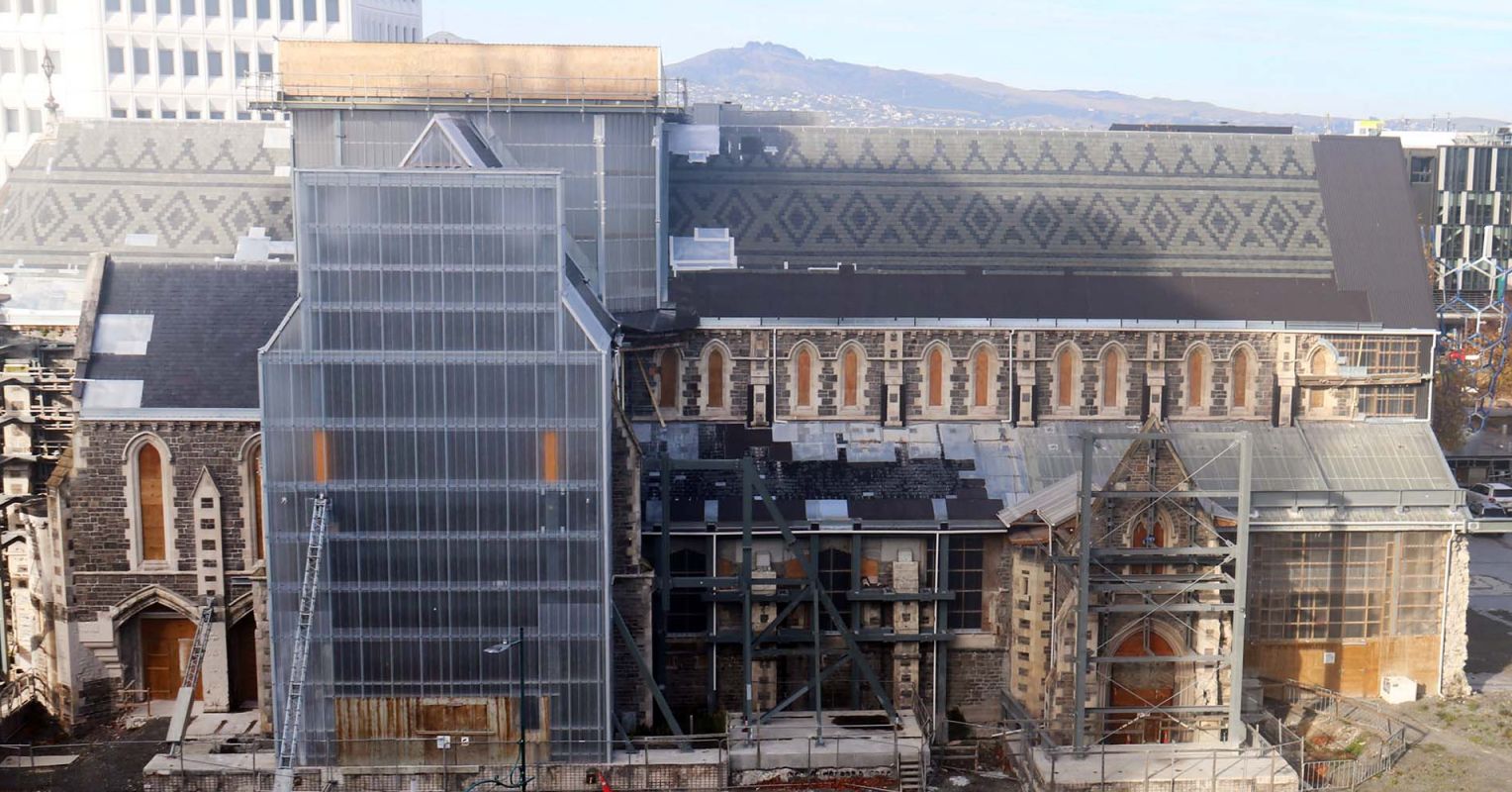
The landmark might be replaced with a memorial and new building, such as New York City’s World Trade Center site, after the 11 September 2001 terrorist attacks. Or, after years of dithering, which can split a community, a restoration decision is reached that continues to split the community. An example is the cathedral in Christchurch, New Zealand, which was heavily damaged during the 22 February 2011 earthquake.
In neither case could everyone possibly be satisfied with the outcome. For some people, it supports healing and coping. For others, it traumatizes and re-traumatizes. Those making the choice and taking responsibility for it must move forward knowing how much they have helped and hurt those around them.
Varying timeframes
After a disaster, the timeframe when life and livelihood “resume” is not clear-cut. People heal or cope, mentally and physically, at a diversity of paces when healing or coping are feasible. For some people, clearing away and disposing of the remnants of home assists. Others prefer to revisit, or live near, what is left, remembering what it used to be and who they lost. Slow healing, abbreviated as shealing, might be preferable to rapid recovery for post-disaster mental health.
No single rate of cleaning and constructing, and no single length of time, could suit everyone and every location. Achieving an adequate balance is not easy.
It forces the question about the reality of disaster recovery, especially for people’s mental health. When is recovery complete, if ever?
People who survive a war with their city under attack—for instance, the London Blitz during World War II, the siege of Sarajevo after Yugoslavia collapsed, and Kyiv since 2022—might live afterwards with the thought of bombs and shooting always on their minds. They enjoy living and working, being physically and mentally healthy, yet remain shaped by their wartime experience, which is perfectly understandable.
Beyond their lifetimes, the disaster recovery search can continue. As with most cities, London, UK has rebuilt numerous times after fires, floods, conflicts, and disease outbreaks. It has also expanded and revamped its infrastructure as a never-ending process. The delineation blurs between (good or bad) disaster recovery and (good or bad) urban development.
Managing without recovery
Disaster recovery—more to the point, what it purports to be—is highly localised and highly personal, even with widespread destruction, as in New York City and Christchurch. For individuals, families, and communities, it involves different timescales, approaches, emotional roller coasters, labyrinthine journeys, and ever-evolving results.
Varying mental health needs and responses require varying approaches and supports. Overlapping processes of grief, remembering, and memorialisation eventually give way to the disaster drifting beyond living memory.
With lives and communities having changed irrevocably, but no one alive who directly experienced the disaster, perhaps recovery is complete. Or perhaps the need and expectation for recovery has become as much a part of history as the disaster.
