


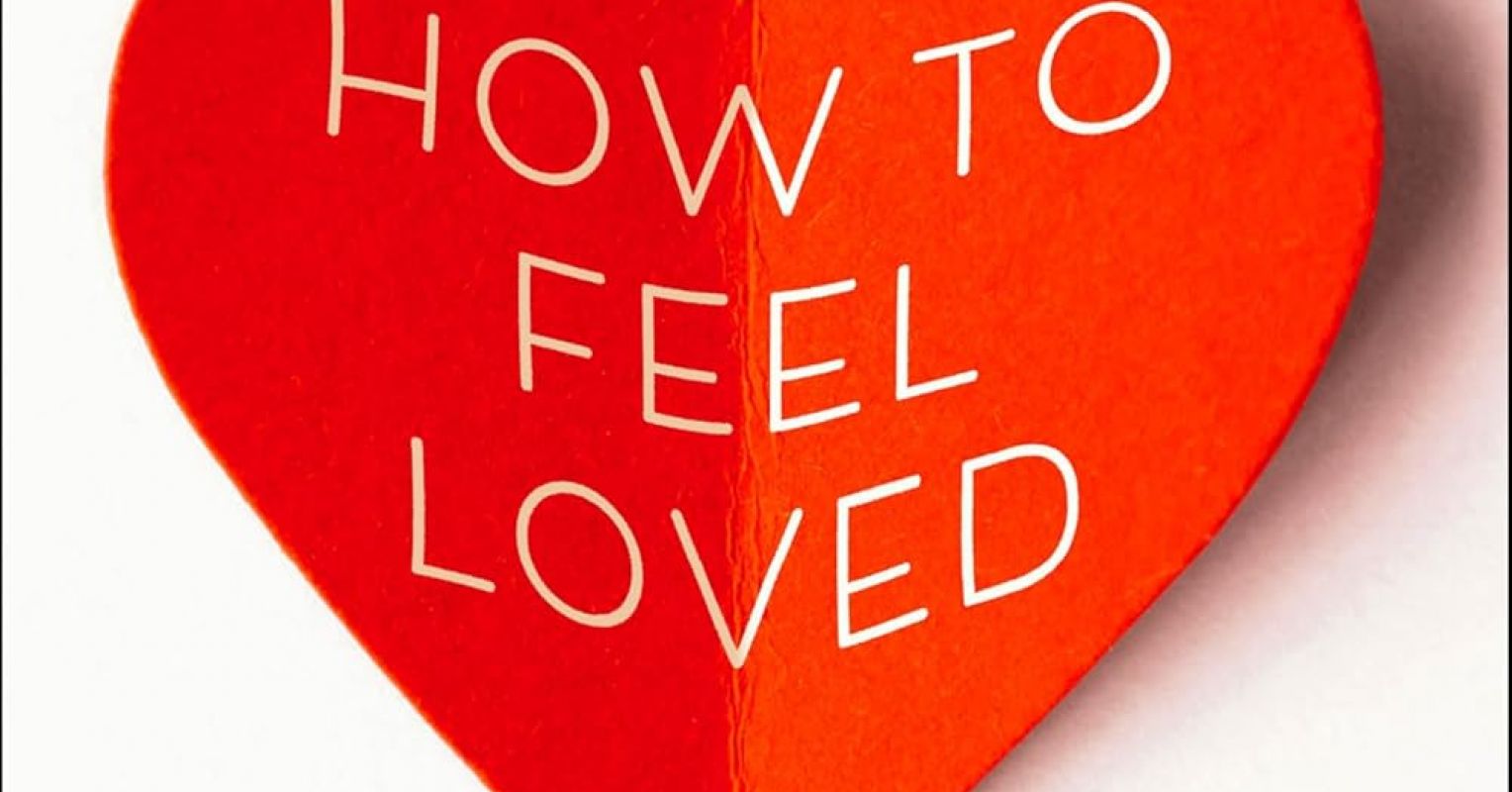
Recently, I came across an outstanding book that combined two of my favorite topics: happiness and love. It’s called How to Feel Loved: The Five Mindsets That Get You More of What Matters Most. And it can absolutely rock your world.
Two expert collaborators wrote it: Harry Reis, a longtime love researcher; and Sonja Lyubomirsky, a pioneering happiness researcher and Distinguished Professor of Psychology at UC Riverside.

For those of you who are not familiar with Lyubomirsky’s work, she’s kind of a big deal. She recently spoke on the TED Mainstage (One Thing You Can Do to Be Happier), had a profile in The New York Times Magazine, and had an article about How to Feel Loved in The New York Times on the book’s launch day.
I sing the praises of this book because I believe it can change your life.
For those of you who read my book, The Tao of Dating: The Smart Woman’s Guide to Being Absolutely Irresistible, you may remember its central premise: fulfillment-centered dating. What you’re actually seeking in a relationship is not some specific person, but rather a set of feelings that fulfill you. If you’ve ever been with the “right” person but still didn’t feel the love, you know what I’m talking about.

That is precisely the topic Lyubomirsky and Reis tackle. In Lyubomirsky’s own words:
My co-author and I spent 7 years reviewing decades of research in happiness science and relationship science, and we came to a simple but powerful conclusion: The key to happiness isn’t being loved; it’s feeling loved.
We introduce five mindsets—Sharing, Listening-to-Learn, Radical Curiosity, Open-Heart, and Multiplicity—that will help you to feel more loved in your most important relationships! You’ll do it not by changing yourself, not by changing the other person, but by changing your next conversation.”
What Lyubomirsky and Reis are telling us is that by having new kinds of conversations, you massively increase the likelihood of feeling loved. Let’s briefly go through each of these conversational mindsets:
1) Sharing: Three components: “a) You have to share the complexity of your full, multifaceted self—both your strengths and your contradictions—with the other person. b) The other person has to notice what you’ve shared. c) The other person has to care about what you’ve shared.”
2) Listening to Learn: “To practice it, you should approach your next conversation by thinking of yourself as a listener, not a speaker—that is, listen and ask questions that clarify and yield insights about the other person’s story, and do it as if you’ll be quizzed on their story tomorrow.”
3) Radical Curiosity: Be intensely curious about your partner.
4) Open Heart: “Seeing the best in others and helping them grow into that version of themselves.”
5) Multiplicity Mindset: Acknowledge that people are multidimensional creatures. As Walt Whitman famously said in his poem Song of Myself:
Do I contradict myself?
Very well then I contradict myself,
(I am large, I contain multitudes.)
That’s the broad framework.
Lyubomirsky and Reis also take time to dispel some prevailing cultural myths about how to feel loved. They call these the Five If-Only Beliefs:
#1: If only I were more attractive, powerful, or successful, I would feel more loved.
#2: If only I could make sure others knew my positive qualities and successes, I would feel more loved.
#3: If only I could hide my shortcomings, I would feel more loved.
#4: If only my partner could speak my love language, I would feel more loved.
#5: If only I could get my partner to love me more, I would feel more loved.”
None of these myths hold up to scientific scrutiny, or even common sense. And, as an aside, the whole “love languages” framework is unscientific and kind of BS. I’m very pleased the authors do a classy and decisive job of dismantling that myth, too.
What the authors propose instead is the Relationship Sea-Saw (sic), which is the centerpiece of the book. It is a “delicate dance of alternately lifting and being lifted”, in which you engage in an upward spiral of increasing intimacy with your partner:
Relationships Essential Reads
Authentic interest and curiosity → sharing → understanding, appreciation, and an open heart → feeling loved.
I’ve read How to Feel Loved a couple of times now. And as a Happiness Engineer who’s been studying, writing, and teaching about happiness and love for 20+ years, I can say this book is life-altering. It’s a paradigm shift in our thinking about love and relationships, and should rightly become a cultural touchstone. It has already enhanced my well-being, and can improve yours, too. And it’s way cheaper than therapy!
I actually recommend that you get multiple copies of this one, because you will want to give it to loved ones (with whom you may or may not be in a relationship, hint). The principles in How to Feel Loved apply to all relationships worthy of our care and attention – family, friendships, and romantic partners.
Make no mistake: the quality of our relationships is the quality of our lives. There’s literally nothing in the world with greater bearing on our long-term well-being. And yet, nobody bothered to teach us this stuff. Not in high school, not in college, not in grad school.
Lyubomirsky and Reis have put together a combined 80 years of experience to bring this book into the world so we can love and be loved better. May you get out of this transformative book as much as I did.

