


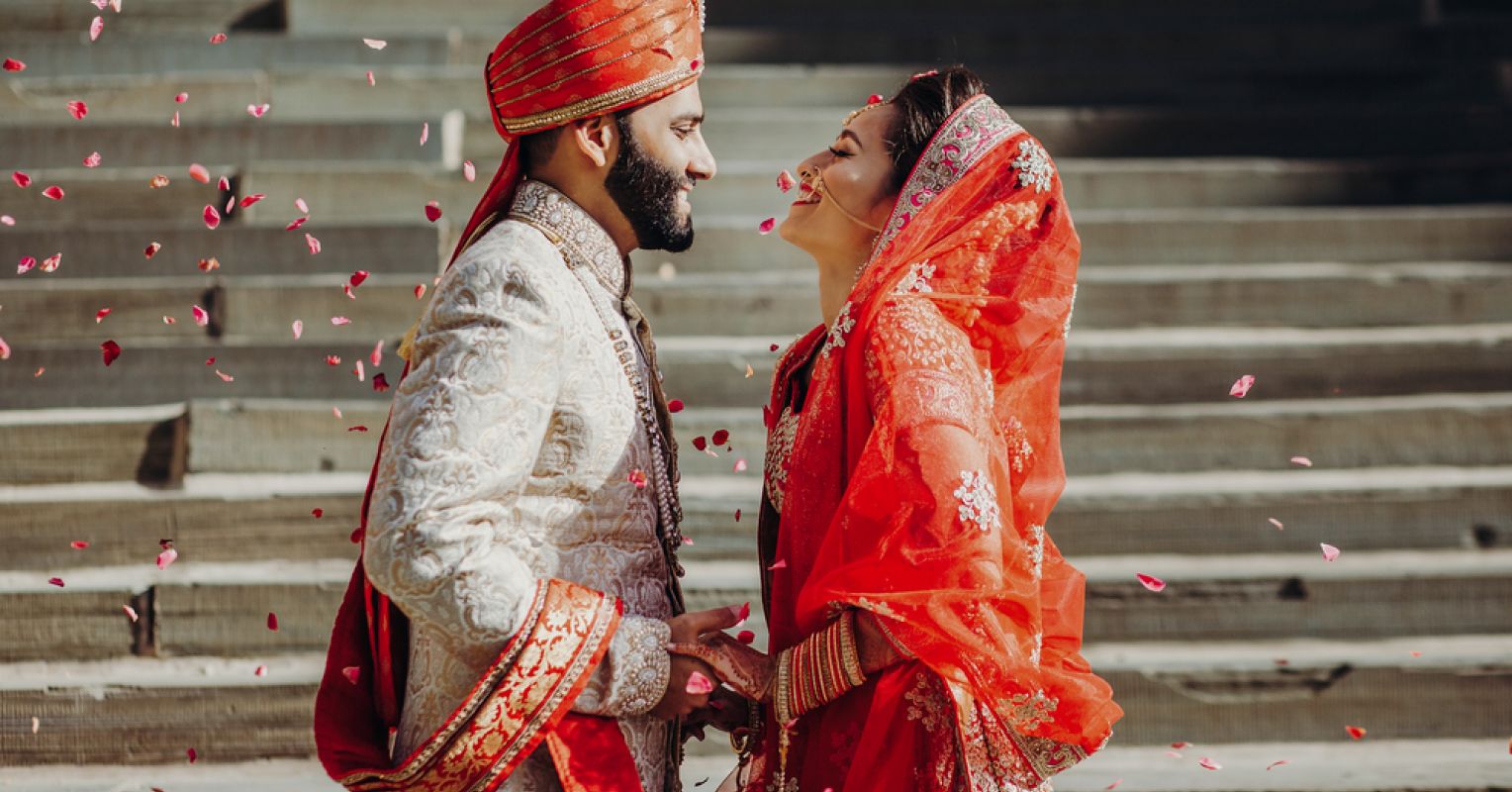
Throughout history, across hundreds of cultures worldwide, male-female marriage has been almost ubiquitous. From ancient times until the 17th century, almost all marriages were arranged by the future spouses’ families. Love between bride and groom was largely irrelevant. What mattered most was how marriages impacted the two families’ alliances and finances.
In Western Europe, arranged marriages were the norm until around 1600, when free-choice marriages—also known as love marriages—began becoming popular, eventually replacing the arranged variety. In Shakespeare’s The Taming of the Shrew, written in 1591, Baptista Mirola looks to arrange marriages for his two daughters, Katherine and Bianca. Katherine’s is arranged, and Baptista is auditioning men to find a spouse for Bianca. But she rebels, and elopes with a suitor she freely chooses. In Shakespeare’s other plays, marriages are often arranged, but there are plenty of free-choice love unions: Romeo and Juliet, Antony and Cleopatra, and Othello and Desdemona to name a few.

Western European colonization of what became the United States began after 1600, just as arranged marriage began yielding to love marriage. In the U.S., love marriage has long been the norm. But throughout American history, various ethnic groups have arranged marriages for their children. The practice persists to the present day among many Indian-Americans, Arab-Americans, ultra-orthodox Jews, and other ethnic groups.
Which raises a question: Are arranged marriages loving or loveless? Recently, an international team of researchers explored the dynamics of arranged marriages in five non-Western societies—and came up with findings that may surprise many Americans.
The Study

The researchers from Poland, Bolivia, India, Nigeria, and Russia interviewed 598 spouses—260 women, 238 men—living in five non-Western societies that practice both arranged and free-choice marriage: the Igbo of Nigeria (34 million people), the Meru of Tanzania (2 million), the Kimaru of Kenya (1.3 million), the Bhotiya of the Tibetan Himalayas (120,000), and the Tsimane of Bolivia (8,000). Studying cultures that practice both types a marriage meant that those interviewed had thought about both models.
The researchers obtained permission from each group’s leaders to conduct interviews. Then teams of researchers visited the groups’ villages. Each team included at least one local person who spoke the group’s language and understood its culture. All those interviewed were compensated with either $10 U.S. or gifts such as fish hooks or flour.
The researchers defined “love” as consisting of three components: intimacy, passion, and commitment. They characterized intimacy as trust, self-revelation, and friendship; passion as intense feelings of desire; and commitment as clear, conscious decisions to maintain the relationship throughout life.
The researchers asked those interviewed about their type of marriage, how long they’d been together, and how they felt their marriages embodied the three components of love: intimacy, passion, and commitment.
Roughly Half and Half
The interviewers asked dozens of questions designed to develop a nuanced picture of the participants’ feelings about their type of marriage—both pro and con. The replies were coded into 42 categories. In slightly more than half the categories (23), participants favored free-choice marriage, while in slightly less than half (19), they favored arranged .
Preferences for one or the other were largely the result of the groups’ cultures. The Tibetan Bhotiyas clearly favored free-choice marriage. The Nigerian Igbos and Bolivian Tsimane just as clearly preferred arranged. The Kenyan Kimeru honored both, but tilted somewhat toward free choice, while the Tazmanian Meru leaned slightly toward arranged.
What about love? Findings were all over the map. In two groups, the Igbo and Kimeru, there were no significant differences in love based on their type of marriage. Among two others, the Bhotiya and Tsimane, spouses in free-choice marriages reported greater intimacy. But in one culture, the Meru, spouses in arranged marriages enjoyed greater intimacy and passion. And among the Bhotiya, free-choice partners reported more passion, while among the Tsimane, free-choice partners declared greater commitment.
Relationships Essential Reads
Hot to Cold, Cold to Hot
Previous studies of arranged vs. free-choice marriages have produced this adage: “Love matches start hot then grow cold. Arranged matches start cold and then grow hot.” The idea is that over time, spouses’ feeling evolve. But in four of the five cultures, marriage duration had no impact on love, except among the Bhotiya, and for them, love differences emerged only after 10 years of marriage, with free-choice coming out slightly ahead.
The researchers concluded: “Although those in free-choice and arranged marriages might experience love differently, the differences are rather small. Our findings challenge the Western perception that arranged marriages lack love. Arranged marriages appear to be as rich in love as free-choice marriages.”
Western Bias?
I live in the San Francisco Bay Area, a region with large populations of Indian and Afghan immigrant families, some of whom arrange their children’s marriages. Local media have noticed. Their reports usually reflect the Western bias that arranged marriages are “loveless,” “empty,” and might “abuse” the young people ordered to wed spouses they hardly know.
This study reveals the Western prejudice against arranged marriage to be ill-informed. Arranged marriages are often intimate, passionate, committed, and loving.
