


Human beings have a psychological need for certainty, for closure, that frequently outruns the evidence that would make such certainty reasonable.
This is a special problem in criminal justice. Hundreds of DNA-based exonerations show that juries frequently convict the wrong person, based on premature conclusions (Selby, 2025). In some societies, this need for “closure” can result in the deliberate conviction of a person completely innocent of the given crime, as an example of vicarious responsibility.

My own research (Sharps et al., 2013) has shown that in cases of especially vicious crime, people are more likely to hold the accused responsible than would be supported by the evidence, and are more likely to ignore evidentiary flaws in more violent crimes. Our human need for psychological closure is strong; this should not be ignored by anyone interested in impartial justice.
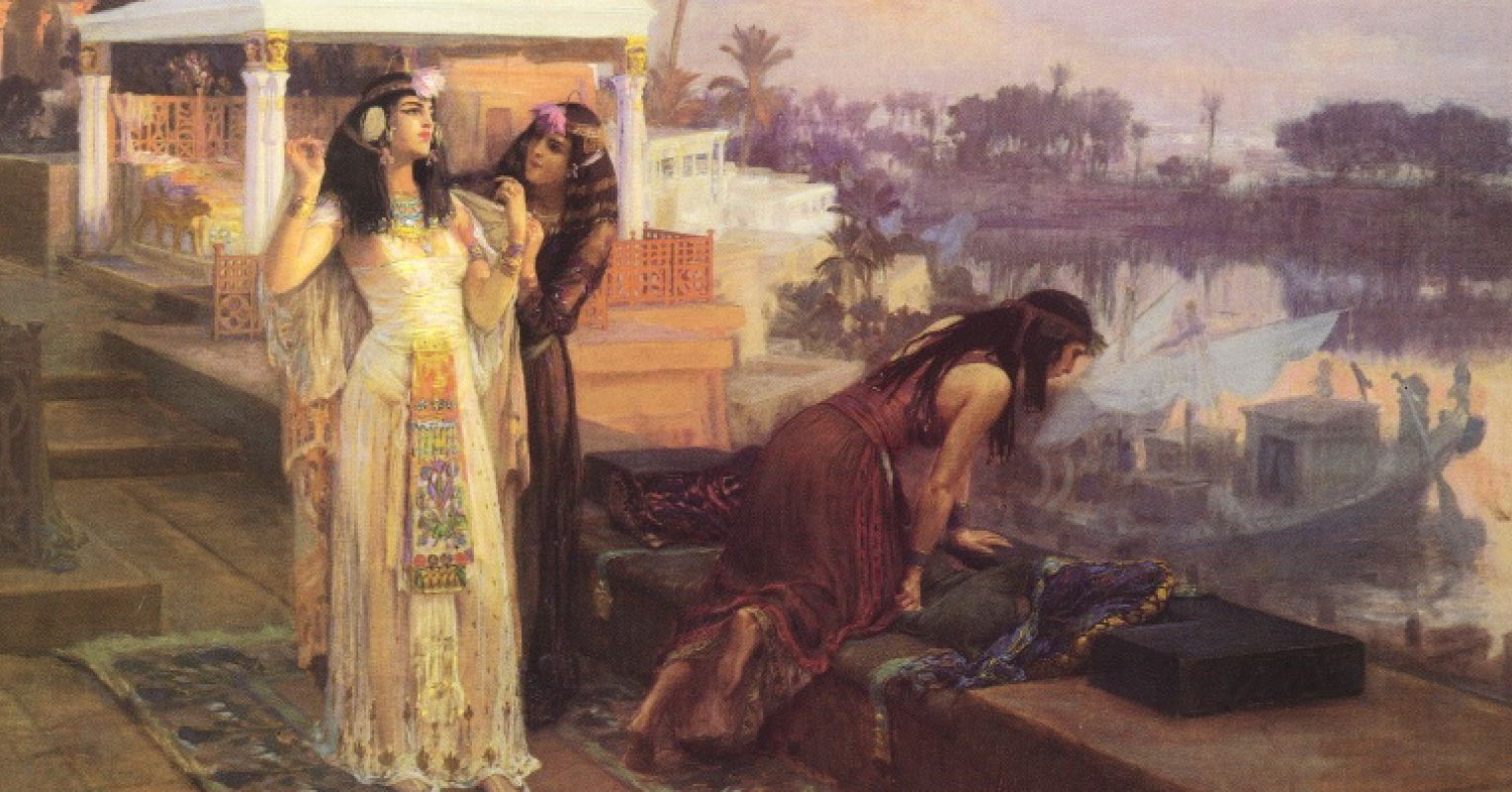
An excellent example can be found in one of the most infamous cold cases in history: the death of Cleopatra VII of Egypt.
Some of the details of the Pharaoh Queen’s career are universally acknowledged. Using a combination of sexuality and political acumen (modern scholars focus on her undoubted political skills), Cleopatra manipulated Julius Caesar into supporting her as sole ruler of Egypt. After Caesar’s assassination, she used her skills to ally with Marc Antony, a fine army officer but not the best naval officer in the world. When she believed she saw Antony defeated at the sea battle of Actium (31 BC), she sailed back to Alexandria with all speed. Antony, seeing her departure, abandoned his own fleet and chased after her, to his everlasting disgrace.

And now things got weird.
Antony’s enemy Octavian, the future Caesar Augustus, was certain to take revenge on Cleopatra. So, the story has always been that she locked herself in her tomb, had a venomous asp smuggled in past the guards, and let it bite her to death.
Suicide, before Octavian had a chance to grab her and parade her in chains before the Romans. Makes sense.
We will not embarrass specific scholars here; our interest is in the general psychology involved. But just as there are firm believers in the asp theory, there are equally firm believers that it’s complete nonsense. Scholars oppose each other on the asp theory with contrary and adamantine beliefs, but based on what?
Some ancient writers refer to an asp, or perhaps even two, but there are problems. For one thing, an asp bite, if it killed you, would take hours of agony to do so. Nobody in their right mind would select death by asp. On the one hand, Cleopatra was no herpetologist, but on the other hand, she was intelligent and well-educated—she would never have selected an asp. These are reasons anti-asp scholars, just as convinced as the snake fans, are certain that no asps were involved.
On another hand, however, most ancient writers weren’t herpetologists either—they may have confused asps with other snakes. Some pro-snake writers don’t even mention asps by name. It’s possible the snake was an Egyptian cobra, or maybe even something like an imported Russell’s Viper, a fabulously unpleasant animal with which I personally developed a nasty acquaintance (Carr et al., 1982). Maybe somebody even brought Cleopatra a fabulously toxic Mamba from sub-Saharan Africa.
Yet all of these snakes, except maybe the insanely venomous mamba, require many minutes or hours to kill you, and it’s difficult to imagine somebody stuffing six or eight feet of writhing mamba into a basket to smuggle into the Queen’s tomb. Some scholars extend this to the firm conclusion that no snake could have been involved, since it would have been writhing around in its basket, and guards would certainly have noticed this and prevented its being delivered to the Queen.
Yet I have personally seen a variety of venomous snakes, including the aforementioned rotten Russell’s Viper, lying perfectly quiescent in their transport baskets; anyone who knows snakes knows they are perfectly capable of immobility. However, many classical scholars have never worked in behavioral herpetology, so they are convinced that any given snake would be doing gymnastics in its basket all the same.
Forensic Psychology Essential Reads
Cleopatra’s two servants were also killed with her, presumably by suicide, and there are scholars who hold that this completely disproves the snake theory. What snake has enough venom to take out three people, as well as that sort of work ethic? Yet there are many other suicidal possibilities; nothing mandates servant suicide by snake.
And there’s still another anti-snake faction, which holds with equal firmness that Cleopatra didn’t commit suicide at all. Octavian killed her.
When he’d already dragged her children through Rome, alive in chains, as trophies? When the last thing he would have wanted in an unsettled East was a royal Egyptian martyr? Octavian needed her alive, for the propaganda value if nothing else. But many scholars seem to have an idealized Cleopatra in mind, essentially a modern feminist on the lines of Star Wars’ Princess Leia, who would never have committed suicide, whatever the circumstances—certainly not over something as trivial as Antony or her own deposition.
Yet any psychologist in the forensic realm is aware of the profound irrationality that may be present in the minds of the suicidal, and of the extraordinarily dissociative processes that may lead to bizarre behaviors under those circumstances (Sharps & Price-Sharps, 2026). For the competent forensic psychologist, any of the scenarios of Cleopatra’s death may conceivably have had some validity.
Despite the need for certainty on the part of scholars, especially those who keep turning up on TV, we just don’t know. We just don’t know about Cleopatra, or, for that matter, about Jack the Ripper, or the Hindenburg, or D.B. Cooper, or the many other conspiracy-laden or relatively obscure cases that keep cropping up.
If we wish to be forensically responsible, we must acknowledge that, psychologically, we don’t like uncertainty, but we must also sometimes accept uncertainty, in ancient cases and in our modern world.
