


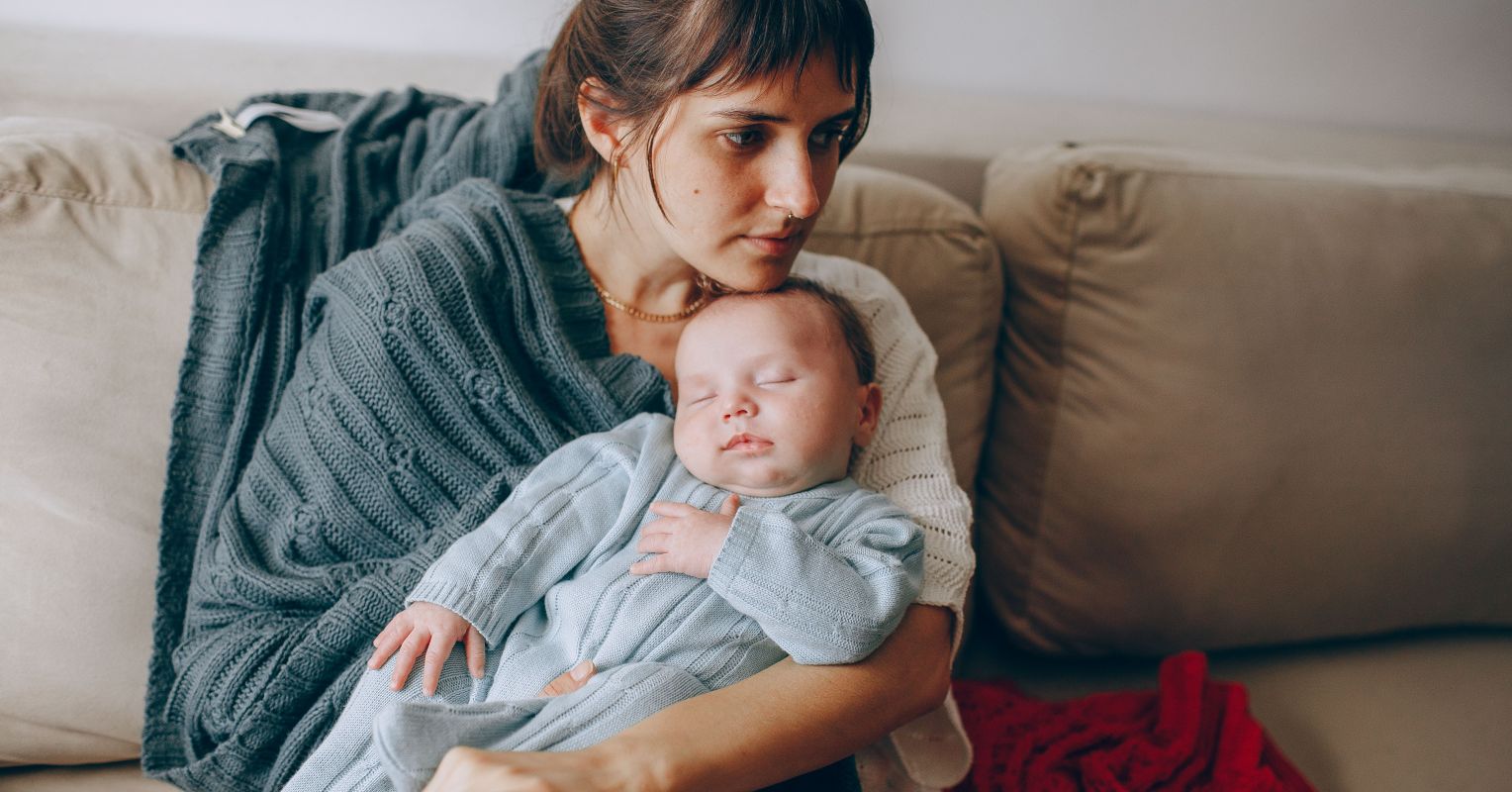
The recent social discourse around tradwives, or traditional wives, illuminates dimensions of our psyche, including the father complex. The tradwives debate can also pit women against one another by suggesting that being a stay-at-home or working mother is the better choice.
In 2013, 51 percent believed children were better off when the mother stayed home,1 whereas in 2023, 55 percent believed one parent at home was better, with 22 percent favoring the mother at home and 33 percent saying either parent.2 Interestingly, 50 percent of mothers with children under 18 preferred to stay home rather than work outside the home.3 This data sheds light on the tradwives discussion. However, arguing that one choice is superior neglects the reality of motherhood: It’s difficult no matter what form it takes.

Fifteen years ago, I started “Mentoring Mothers,” which offers consultation and connection for mothers as they transition to a more conscious experience of motherhood. I did so because perinatal mental health support is severely lacking.
The specific link between trauma and motherhood is often neglected.4 There are different kinds of trauma. Colloquially, what are sometimes called “Capital T traumas” generally involve experiencing, witnessing, or learning about a loved one’s death or threatened death; serious injury; or physical, sexual, emotional, or verbal abuse or violence. Capital T traumas can also include life-altering experiences such as natural disasters, famine, human trafficking, war, gang violence, immigration, becoming a refugee, neglect, disease, and medical procedures.
Alternatively, what are often dubbed the “lowercase t traumas” are also damaging sources of psychological pain that may set the stage for more severe pathology, including “complex trauma” or “complex posttraumatic stress disorder,” which is common clinically yet not recognized in the Diagnostic and Statistical Manual of Mental Disorders. These traumas are related to repeated and chronic relational, developmental, and cultural experiences such as discrimination, rejection, abandonment, dismissiveness, and intrusiveness.

Trauma is both deeply personal and universal across culture, time, and history. From a Jungian perspective, trauma and complex trauma can become organized into complexes. You can read more about complexes here, the mother complex here, and the father complex here.
Becoming a mother can kindle both “capital T traumas,” such as a difficult birth requiring an emergency medical procedure, and “lowercase t traumas”—for example, reactivating painful relational experiences of being parented with dismissiveness or intrusiveness. Previous relational experiences can surface consciously and unconsciously after giving birth, stirring complex trauma.
When becoming a mother, present-day trauma triggers such as a difficult birth, emergency procedure, or caregiving demands resembling past experiences can reactivate old trauma memories, even if they were previously processed and integrated. Feeling “dysregulated” or “triggered” often means a complex has been activated. Carl Jung observed, “The complex is not under the control of the will…and possesses the quality of psychic autonomy…in direct opposition to conscious tendencies: it forces itself tyrannically upon the conscious mind. The explosion of affect is a complete invasion of the individual; it pounces upon him like an enemy or a wild animal.”5
That imagery, pouncing like a wild animal, vividly describes what it’s like to be under the influence of a complex and is perhaps most applicable to the trauma complex. Interestingly, the comparison of a trauma complex to a “wild animal” is used in contemporary trauma work; for example, Peter Levine’s Waking the Tiger, which introduces his somatic experiencing approach.
How Unresolved Trauma Affects Perinatal Mental Health
Research has repeatedly demonstrated that trauma can lead to perinatal mental health problems. A 2025 study by Hanna Grundström found that women who experienced past trauma were more likely to feel depressed or stressed after giving birth than those without such histories, especially for younger women and first-time mothers.6 In other words, trauma can influence many perinatal mental health challenges, including postpartum anxiety, depression, obsessive-compulsive disorder (OCD), and psychosis.
I had a patient who suffered from anxiety and a relentless tendency to scrutinize herself. She would compulsively review her interactions: Was she warm and fun enough? Smart but not too smart?
Her family system was marked by both parental absence and intrusion: Her father was emotionally disengaged due to alcoholism, while her mother was consumed by the demands of carrying the parenting and family load. Her mother’s overwhelm and self-sacrifice had a pervasive presence in her family, manifesting in a “martyr complex”—her needs were subordinated to others, while others often felt as if she lived vicariously through them and struggled with being the object of her resentment.
In therapy, my patient came to understand that scrutinizing had substituted for authentic relating, which was foreign to her. We identified how her chronic anxiety was a safe and familiar emotion that kept her from feeling more challenging or complex feelings. While her trauma complex would still surface, she was aware of her relational patterns and related differently.
Where Old Trauma Intersects With Postpartum Anxiety
Then my patient gave birth.
It was as though everything she had learned flew out the window. The demands of caring for a completely dependent infant, coupled with changes in her marriage as her husband became less available under the pressure of being the sole financial provider, intensified her anxiety and compulsive rumination. Her worries now got directed toward her baby, marriage, and how others perceived her as a mother.
She found herself in a role that echoed aspects of her childhood: carrying the weight of childcare and family responsibilities while experiencing the loss of her partner’s presence and support as he left for work.
In our work, we made space for the parts of her experience that could not exist in her new identity. We explored her grief, anger, resentment, and loneliness about motherhood as meaningful, emotional experiences that had been pushed aside to be the mother she believed she needed to be. We examined the unconscious expectations she brought into motherhood: that a “good” mother should be self-sacrificing and endlessly available. I helped her recognize that her husband’s absence was emotionally challenging, yet it did not make him her emotionally disengaged alcoholic father.
Our work helped her recognize when the past and its unresolved trauma were entering the present, creating space to respond differently. Motherhood reopened an old story. In her analysis, she could begin to tell it and write it differently.
My patient presented with moderate postpartum anxiety that reactivated her trauma complex. Sometimes trauma contributes to other perinatal mental health disorders, including postpartum depression, posttraumatic stress disorder, or psychosis, which has been in the news given the trial of Lindsay Clancy, who has admitted to strangling her children. I’ll be discussing that in my next post.
