


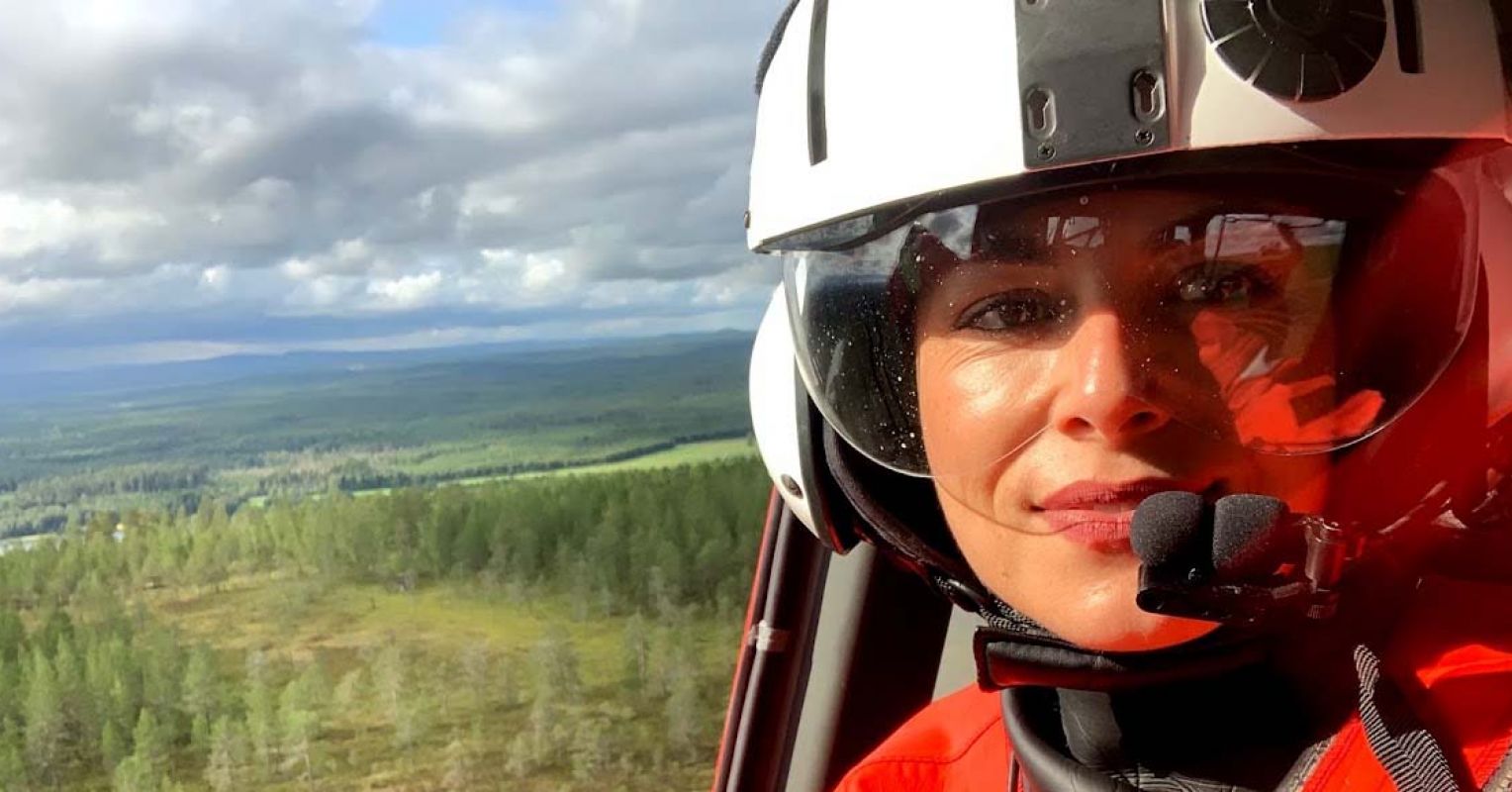
In June 2016, a bus carrying Australian tourists crashed head-on into a local bus in Port Vila, the capital city of the Pacific island country of Vanuatu. Three people in the local bus died. A dozen Australians were hurt, including head injuries and open fractures. As one incident within her 15 years of trauma nursing, Emily Ragus helped evacuate some of them to Australia for medical care through CareFlight.
Emily recounts the epiphany, “The usual fairness issues appeared. Australian tourists received deserved world-class emergency help while the people of Vanuatu struggle with daily health services. But nor should tourists take away valuable healthcare resources from locals, so evacuations can help equity. And part of this balance is mental health connected to physical health, for the responders as well as for the crash-affected people and their families.”

This experience led Emily to apply for and win a Winston Churchill Fellowship in 2018 to earn a Diploma of International Humanitarian Assistance from Fordham University in New York City. She formulated ideas about keeping mentally healthy while being a trauma nurse, especially since mental health is not separate from the physical care she provides. Emily’s exploration into these topics led her to win a prestigious Sir John Monash Scholarship for an anthropology Ph.D. at the University of Amsterdam in the Netherlands.
Broad connections with mental health
Emily explains, “I am a listener and teller of stories—stories of disaster, health, and the ties that bind people to their environments. I trace the stories of responders and survivors, listening closely to how they navigate the chaos and repair left in the wake of environmental rupture.” She has done so as a nurse in Australia, Azerbaijan, Jordan, Malaysia, Uganda, and Ukraine, followed by research in South Africa and Europe. Physical care and storytelling were never far from mental health.
A major part of her practical experience was dealing with systemic sexism, which debilitates one’s mental health, despite the team being united in trying to save lives and prevent further injuries to patients. Healthcare, especially in disasters including conflicts, remains heavily male-dominated. Nurses are primarily women who are then subject to overt and subtle discrimination on the basis of being female.

“Women’s professional abilities are often relegated to the background,” explains Emily. “Comments about hair and lipstick, as well as sexual jokes, remain frequent topics of workplace conversation.” Yet she had to focus on dealing with each patient. Self-care meant protecting herself physically from possible injury or contamination from a patient’s body fluids, while also having to avoid physical harassment, work around the verbal harassment, and do more than men to prove her competence.
These mental health impacts are not easy to navigate, especially since physical health impacts are never too far from daily experiences. Men rarely understand hygiene requirements for menstruating when working, plus standard equipment was infrequently designed for women’s bodies, typically presuming a body shape and size based on men. Emily became motivated to seek deeper knowledge and apply it to improve practice.
For her Ph.D., “I used ethnographic and arts-based methods to examine how people lived through and after South Africa’s 2022 KwaZulu-Natal floods. I was particularly interested in the stories people told about disaster, how floods disrupted and reshaped social worlds, and the forms of repair through which people continued living with what had been lost or broken. I also considered how these experiences shaped health, which by definition must include mental health, even though this is often neglected.”
One of Emily’s key recommendations is to listen more closely to how trauma nurses and disaster responders describe the psychological impacts of their work. These accounts can reveal pressures that may otherwise go unnoticed and help us understand what enables people to remain in these roles over time.
Ethics involving mental health
Despite winning multiple awards, including being pre-selected for Global Australian of the Year in 2023, Emily’s focus is on the people she helps—those affected by disasters, including conflict and violence, her colleagues, and also herself. She explains, “The ethics of care is fundamental to what I do in practice and in research. This relates to data collection and data use, as well as to physical treatments in disaster medicine. But also how our mental health is affected when being treated and when treating, when being a ‘subject’ of research and when researching.”
In essence, Emily aims to examine, understand, and improve how people stay mentally healthy during medical situations involving physical trauma, which, in turn, links to psychological trauma. It is about the first rule of first aid, including mental health first aid: help others, but do not place yourself or others in danger to do so. Emily’s work will help us all by reducing these dangers to physical health, mental health, and their interconnections.
