


For 35 years, I taught a course called “Psychology and Law” in a small college town in Wisconsin. Every year I asked my students the same question: Where are the high crime areas in town? Every year the students identified two neighborhoods whose residents are mostly low-income persons of color.
I told my students, “You’re not wrong. The people living in those neighborhoods do, in fact, have higher rates of arrests and convictions. But what if I changed the question and asked you to identify the parts of town where there’s a lot of illegal behavior?” Invariably, a few students would look at each other and say, sheepishly, “Honestly, there’s a lot of illegal behavior right here on campus, in the dorms and Greek houses.”

The students were right, of course. Lots of illegal stuff happens every day on almost every college campus in the United States. Everything from underage drinking, petty theft, and fraud to disorderly conduct, battery, selling drugs, and sexual assault.
The Applied Resources Model
Making a distinction between crime and lawbreaking leads to several valuable insights. Studies have found that large numbers of people engage in illegal activity, but only some people become criminals (e.g., Wallerstein & Wyle, 1947; Elliot et al., 1989). To become a criminal, a person must not only break the law but also be caught, arrested, and convicted.
What determines which lawbreakers will become criminals and which will not? According to an approach sometimes called the applied resources model, the determination is made largely by government agents—lawmakers, law enforcement officials, prosecutors, and judges. According to this view, crime is a product of the resources—criminal statutes, money, time, and effort—that are devoted (applied) to catching lawbreakers.

A provocative corollary of the applied resources model says that, when it comes to catching, prosecuting, and convicting lawbreakers, the government’s resources are not applied equally to all segments of society. There simply aren’t enough resources available. Consequently, of all the people who engage in illegal activity, only some are likely to end up in prison.
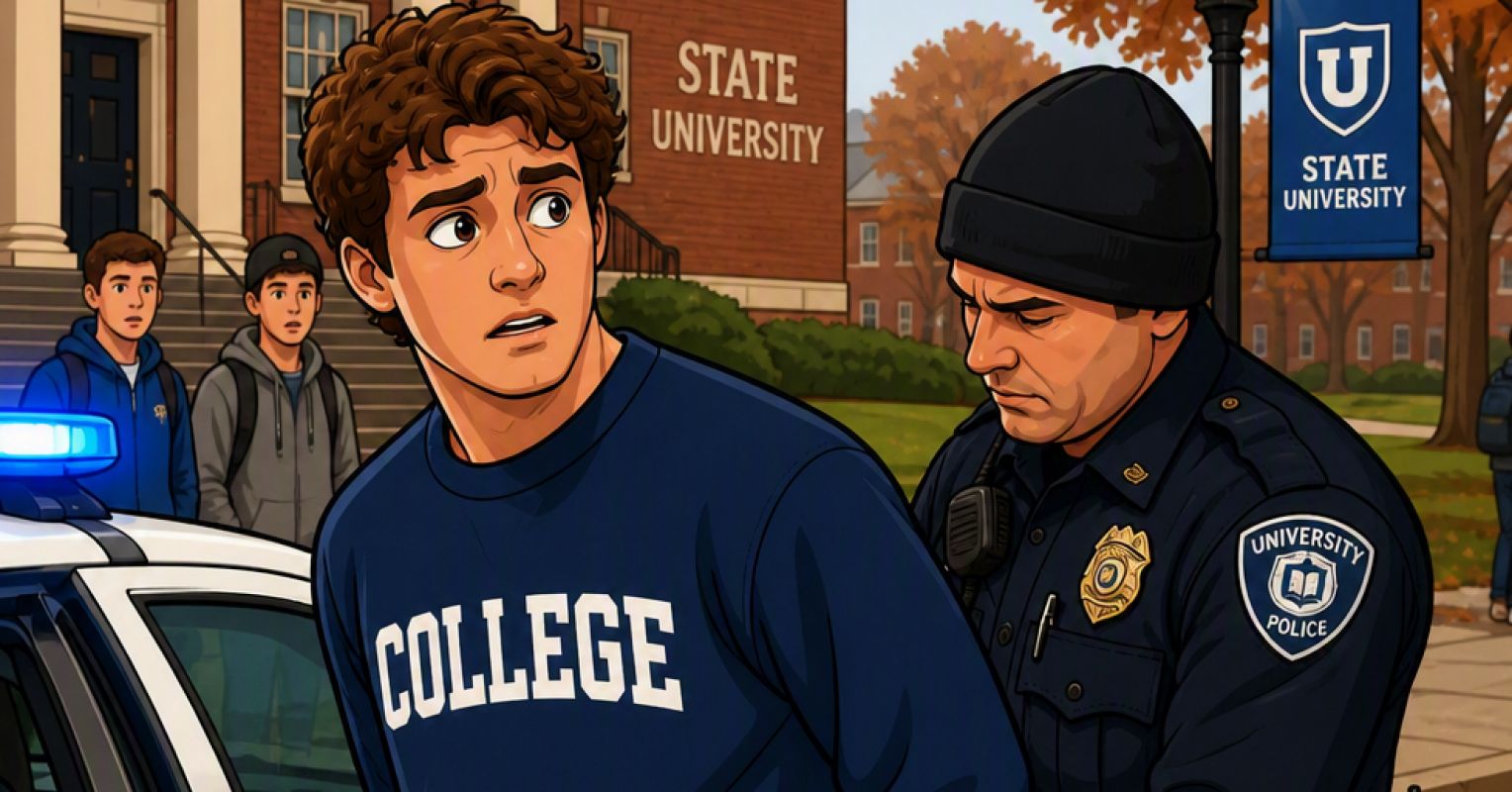
College campuses have many lawbreakers, but very few students have criminal records. Why is that? It’s because the police rarely “apply their resources” on college campuses. Universities have their own police departments or security officers. University staff handle most instances of misconduct without involving the local police, prosecutors, and courts. Students are disciplined by the university and sometimes expelled. But rarely are they arrested and convicted.
Here’s another illustration of the applied resources model. In 1894, the French poet and novelist Anatole France wrote, “The law, in its majestic equality, forbids the rich and the poor alike to sleep under bridges, to beg in the streets, and to steal bread.” Laws that are applied universally on paper can be experienced very differently, depending on one’s social status.
Legislators make laws, including criminal statutes, and legislators come from particular segments of society. As a group, they tend to be older, wealthier, and more conservative than most of the people they represent. Not surprisingly, the laws they make often reflect their own life experiences and moral judgments about what is permissible and what is not. No panhandling, no smoking marijuana, no gambling in a back alley, no drinking in a park, and no sleeping under a bridge.
A Famous Field Experiment
In 1971, a sociology professor at Cal State Los Angeles convinced the students in her class to participate in a now classic experiment (Heussenstamm, 1971). She selected 15 students who had flawless driving records and gave them Black Panther Party bumper stickers for their cars. At that time, the Black Panther Party was a revolutionary political organization that advocated for Black Power and monitored the actions of police officers.
Despite their perfect driving histories, the students were pulled over by the police dozens of times in just 17 days, resulting in 33 traffic citations. The professor ended the study when she ran out of money to pay the fines.
Were the police officers angry bigots who wanted to punish drivers for their political views? Maybe, but I don’t think so. I think the bumper stickers acted like red flags that led police officers to (1) watch the cars closely and (2) interpret what they saw within a different frame. In a very real sense, the bumper stickers showed police officers where to “apply their resources.”
Finding Crime
When FBI agents, local police, and journalists look diligently for crime, they often find it. Corruption in Cook County courthouses. Pedophile priests and abusive nuns in the Catholic Church. Massive fraud in the accounting practices of large companies like Enron, Worldcom, and Tyco.
Arrests in most cities are concentrated in particular neighborhoods and districts. Maybe that’s because more crime happens in those areas. Or maybe it’s because the police and courts apply more resources to those areas and fewer resources to other areas.
