


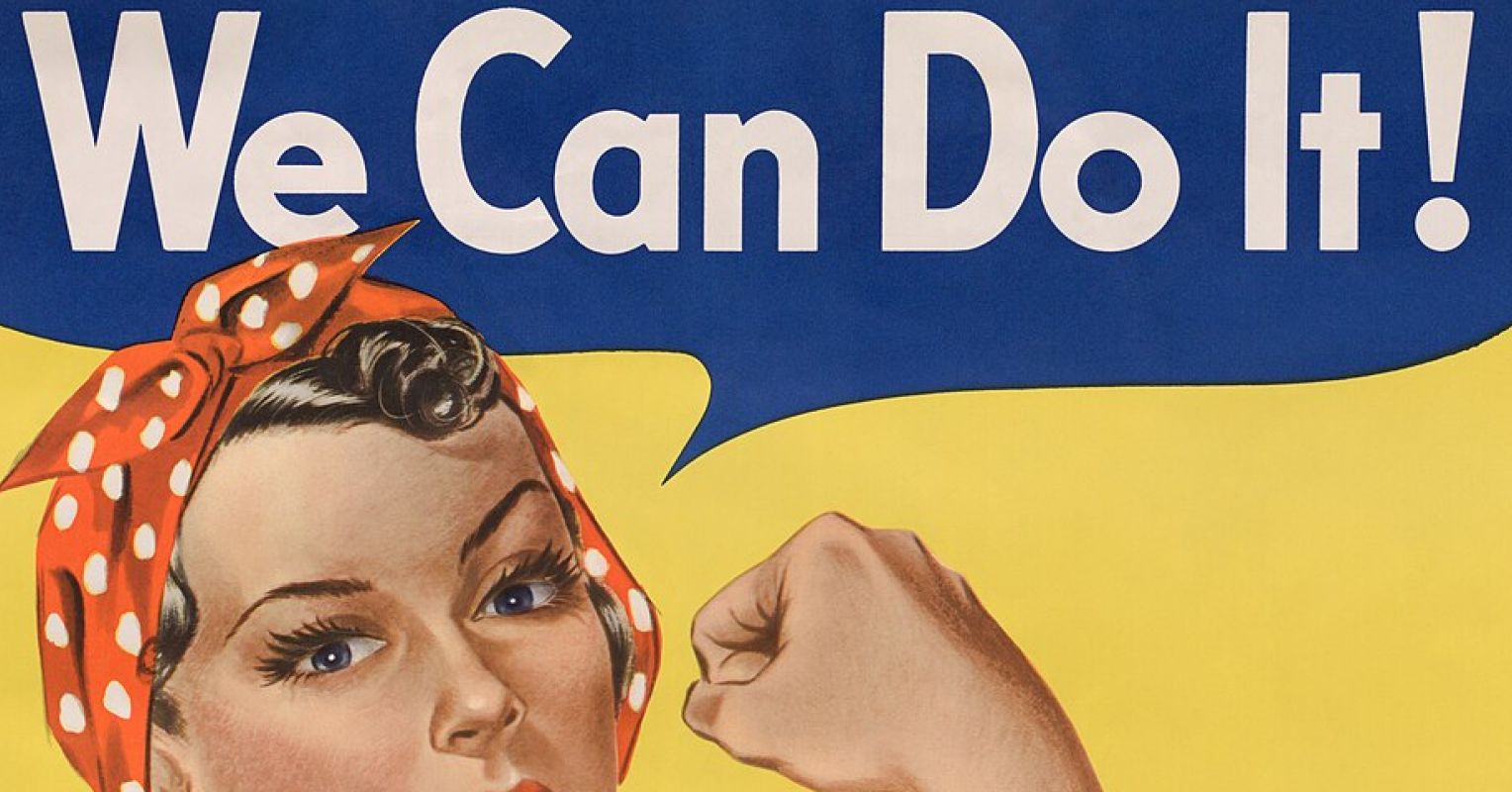
As humans, we all have unconscious biases that influence our most important choices: where we live and with whom; who we consider friends and enemies; who we choose to govern; what we believe about our universe and about God. It may be impossible to rid ourselves of all our biases, but we can become aware of them and how they shape our decisions. Biases lead us to create stereotypes of people or ideas, and these stereotypes can limit our interactions with and understanding of others and the world.
With early voting, many Americans have already gone to the polls or will go in less than a week. What leadership qualities do you consider essential in a candidate? Does a candidate’s gender affect your evaluation? Do you consider some personality traits as masculine or feminine? Take a minute to remember when and how you first developed these beliefs.

In 1984, psychiatrist and Jungian analyst Jean Shibola Bolen wrote a revolutionary book, Goddesses in Everywoman: A New Psychology of Women. Bolen’s aim was to deter women from identifying with repressive cultural stereotypes that narrowed their self-image, capabilities, and role in society. Using the Greek goddesses as models, Bolen offered modern women portraits of the female deities that represented archetypal patterns still active in modern women’s psyches.
Women might discover their “inner Athena,” the warrior goddess, ally to male heroes and known for her strategic prowess in battle. Born fully formed from her father Zeus’s head, Athena was depicted in full battle armor—breastplate, helmet, spear—and honored for her practical intelligence and sound planning. Bolen examined seven goddess types—nurturing Demeter, intuitive Persephone, calm Hestia, queenly Hera, creative Aphrodite, and autonomous Artemis—each with her own backstory and attributes, breaking through old stereotypes and providing exciting examples for a more expansive self. The book was an instant best-seller and changed how many women viewed themselves.1
It’s been 40 years since the publication of Goddesses in Everywoman. Yet our country is one of the few Western democracies that has not yet elected a female president. But change may be coming. According to the Center for American Women and Politics (CAWP), a record number of 4,215 women are running for nationwide or state office in 2026: 271 for seats in the House of Representatives, 19 for Senate seats, 131 for statewide executive offices, including governor, and 3,794 for state legislatures.2 It’s a good time to examine our stereotypical biases about leaders and leadership.
Women seeking leadership positions, across cultures and throughout time, face challenges their male cohorts do not. Rather than being evaluated for their policies and ideology, women are judged on the basis of likability and presentation. A woman candidate can be seen as too assertive, or conversely, too empathetic and too weak to lead. Aggressiveness, a trait valued in a male candidate (he’ll get things done for us, he’ll stop the war, vanquish the enemy), is seen as a negative trait in a female candidate. A female candidate must strike just the right balance between not being too masculine and lacking empathy, or too feminine and lacking the moxie and stamina to be a leader.
Women candidates are judged by their wardrobe, hair, makeup, weight, body size, their beauty or lack of it, tone of voice and gestural language, and a host of other factors that do not include intelligence and competency. Shared cultural stereotypes exist in most societies, and women and marginalized groups are more vulnerable to prejudices that don’t align with accepted norms.3
Some of the most accepted stereotypes women face include:
- Women are natural nurturers; men are natural leaders
- Women with children are less devoted to their jobs
- Women are too emotional to undertake certain kinds of work, especially while pregnant
- Assertive women are “bossy, bitches, or whores”4
Rosalind Cardinal, a facilitator, leadership coach, and speaker, spent years researching the different ways men and women lead. She was especially interested in learning how women uniquely approach leadership roles. Writing from her experience in human resources and as a leadership mentor, she saw a need to expand the repertoire of archetypal models for future female leaders. Since 2018, over 10,000 women have participated in her Women Leader Archetypes (WLA) assessment. Drawing on findings from this expansive dataset, she devised four basic patterns of female leadership. In practice, one individual can exhibit all four of these characteristics.
The Sovereign
“Self-assured, focused on being her best, fearless leader, confident, exciting, influential, impactful, magnetic, uses her power to benefit the collective, creative. Sovereign thinking results in the highest form of personal fulfilment. This archetype is characterized by a very high acceptance of self, others, and situations “as they are.” Sovereign women feel in control of their lives and have achieved a unique sense of self-acceptance, self-respect, and pride in what they do.”
The Warrior
“Ambitious, change catalyst, goal-driven, visionary, insightful problem solver, loves challenges, a true self-starter, motivated, sure of her ability. The Warrior archetype is highly associated with personal effectiveness. Warriors are focused, goal-oriented individuals who are proficient at attaining high-quality results on challenging projects. Warriors are motivated to succeed by their own values and beliefs. They know they can improve things and do not hesitate to act on this knowledge.”
The Wise Woman
“Sought out by others for her wisdom and knowledge, she is a lifelong learner who mentors, guides, and encourages others. Shares her knowledge freely. Supports the growth of others, sees potential. Wise Women believe they can assist others in fulfilling their potential by providing a supportive environment that inspires self-improvement. They gain satisfaction from seeing others learning and growing, and their willingness to take time with people makes them excellent leaders and coaches. They are very knowledgeable and sought out by others for their words of wisdom.”
The Tribe Builder
“Networker draws people together, creates community and collectiveness, compassionate, empathic, values people and relationships. The Tribe Builder archetype tends to value relationships and connections above all else. She has a need to build relationships that are meaningful, and she possesses strong, well-developed interpersonal skills. The Tribe Builder motivates primarily with genuine praise and friendliness.”5
Cardinal’s typology is an invitation to ponder what traits and values we want in our leaders. It’s also an invitation to root out stereotypical thinking about those we consider Other. Animals of different species often find comfort in each other and become lifelong friends. After watching a video of the devoted friendship between Owen, an orphaned hippo in Kenya, and his dear buddy Mzee, a 130-year-old giant tortoise,6 or seeing Ruuxa, a rejected cheetah cub at the San Diego Zoo, comforted by a puppy named Raina,7 you might feel your own fear of unfamiliar others loosen its grip.
