


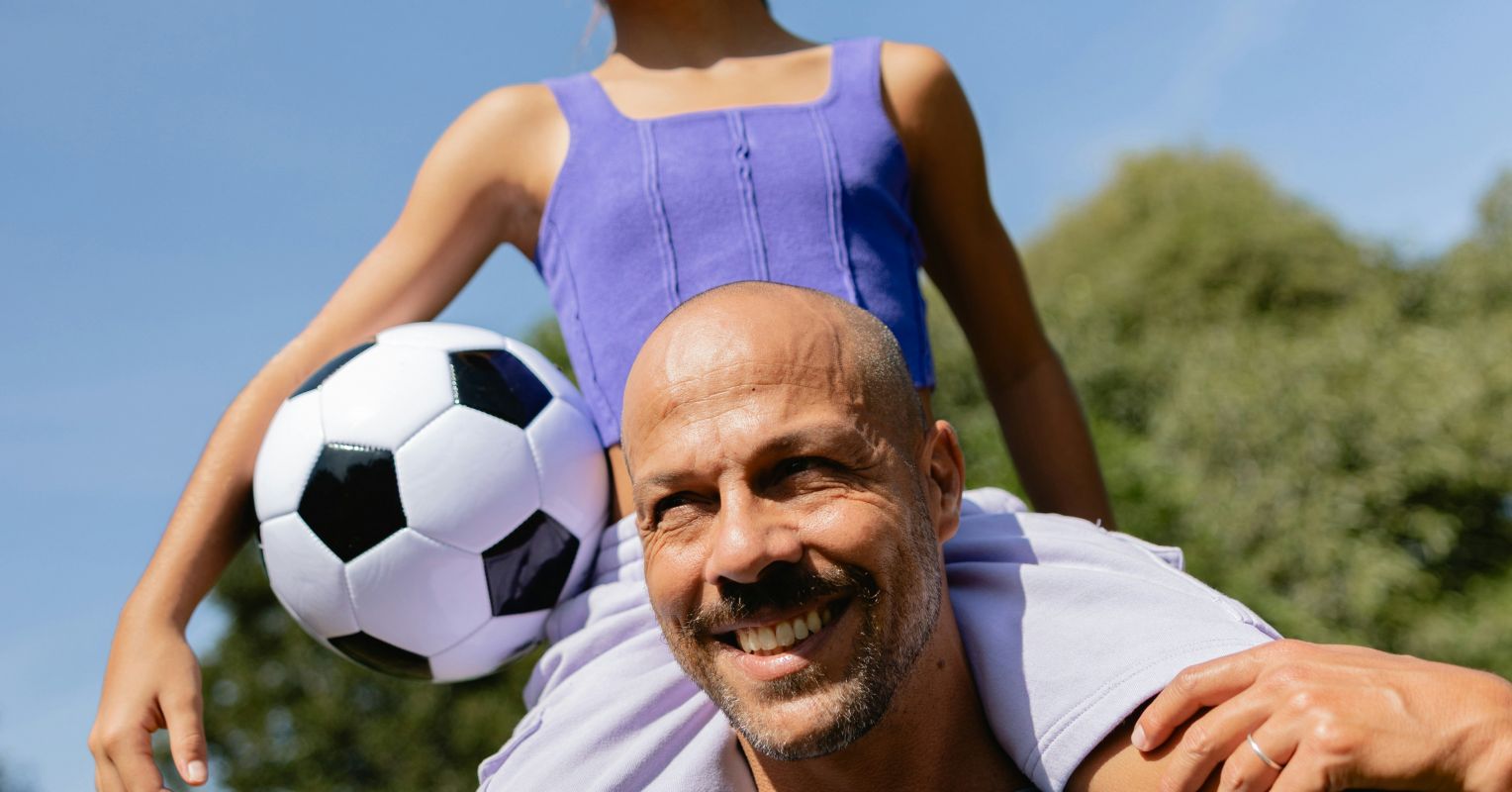
A father recently came into my office consumed with anxiety. “I’m having trouble sleeping,” he told me. “My high schooler is an exceptionally talented soccer player and her ill-equipped coach is messing with her confidence. Every suggestion I make only makes things worse.”
Kids in sports can bring valuable lessons and blessings, and at the same time, trigger intense stress and discomfort—for both kids and parents. The challenge is learning how to best support our kids through the stress, disappointments, and ups and downs of sports without letting our own fears and emotions get in the way.

Here are four parenting habits to guard the balance in your self and family:
1. Separate your experience from theirs
Our kids’ sports can trigger big emotions in us in large part because there is so much we cannot control—from teammates to injuries, coaches to other parents, and playing time to how much your child wants this.
For the devoted father I mentioned above, the hardest part was how completely out of control he felt. The more we talked, the more he realized that mistrusting people and life was an issue that belonged to him, not his daughter. He began to see how he was merging his experience with hers—who, by the way, was not nearly as distraught as he was.
Parenting is for our transformation too, not just our children’s.

Here are six self-awareness questions to help you know yourself better as a parent:
- Why does this matter so much to me?
- What imagined disaster is hijacking my consciousness?
- What learned behavior from my parents or lineage might I be repeating?
- What am I trying to fix that is not mine to fix?
- How am I overlooking what’s best for my child in order to soothe myself?
- Am I making this about my success or failure as a person or parent?
- What old wound is being awakened for more healing (e.g., rejection, injustice, inadequacy, being overlooked, needing to control or win)?
2. Emphasize values over victory
Winning is important, just as is competition. But at the end of the day, what matters most is who we become in the process and the values we learn to live by. With your child, make their qualities and life skills the real scoreboard. Much in society doesn’t encourage this, so we need to be the voice that makes “who you are and the process itself” matter most.
Take the time to write down what you hope your child learns and who they become from their sports experiences. Some examples of what you can encourage include:
Showing up. Not giving up when things get hard. Loving the game. Being a caring teammate. Staying humble. Taking risks. Giving yourself grace. Handling disappointment. Learning from feedback. Managing big emotions. Speaking up for yourself. Sport-life balance. Celebrating someone else’s win. Getting back up after a loss.
Show your child the list and ask them what they admire most in others that they want to develop. Let them pick their own “being” goals for the upcoming season. When you give them feedback, point out behaviors and attitudes in line with these values.
3. Give them room to work it out
Rather than automatically taking over when your child faces pain, disappointment or failure, remember each child has their path and process—to become who they are capable of becoming. We don’t want to rob them of the gifts or lessons wrapped in life’s spiky packaging.
At the same time, we don’t want to leave them alone either. If something genuinely harmful is occurring then it’s important to step in. Oftentimes, however, we confuse discomfort with danger, disappointment from mistreatment, and advocacy from rescue.
Let your child own their journey, including their desire and their struggles. You own the values you hope to impart. The coach needs to own the coaching.
4. Protect the rest of their life and sense of self
When a child really loves a sport, they can easily get swallowed by all the practices and games. So can their identity become engulfed in the false belief that they are their sport or their performance as an athlete. We as parents need to do everything we can to let them be a kid, one who is an unconditionally lovable and valuable soul.
Parenting Essential Reads
To protect their childhood and sense of self, here are a few suggestions:
- Don’t make the ride home all about the game and critiquing them.
- Use the ride home to talk about other things, to express how much you simply loved watching them, even if they sat on the bench.
- Make sure they come home to the same love and family whether they won or lost, played well or poorly, or simply didn’t play at all.
- Rather than “she’s a soccer player,” say “she loves playing soccer.” This focuses on something meaningful she does, not who she is.
- Leave room for other interests and ask about these interests with your child. This could include other hobbies, family vacations, music, spirituality, reading, family traditions, or volunteering.
At the end of the game
Sports can help our kids grow in ways that reach far beyond the game. And if we pay attention, parenting them through it can help us grow too.
