


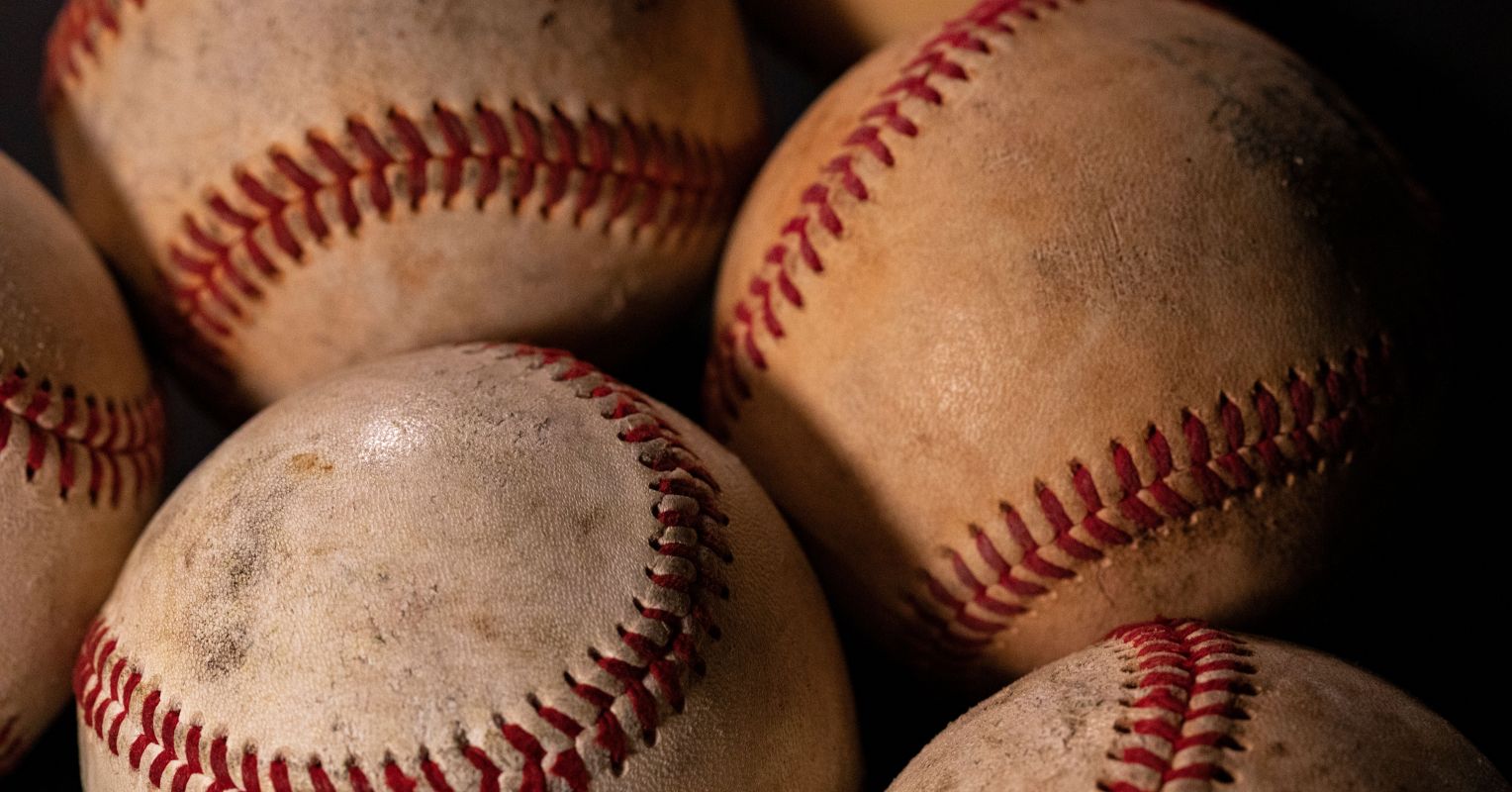
Interestingly, it often turns out that issues in everyday life provide remarkable insights into psychology, psychoanalysis, and the internal working of the mind. I will start with the concept of transitional objects, and then discuss the meanings of these objects. Sports cards, especially baseball cards, are one of the most popular of “transitional objects.”
In psychology and psychoanalysis, the term “transitional” refers roughly to the area between our internal world and the external world. In children, “transitional objects” might include a teddy bear, blanket, pet, lovey, and so on. In adults, these objects might be special items (a ring, a picture), books, a pet, and the like. These transitional objects can provide a variety of functions: comfort, love, memories, consolation, tension-regulation, joy, play, and more.

The psychoanalyst Donald Winnicott was especially helpful in showing us how transitional phenomena can help us reach our authentic, creative, less-defended parts. Winnicott suggested that it is creative self-awareness “more than anything else that makes the individual feel that life is worth living. Contrasted to this is a relationship to external reality which is one of compliance, the world and its details being recognized but only as something to be fitted in with or demanding adaptation.” (Playing and Reality, 1971, p. 65)
My colleague Tony Schaefer has run a world-class sports card collection business for over 30 years. He has a remarkable window on the world of transitional objects from childhood through adulthood. I asked him to share a bit about what transitional objects mean to collectors he’s met. Here, Schaefer discusses these transitional objects from a psychological perspective, integrating the internal world, development, and everyday life:
“‘It’s just sports!’ In one form or another, I hear that sentiment or read it on the internet often. It usually accompanies a story about fan overreaction or dollars spent on a new arena. However, I’m here to understand sports. In nearly 30 years as a sports card dealer, I’ve met so many great people through fandom, fantasy sports, and, of course, sports card collecting. Friendships and connecting with people are what life is all about!

As my card business grew, I noticed myself changing as well. I was less interested in the dollars and cents and more interested in the people I dealt with. I wondered about the “what” of their collections, as I found people were very creative in their quests. Then, I questioned about the “why.” It turned out that these cards not only trigger nostalgia for their own childhoods but also generate a connection to history — to times before they were born and after they would die.
The history of sports intertwines with the history of civilization: Wars, civil rights, struggles, gender equality, labor issues, and so on. These cards are containers of memory. History, art, personal memories, and stories are kept very much alive in these little artifacts.”
Tony asked a few collectors to express what their collections mean to them, not in terms of market value but what these objects hold and what holding onto them does for them. Their responses, below, further help to illustrate the concept of transitional objects.
“My collection, at its heart, reveals my philosophy that the only thing we have, ultimately as sentient beings, is memory. The present moment is a frontier that is infinitely small, before everything we feel, understand and remember is translated to memory, where it changes, settles and is sorted in some way that makes us who we are.
Therefore our memories are essential: they are everything, psychologically. This informs my belief that early childhood and adolescent memories are hugely important. I never trivialize them as an adult; I magnify them.
My collection isn’t just a way of cataloging memories that were meaningful to me, but trying to go back further generations into my father’s, grandfathers’ and great-grandparents’ memories. To capture stories of their childhood, stories that made our culture what it is.”
-John
“What would I hope my collection says about me? That I moved through the Hobby with an open heart. Connection runs through all of it – to my father and my son, to the friends this passionate pursuit has brought me, to those who have encouraged and helped me, and to the art, history, and stories kept very much alive in these little tangible artifacts.
And beyond connection, I’d hope it reflects something of who I aspire to be: a sense of justice, excellence, character and indomitability of spirit. I’d like it to show thoughtfulness and rigor, but also whimsy. It should reflect a seriousness about beauty, history, curation, and community – but joy and humor should always shine through.
That’s an awful lot of lifting for a dusty old pile of cardboard to do! If it does even a third of that, I’ll be lucky – but those are my hopes for when someday the collection is Final (though it will never be complete).”
-Nancy
“So you hear a lot of collectors say they collect sports cards because it gives them a link to the past – nostalgic reasons. Heck, I wanted a Cardinals Coca-Cola set because it reminded me of a time in my life – my early childhood – and a friend who I spent a lot time with growing up. It reminded me of grade school and a classmate who was (MLB player’s name redacted) daughter. Then that reminded me of watching my first World Series in 1982 and getting the 1982 Topps set as my big Christmas present that year. A true trip down memory lane. I can literally put myself back in the family room of my parent’s house in 1982 and remember the feeling of looking through those cards and pulling out the Cardinals and thinking about the World Series plays and highlights of Sutter, Porter, Ozzie, McGee, Herr, Hernandez, Oberkfell, etc. Wow! A feeling of comfort and nostalgia.
My collection as an adult is still about finding those items that bring me that same level of comfort and nostalgia. In some ways, like buying a seat in a time machine…I would chase cards that I had in my childhood. 1958 All Star Musial, 1959 Ken Boyer, 1964 Lou Brock, 1977 Topps Cloth Stickers, 1981 Ozzie Smith in a Padres uniform, and that 1982 Topps set, etc. I wasn’t really focused on value or long term investment but wanted to capture those good vibes from childhood.
Today, I value finding cards that have incredible history and provenance, and cards that give me the feeling of owning a true piece of history. All the rookie HOFers, all the Babe Ruth cards, all the Yankees and Cardinals greats. Holding a card that is 100 years old just makes me feel something…I can watch highlights of these players and feel something, but holding a physical object that has survived wars, survived the Great Depression, survived mothers who did vigorous spring cleanings, etc…is amazing to me. I think about the Civil Rights Movement when I hold Jackie (Robinson), (Satchel) Paige, (Willie) Mays, (Hank) Aaron, (Bob) Gibson, and even Curt Flood. I think about how the Babe was bigger than life and ‘had a better year than the President!’ I remember my grandmother retelling the story of the game where she saw Babe Ruth hit a home run in Sportsman’s Park!”
-Mike
As I mentioned above, transitional objects involve the connections between our internal and external world, our past and present. Tony Schaefer and John, Nancy, and Mike provide terrific examples of transitional objects and their importance to human beings. I am grateful to Tony and his colleagues for letting us enter their world.
