


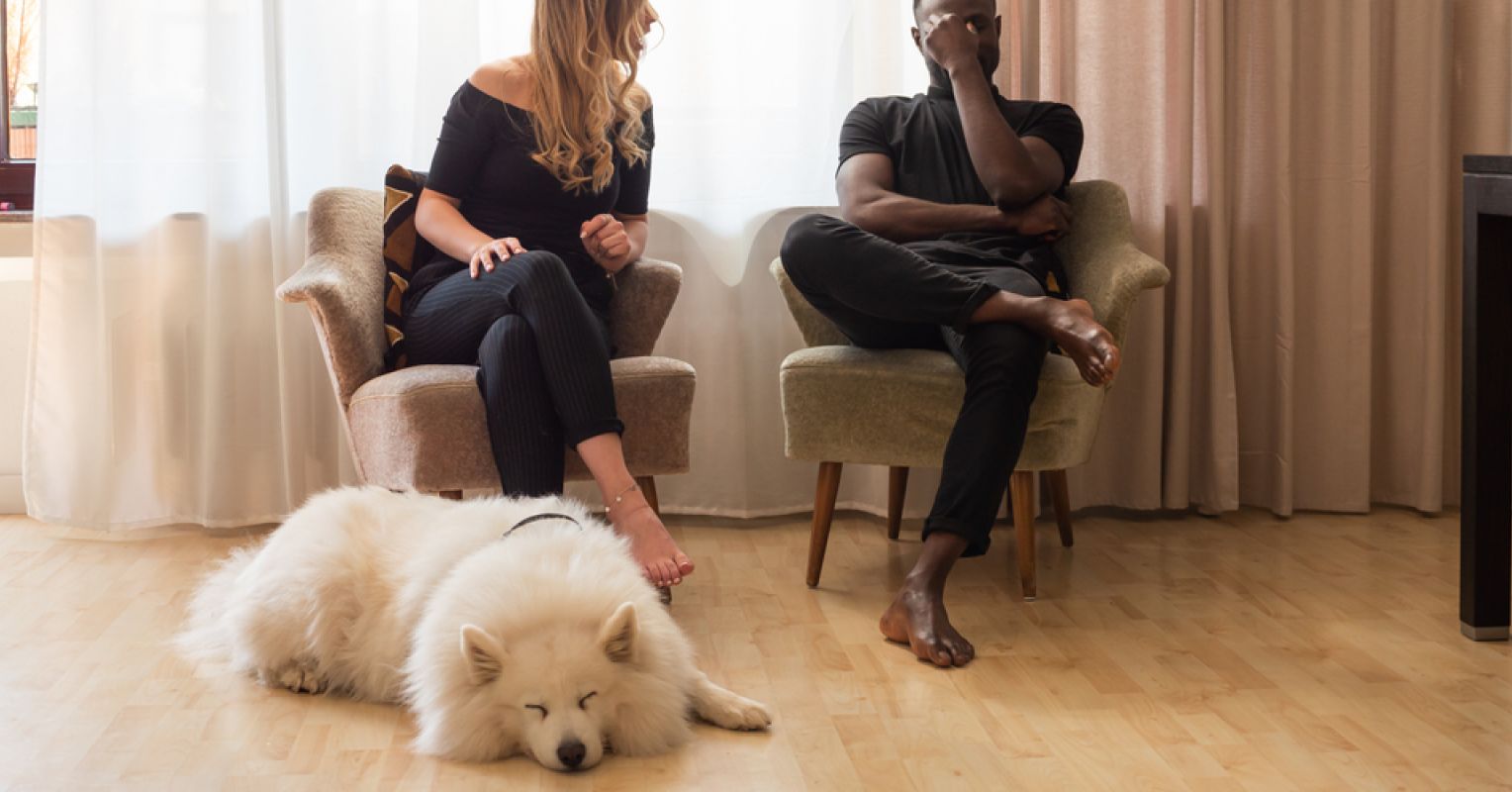
We do it a lot, but we’re not aware of it. Projection is when we perceive a feeling inside of us as coming from the outside, usually from a person close to us. When, for example, we might accuse a lover of flirting instead of recognizing our own roving eye or guilt for past infidelities.
Generally, projections are parts of ourselves we don’t like, our negative or shadow self that we attribute to others in order to maintain our self-regard. The results can be tragic when we project onto groups we think of as “those people” the shameful qualities we don’t want to see in ourselves, such as aggression, dishonesty, or “animal” sexuality.

The trouble, of course, is that blaming others for our own disturbing feelings distorts reality and can erode relationships. But what to do about projection is a challenge. It’s difficult recognize that our assessment of others may not be objective reality, which is why it can be helpful to investigate projections when the opportunity arises.
It did for my husband Peter and I recently when the context was innocuous enough to make them nonthreatening: the care and feeding of our dogs. In what had come to be an ongoing battle, we discovered mutual projections based on even quirkier individual ones. It was a kind of projection sink hole, you might say.
Noticing that my husband was now routinely giving our two dogs, like, 20 treats a day, I insisted he cut back. They were getting fat, I argued, and he was turning them into beggars. He coolly responded that their total caloric intake was the same as ever and offered various calculations. Nonetheless, they’d gained weight and so, with this rare evidence of my ordinarily Mr. Spock-like husband’s utter irrationality, I quickly ratcheted up to “You’re acting crazy!” Although he didn’t just admit it and desist, he did something that might be more helpful in the long run: He pointed out my own pet care madness.

As he reminded me just that morning, when it was way too hot to take the dogs on a nearby hiking trail, I got up at 6 AM to drive half an hour to the beach despite being tired and facing a full workday. Struck by the truth of what he said, I even confessed to being guilt-ridden when I don’t take them to roam free, imagining that I can feel their claustrophobia and depression. Peter was quick to note that freedom is something animals like but don’t need, as I seemed to think. There were plenty of city dogs who got leashed walks twice a day and were happy just to chill at home with their people.
I conceded his point as he did mine, not that either of us have changed our pet care. However, there has been a promising shift.
Calling each other out for craziness is hardly rare in couples—and isn’t necessarily projection. Yet I think for us it was. Talking it over, we realized we both pride ourselves on our rationality and left-brain thinking. Individually, we’ve used that orientation both as a life strategy and as a prop to maintain self-esteem. Much easier to accuse the other of irrationality—no less craziness—than see it in our supposedly rational selves. Having it revealed, however, we were both chastened enough to want to investigate the weird projections that had motivated it.
What we found is that even projection as innocuous as how we treat our pets repays consideration. It’s easy to recognize a feeling as projection when its recipients are those most agreeable of companions who never really insist on the treats or hikes that we so anxiously offer them. Calming those anxieties, though, is the hard part. For that, we tried psychoanalytic thinking—that is, looking into our motives and their origins.
As I thought about what I believed to be my dogs’ urgent need to roam free, I remembered the urgency I felt about “breaking out” of a childhood home filled with sadness and secrets, as if it had imprisoned me. My resources were limited but since nothing had stopped me from freely exploring the world, really, I soon realized it must have been my own unacknowledged fear of leaving the only life I knew.
Although I have lived a radically different life from the one I grew up with, I think I was never convinced that I could manage it. Some part of me has been stuck in the fear that my courage would fail and I would find myself back there, which has led me to forever replay my “breakout.” And now to project it onto my dogs, who hardly object.
Projection Essential Reads
On reflection, Peter discovered that he felt so bad when our 13-year-old dog Tallulah fell ill and soon after took second place to our lively pup, Olive, that he started to “comfort Tallulah” with treats (which he couldn’t deny Olive either). In his childhood, he said, there were no comforting hugs, no soothing words, no special outings. His depressed mother comforted herself with food, despite her diabetes, and Peter followed suit. Now he was doing it with our dogs.
Neither of our projections onto our pets have abated as quickly as our mutual accusations of craziness, but awareness is a beginning. Peter can no longer dole out Pup-Peroni without knowing why he’s doing it, nor can I scramble awake at dawn to take the pooches for a hike without thinking about my own insecurities. Hopefully, as we track our weird projections, we’ll settle into a reality that doesn’t require them.
