


“You are capable of more than you know.” — Glinda (The Wizard of Oz)
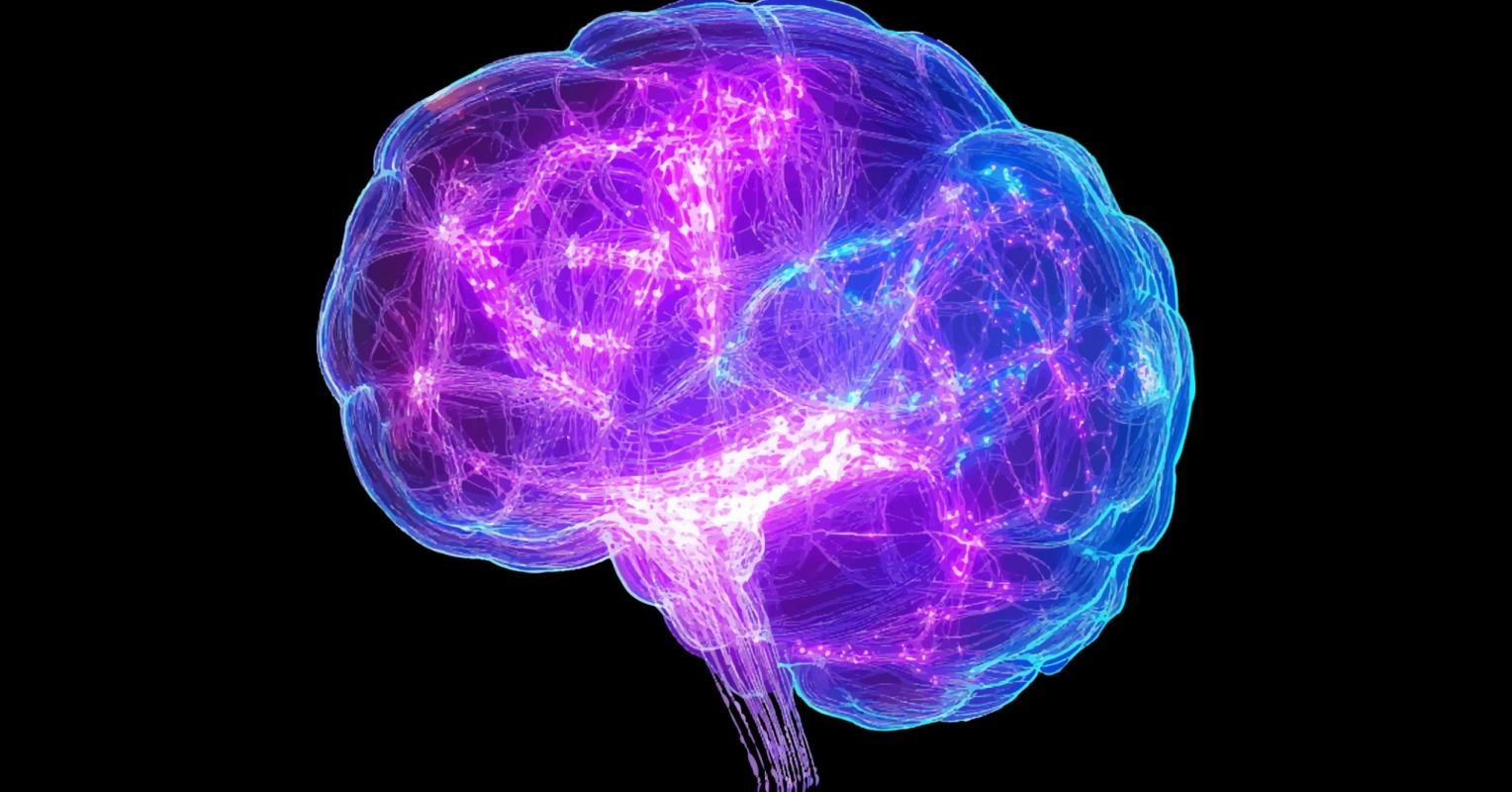
Our mind is composed of knowledge (perceptions of the present moment made tangible through our five senses and our autobiographical memories) and energy flow (electrical pulses that fire across neural paths and transfer information).

The way we perceive information is directly related to the attention and intention of how we choose to cultivate our neural pathways. Neural pathway development is similar to Dorothy Gale’s journey on the yellow brick road—unbound, on uncharted territory, and full of possibility.
Navigating the Storms of Neuroadaptation
Life is not always rainbows, sunshine, and happy endings. But when we encounter unexpected showers, we can gain wisdom from walking in the rain. We learn to avoid puddles (unless we are the few who leapfrog puddle to puddle). Or we may choose a path lined with trees to deflect the raindrops.
Building mental flexibility, neural strength, and connections allows for innovation and new patterns for greater adaptation. With enhanced mental flexibility, we can spontaneously discover a new highway leading to a shortcut home, gifted with a moment of insight. Our growth is directly related to our openness that can amplify (or hinder) our neuroadaptation.
The Yin and Yang of Brain Expansion

Neuroindividuality is at our forefront. Each of our brains has its own entire Land of Oz, illuminating distinct yellow brick roads. The minds of our twice-exceptional (2e) adults and children are just that: places where pathways have unexpected detours, backcountry roads, and high-speed interchanges.
The yin and yang of brain expansion is through time and space. Brain development is asynchronous—our brain has the ability to change throughout our life based on attention, intention, and experience.
Mental flexibility and neural plasticity go hand in hand and inform how we choose to nurture our mindset. Parents, educators, and community directly shape and build the roadways in our children’s brains.
Neurons That Fire Together, Wire Together
Neural plasticity is the process of building and strengthening neural patterns in the brain. This is the ability of the brain to change throughout an individual’s life based on experience, environment, and memory, known as the Hebbian notion.
Put succinctly: “Neurons that fire together, wire together.”
A common firing pattern creates a circuit and memory that shapes and develops the brain. These pulses across the brain relay information about our perceived environment. The next step is our mindset, or how we choose to pay attention to information in the present moment, encouraging a neural pathway.
The Challenge of Paving New Roads
Can we build neural connections for new skills from scratch? Yes, but it may take more time to develop a completely new neural pathway.
A recent study in Richard Anderson’s laboratory at Caltech has shown that learning a new skill is easier for the brain if a common neural pattern has already developed. The lead authors, Sofia Sakellaridi and Vassilios Christopoulos, used a brain-machine interface paradigm to track learning and individual neuron firing. They found that learning is restricted by pre-existing neural patterns.
When the participant was acquiring a completely new skill, the neural framework was not in place, and adaptation for neuronal firing in learning a new skill was being developed, as compared to skills that build upon or adapt skills already learned. For example, a violinist can learn to play the bass guitar more easily than the drums, because the neural pattern involved with playing a string instrument has already developed.
Neuroplasticity Essential Reads
Having the pavement for the pathway helps when learning a new similar skill. However, when learning a new skill that does not have as well-paved a neural path, it takes time to build the road through repetition and practice of the skill, where attention and intention are paramount.
Emotional Connections and Meaningful Learning
Often, 2e children have a high level of disconnect when learning new skills. Literally, they may have a roadway built for excellent spatial memory, while their peers require months or perhaps even years to develop a similar ability. On the other hand, they may not have the brain infrastructure required for raising their hand and waiting their turn until they are called on.
Somehow, they always speak out of turn. Behavior does not match the attention and intention of the child, and learning the appropriate behavior can be challenging and frustrating. In extreme cases, failing time and time again to learn a new skill can be demoralizing to a child, lowering self-image and esteem if the skill is not taught with compassion and patience.
This is where the connections with family, teachers, and community are key. Pamela Cantor and her colleagues found that emotional connection is the greatest factor helping children to learn. Specifically, when a child is supported and has emotional equanimity at home, in the classroom, and in the community, the child thrives, and knowledge is easily acquired. Children need to feel engaged with material that is meaningful to them, and the bridge can be an emotional connection.
By contrast, Cantor reports that negative reinforcement and trauma hinder learning. When the mind is stressed, we lack the openness needed to obtain the new skill or information. Instead, the mind and body are absorbed in the fight, flight, or freeze responses associated with anxiety. The mind is off-line. As Dorothy says to the Scarecrow, “How can you talk if you haven’t got a brain?”
The Power of the Arts in Brain Integration
Importantly, the environment can support positive neural connections and strengthen development, or it can hinder development. Positive reward for internal states that are related to meaning can allow for a change to positive neural circuits and positive behaviors.
In a striking example, Mariale Hardiman and her team have found that arts instruction enhanced learning and integration of science content and concepts. Instructors in fifth-grade classrooms in Baltimore, Maryland taught environmental science and astronomy along with singing and dancing.
The arts-integrated students retained the scientific information ten weeks later with greater accuracy than students who had studied the same material without arts instruction. Importantly, this demonstrates how learning works across three domains:
- Learning novel information becomes meaningful when it activates our senses.
- Our brains are wired for retention when there is an emotional connection.
- We retain material better because it is integrated into our senses, emotions, and body.
Trust Your Yellow Brick Road

Each of the characters in The Wizard of Oz searched for something outside of themselves, only to discover it had resided within them all along. We can build positive neural plasticity when our mind is open, awareness is present, and our intention is clear.
Trust your neurodiverse yellow brick roads. Take yourself on an adventure, get lost, have fun, and walk joyfully along the glistening path you are on. Each of these is made of gold bricks, the building blocks that enhance the neural plasticity of your mind.
“Experience is the only thing that brings knowledge, and the longer you are on Earth, the more experience you are sure to get.” — The Wonderful Wizard of Oz
